

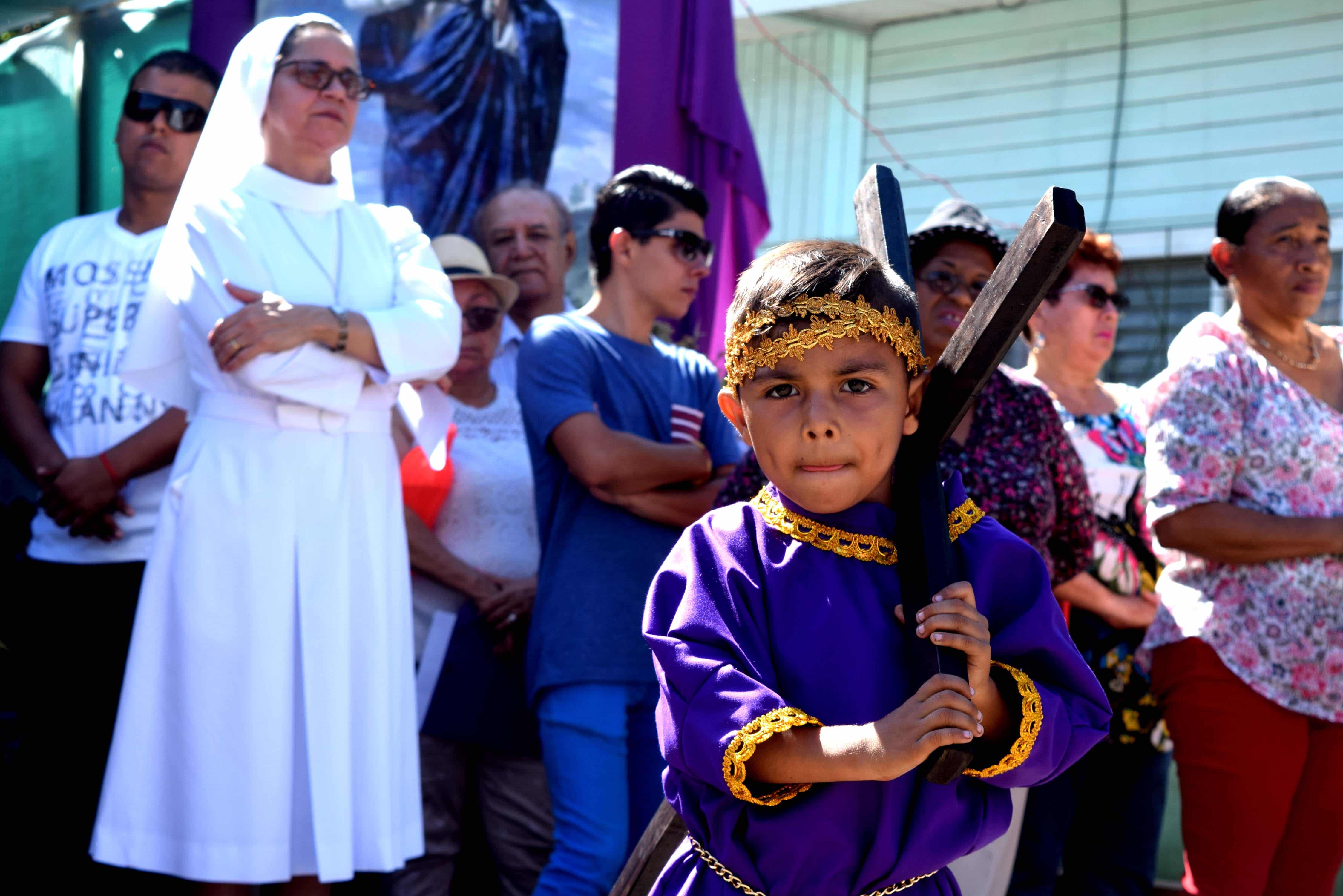
Good Friday in Costa Rica brings processions, family traditions, quieter streets, and widespread closures as Semana Santa reaches its most solemn day.
Good Friday in Costa Rica arrives with a different rhythm. Today much of our country slows down as Semana Santa reaches its most solemn point, with church bells, processions, family meals, and long-held customs shaping the day from morning to night. Good Friday is also a mandatory paid public holiday in Costa Rica, and that alone changes how the country moves. Government offices, many businesses, and banks close, while town centers and neighborhoods take on a quieter, more reflective feel.
At the center of the day is the Catholic commemoration of the crucifixion of Jesus Christ. Across Costa Rica, parishes mark the occasion with liturgies, prayers, and public reenactments of the Passion. In San José, the Metropolitan Cathedral’s Good Friday program includes the morning Procesión del Encuentro, the afternoon liturgy of the Passion, and the evening Santo Entierro procession, reflecting the way the day still blends religious devotion with public tradition.
For many Costa Rican families, Good Friday is also about silence, restraint, and routine. Even people who are not regular churchgoers often treat the day with more seriousness than the rest of the holiday week. Homes tend to stay calmer, music is lowered, and the pace of the day changes.
In many households, meals follow long-standing Holy Week customs, with fish, tuna, soups, rice dishes, and other meat-free foods replacing heavier fare. While many people avoid meat for several days during Semana Santa, Good Friday is the one day when the Church specifically calls for abstinence from meat.
The day also carries a strong layer of popular tradition that goes beyond official church teaching. Older Costa Ricans still pass down warnings and sayings tied to Good Friday, especially in rural areas and small towns. Some families speak of avoiding swimming, climbing trees, or doing strenuous work on the day. Others keep older customs alive by maintaining a more modest and quiet atmosphere at home. These practices are part of Costa Rica’s cultural memory of Semana Santa, where faith and folklore have long existed side by side.
For travelers and newer residents, Good Friday can be one of the clearest windows into how tradition still shapes public life in Costa Rica. It is not just a day off on the calendar. It is a day when religion, family, food, silence, and shared custom all become visible at once. In the cities, the streets may empty while churches fill. In smaller communities, processions still draw residents into the streets. At the beaches and vacation areas, the wider holiday mood continues, but Good Friday itself still carries a different weight.
That is what makes Good Friday in Costa Rica stand out. It is one of the few days each year when our country seems to pause together. For some, it is a day of deep faith. For others, it is family tradition or cultural habit. For almost everyone, it is a day that feels distinct from the rest of the year.





