

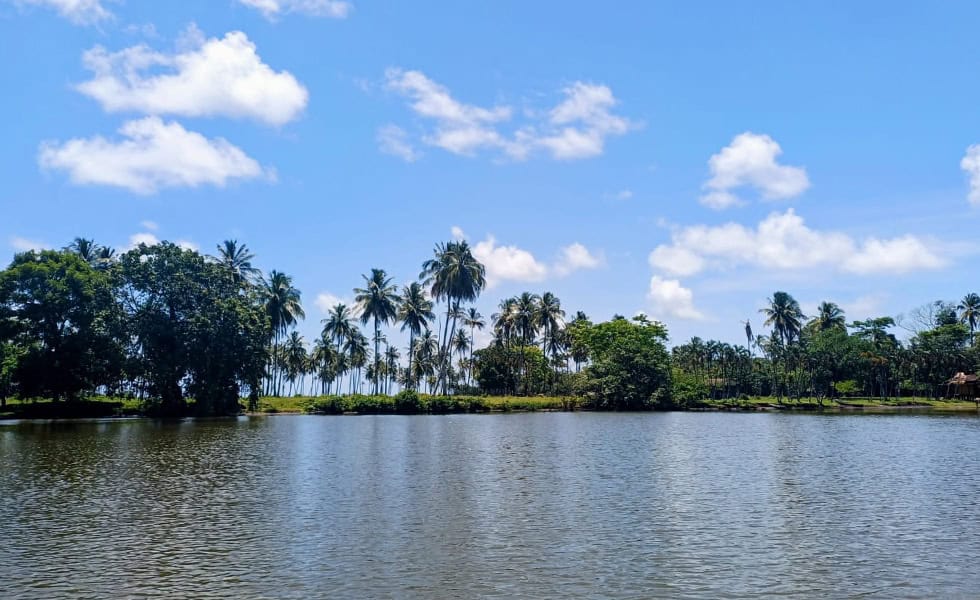
In Costa Rica’s remote Caribbean north, a new model for sustainable sportfishing is taking shape, driven in part by the leadership of FECOP and the active participation of local fishing communities. Nowhere is this more evident than in Barra del Colorado, where recent efforts have focused on strengthening responsible fishing practices while reinforcing the region’s reputation as one of the world’s premier tarpon fisheries.
A key moment in this ongoing effort was a recent gathering of sportfishing captains and stakeholders held at Silver King Lodge, one of the most iconic fishing lodges in the country. Organized by FECOP, the meeting brought together local captains, scientists, professional anglers, and Coast Guard instructors to share updates on regulations, safety protocols, and best practices in sustainable fishing. The goal was clear: align the community around a unified vision that protects the fishery while ensuring long-term economic benefits.
The choice of venue was no coincidence. Silver King Lodge has long been a cornerstone of sportfishing in Barra del Colorado. Established decades ago, the lodge built its reputation on the back of the area’s legendary tarpon runs, attracting anglers from around the world.
Over the years, it has hosted generations of fishermen and contributed significantly to the local economy, helping put Barra del Colorado on the global map as a bucket-list destination. Its history is deeply intertwined with the evolution of sportfishing in Costa Rica, making it a fitting setting for discussions about the future of the industry.
During the meeting, FECOP emphasized the importance of science-based conservation and responsible practices such as catch-and-release fishing, proper fish handling, and adherence to current regulations. By bringing in experts alongside local knowledge, the organization continues to act as a bridge between policy, research, and on-the-water experience. This collaborative approach is central to its mission and has proven effective in building trust within coastal communities.
Beyond conservation, the discussions also reinforced the economic reality that healthy fisheries are essential to the region’s livelihood. Sportfishing tourism generates significant income for Barra del Colorado, supporting not only captains and guides but also lodges, transportation providers, and other local businesses. Protecting the resource is therefore not just an environmental priority, but a financial one as well.
Adding a forward-looking dimension to these efforts is FECOP’s commitment to inclusion through its women’s fishing school. The program seeks to train young women as captains and mates, opening new career paths in a traditionally male-dominated field. This initiative reflects a broader vision for the future of sportfishing in Costa Rica—one that is not only sustainable, but also more inclusive and community-driven.
Taken together, these efforts are helping to position Barra del Colorado as a national example of how responsible sportfishing can be successfully implemented. With the support of organizations like FECOP and the engagement of local stakeholders, the region is demonstrating that conservation and economic growth are not competing interests, but complementary goals.
As the conversations that took place at Silver King Lodge continue to translate into action, Barra del Colorado stands poised to serve as a model for other coastal communities in Costa Rica and beyond—proving that with the right balance of tradition, science, and collaboration, the future of sportfishing can be both sustainable and prosperous.





