

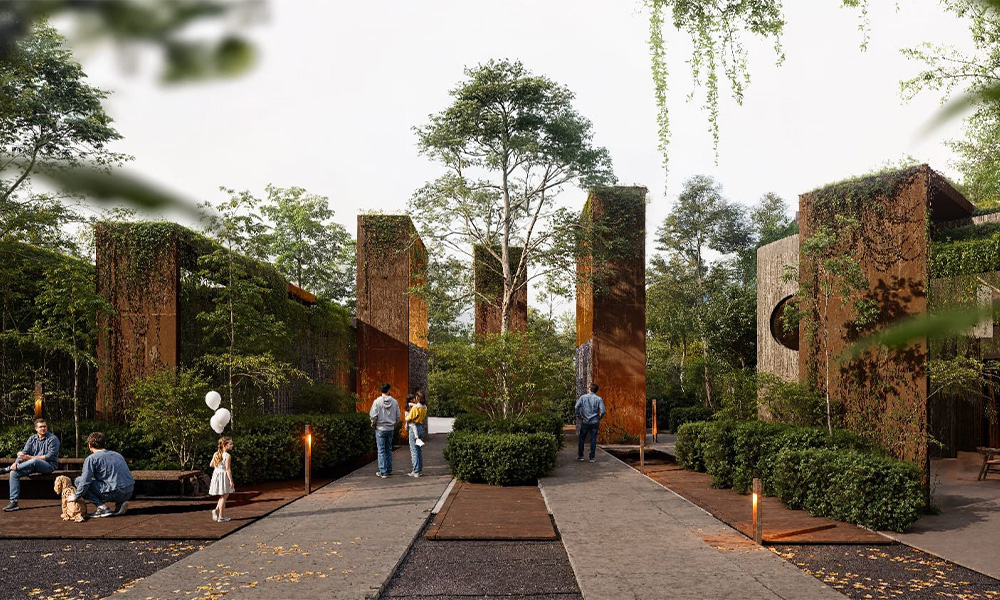
The Simón Bolívar Urban Natural Park will open to the public for a single day on Saturday, March 14, starting at 9 a.m. This temporary access forms part of Amón Cultural 2026, a festival that highlights heritage in the Amón and Otoya neighborhoods.
The event marks the 12th edition of Amón Cultural, held under the theme “Heritage in Today’s Light.” Organizers aim to draw attention to the park as a key natural and historical site in downtown San José. Visitors can explore the central plaza and sections of the trails during this limited reopening.
Juan Pablo Campos, coordinator of the Culture and Sports Unit at the San José Campus of the Technological Institute of Costa Rica, noted that including the park in the festival supports efforts to activate and restore such areas in the capital’s central district. He stressed the park’s role in offering residents a chance to reconnect with a space that holds value for the environment, culture, sports, and research. Campos described it as a green option amid the urban setting, expanding public areas in the city.
The park’s agenda for the day includes a range of activities suited for different ages. These feature workshops and open classes from the Technological Institute of Costa Rica and the Municipality of San José. Attendees can join guided tours, art sessions, music performances, and gastronomy experiences spread across the neighborhoods.
This reopening aligns with a broader transformation of the former Simón Bolívar Zoo, which closed in May 2024 after decades of operation. The site now shifts toward becoming the Greater Metropolitan Area’s first urban natural park. The project focuses on restoring forested zones, updating botanical gardens, and repurposing old enclosures for recreation and education.
Led by the Ministry of Environment and Energy, the Ministry of Culture and Youth, and the Municipality of San José, the initiative involves multiple partners. They have developed designs, a master plan, and a general management strategy to make the park accessible and sustainable. Short-term goals include diagnostics and initial public openings, while medium- and long-term phases cover infrastructure maintenance and new developments. The total investment stands at about 8 million dollars, with full public access targeted for late 2026.
Amón Cultural 2026 itself offers more than 115 activities across 38 locations, from streets to buildings. The program runs for about 12 hours, featuring concerts, exhibitions, and community events. It brings together local artists, musicians, and food vendors to create a lively atmosphere in the historic heart of San José.
The festival encourages people to engage with the city’s past and present. By integrating the park, it promotes the idea of combining nature with urban life. Residents and visitors alike can see the potential of the space as a community hub.
For those interested, the full schedule is available online at https://bit.ly/AC26_PROGRAMA. The event provides a preview of what the park could become once fully operational, serving as a central green area in the capital.
This step forward reflects ongoing commitments to preserve and adapt urban spaces in Costa Rica. As the country balances development with conservation, projects like this one show practical ways to maintain natural elements in city centers.





