

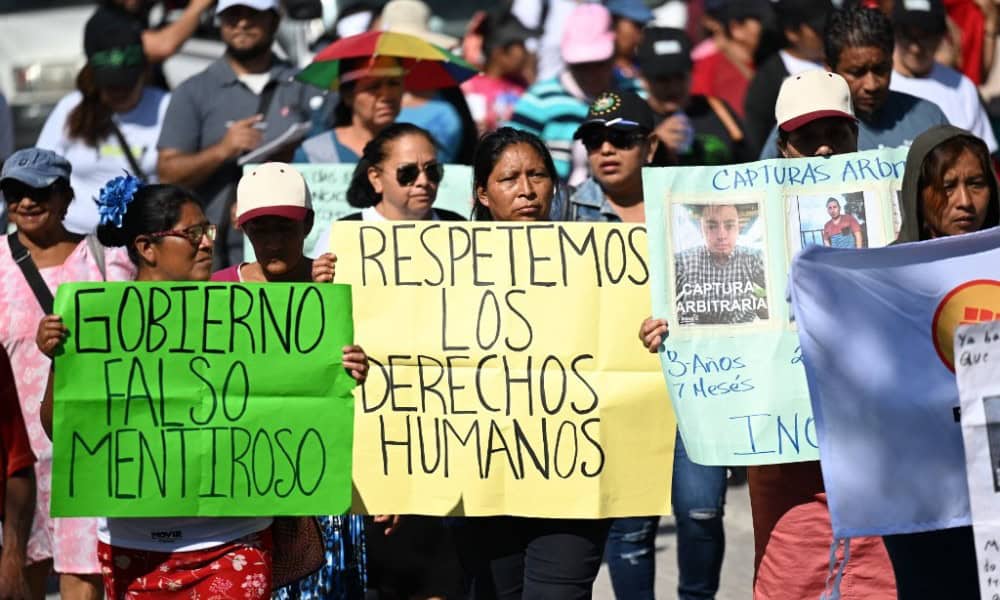
Hundreds of demonstrators took to the streets of San Salvador on Sunday, calling for an end to President Nayib Bukele’s state of emergency. The measure, in place since March 2022, has drawn sharp criticism for enabling arrests without warrants and suspending key constitutional rights.
The protest coincided with the anniversary of the 1992 peace accords that ended El Salvador’s civil war. Participants from various activist groups marched through downtown, voicing concerns over what they see as democratic erosion under Bukele’s administration. Sonia Urrutia, a spokeswoman for one of the organizing groups, stated, “We demand an end to the state of emergency and the restoration of constitutional guarantees.”
Bukele introduced the policy as a response to rising gang violence, granting authorities broad powers to detain suspects. Since then, over 90,000 people have been arrested in the nation of about 6.5 million. Government figures show that roughly 8,000 detainees have been released after investigations cleared them of charges.
Supporters point to a sharp drop in crime rates, with homicides reaching historic lows. El Salvador reported fewer murders in recent years than at any point since the civil war, crediting the crackdown for improved public safety. However, opponents argue the approach has led to widespread abuses.
Human rights organizations report cases of arbitrary detentions, where individuals are held without evidence linking them to gangs. Socorro Juridico Humanitario, a local rights group, claims 470 people have died in custody since the emergency began, often under unclear circumstances. Families of detainees have formed groups like the Movement of Victims of the Regime (MOVIR), which seeks a court ruling to declare the state unconstitutional.
The demonstration remained peaceful, with police monitoring but not intervening. Organizers from the Bloque de Resistencia y Rebeldía Popular emphasized the need for accountability, highlighting how the prolonged emergency has affected everyday life. Many protesters carried signs remembering those lost during the civil war, drawing parallels to current tensions.
El Salvador’s government has extended the state of emergency multiple times, most recently acknowledging that some innocents were caught in the net. Bukele, who won reelection in 2024 with strong popular support, defends the policy as necessary to maintain order. Yet, international watchdogs like Human Rights Watch have urged its termination, citing violations of due process.
In neighboring Central American countries, including Costa Rica, observers note the policy’s influence on regional security debates. Leaders grapple with similar gang issues, but El Salvador’s model raises questions about balancing safety and rights.
As the protest wrapped up, participants vowed to continue pressing for change through legal channels and public actions. The event underscores ongoing divisions in Salvadoran society, where security gains come at a cost to civil liberties.
Hundreds protested in San Salvador against President Bukele’s state of emergency, highlighting arrests and rights abuses while commemorating the 1992 peace accords in El Salvador.





