

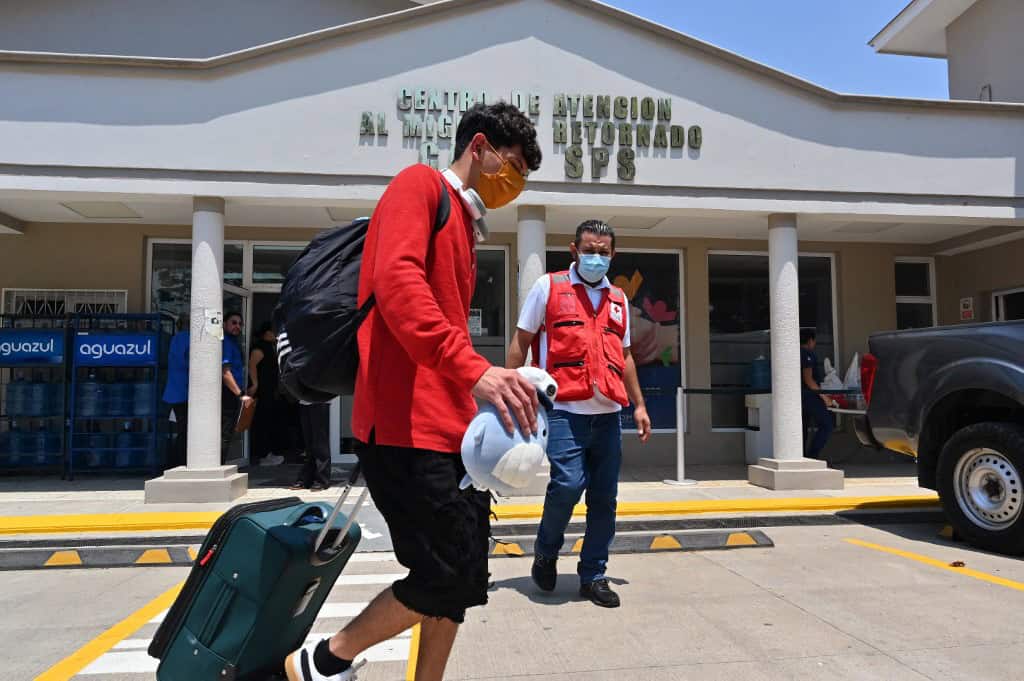
The US has signed a new deportation agreement with Honduras, allowing officials to send migrants from other countries there instead of keeping them in the US. This pact fits into President Donald Trump’s push to handle migration by sharing the load with other nations. It builds on earlier talks and aims to move people who crossed the southern border but lack strong asylum claims.
Honduras agreed to take in several hundred migrants from Spanish-speaking Latin American countries over two years. The deal focuses on families with kids, and Honduran leaders said they might accept more if conditions allow. The country gets support from the US to handle arrivals, including screening to skip those with criminal records.
These arrangements let the US deport people to places outside their home countries, easing pressure on its own system. Migrants who applied for asylum at the border could end up in Honduras if their cases don’t hold up. The numbers start small—around 240 in the first phase—but could grow based on needs. This expands Trump’s strategy of finding “safe third countries” or partners to share migration duties, a tactic he used in his first term with places like Guatemala and Mexico.
Talks picked up speed after the Supreme Court in June 2025 gave the green light for the administration to restart quick deportations to third countries. The US has chased similar deals worldwide, landing at least a dozen now, from Rwanda and Paraguay in Africa and South America to spots in Central America. In Latin America, nations like El Salvador, Guatemala, and our own Costa Rica have signed on to varying levels of cooperation.
Trump’s team calls this a fair way to manage global migration flows. They argue it stops people from gaming the system and shares costs with allies. But groups watching human rights flag issues: many migrants might lack connections or safety nets in these new spots, and conditions in receiving countries could pose risks. In Honduras, for example, crime and economic struggles already drive people north, raising questions about how well it can support newcomers.
Honduras’s response has been mixed. President Xiomara Castro warned that mass deportations could strain ties, even hinting at kicking US troops out of a key base if things get tough. Her government ended a longstanding extradition treaty with the US last year, adding tension. Still, the deportation deal moved forward, with Honduras set to receive the first groups soon.
This fits into Trump’s bigger immigration moves. His administration ended Temporary Protected Status (TPS) for Hondurans and others from Nicaragua, Venezuela, Haiti, and more, putting over 70,000 Hondurans at risk of deportation by September 2025. TPS had shielded them since Hurricane Mitch in 1998, but officials now say those countries recovered enough for safe returns.
Deportations to Honduras rose 9% this year compared to last, with over 23,000 Hondurans sent back so far, mostly from the US and Guatemala. Many face tough reintegration, with limited jobs and ongoing violence. The new deal adds layers, as Honduras preps to host non-nationals too.
Looking ahead, arrivals under the pact will roll out in phases, with checks to fit families into local systems. Questions linger on ground-level support and long-term effects for communities. As Trump ramps up enforcement, these agreements signal a shift toward global partnerships, but they also spark debate on fairness and safety for those caught in the middle.





