

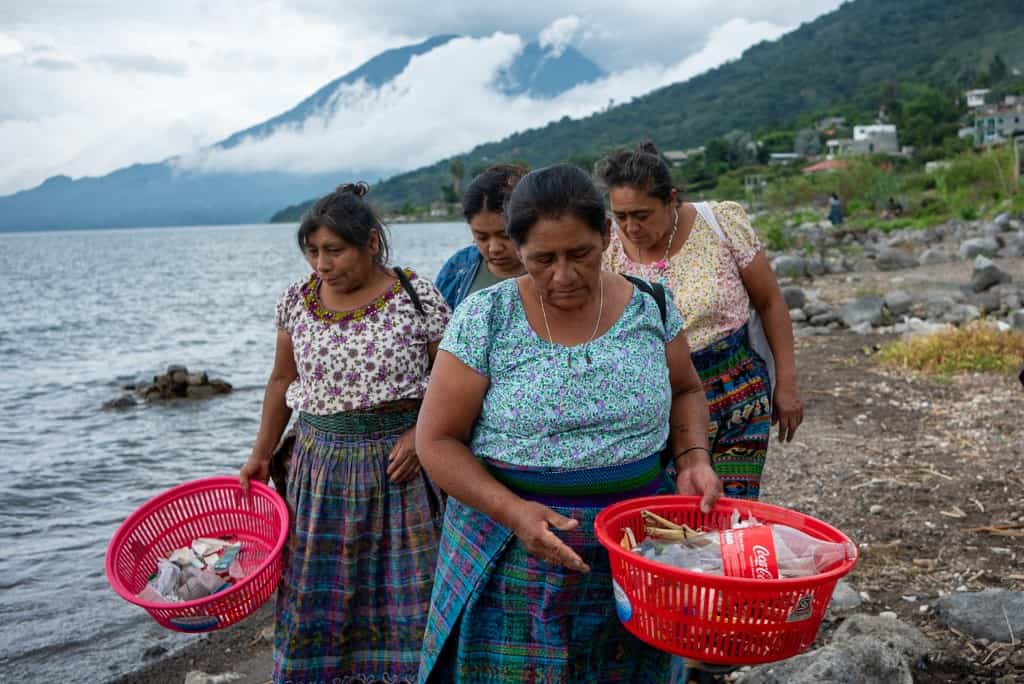
Wading into the water and walking along the beach, a hundred indigenous women collected accumulated garbage this Saturday on a shore of the paradisiacal Lake Atitlán in Guatemala, a natural wonder threatened by pollution. The cleanup day is held once a month to preserve the lake, promoted by the Tz’unun Ya’ collective that brings together women considered the “Guardians of the Lake” in the Mayan Tz’utujil municipality of San Pedro La Laguna, in the west of the country.
“We decided to clean the lake because there’s a lot of garbage,” said María González, 56. González, who wore colorful indigenous clothing, went into the water to collect plastic waste, cans, glass bottles, and even clothes that she put in a bag. “Let’s not lament later about all the garbage on the lake’s beach,” the indigenous woman insisted, calling for more people to join the initiative. Meanwhile, groups of women dispersed to other points along the lake shore to collect garbage that is mainly left by tourists visiting towns located on the lake’s shores.
About twenty members of the firefighters’ diving unit also joined the cleanup day, extracting tires and iron parts from the bottom of the lake, Nancy González, who coordinated the activity, explained. The women’s collective was formed 14 years ago and has raised its voice against large industries, accusing them of their responsibility for plastic pollution.
“Lake Atitlán is suffering an accelerated process of eutrophication – excessive increase in nutrients, especially nitrogen and phosphorus – due to anthropic activities or human activities,” said Flor Barreno, head of the laboratory of the Authority for the Sustainable Management of the Atitlán Lake Basin and its Environment.
Barreno pointed out that the main causes of pollution in the lake are the use of fertilizers and pesticides used in agriculture and the inflow of wastewater, in addition to waste such as plastics. Currently, 20 treatment plants are operating that “do not cover all the wastewater produced within the lake’s basin,” she added.
Lake Atitlán is one of Guatemala’s main tourist sites and is surrounded by the Atitlán, Tolimán, and San Pedro volcanoes. It is located among mountains at an altitude of 1,562 meters with a water surface of 125 km2 and a maximum depth of 327 meters. About 380,000 people inhabit its basin, according to official figures.





