

Let’s get transcendental.
Costa Rica has begun its last electoral process before its 200th birthday as an independent nation. It’s time to talk about what’s urgent, what’s important, what’s been postponed – but most of all, about the state of the institutions that sustain Costa Rica, this country we brag about all over the world.
We already know that this discussion will not take place the way it should and, if it does take place, it will depend on how many votes come or go. However, that’s not a reason to stop demanding that we talk about these issues.
The most generous description of Costa Rican society would call it democratic, egalitarian, faithful to the rule of law, pacifist and educated.
Each one of those adjectives can be linked to an instituion – except pacifism, which can be attributed to the absence of an entity, in the case of the army, rather than the presence of one. Let’s be honest: we are pacifists partly out of passivity and partly because, diay, Costa Ricans have been born that way since 1948 and it’s worked out pretty well.
So we are left with democracy, education, social equality and a sense of justice, or at least a sense of the power of the law. Each one of these qualities corresponds to public institutions that are pillars of the Costa Rica we have today, and that we want to preserve – or recover, depending on your point of view.
For democracy, the Supreme Elections Tribunal (TSE); for social equality, the Social Security System (CCSS, or Caja); for education, the thousands of elementary and high schools in every corner of our country; and for the rule of law, obviously the Judicial Branch.
These are four institutions we love, whether we know it or not, and that other countries envy – but precisely for that reason it’s important to review and rejuvenate them, debug or reform them. Dark will be the day when we are forbidden to question them.
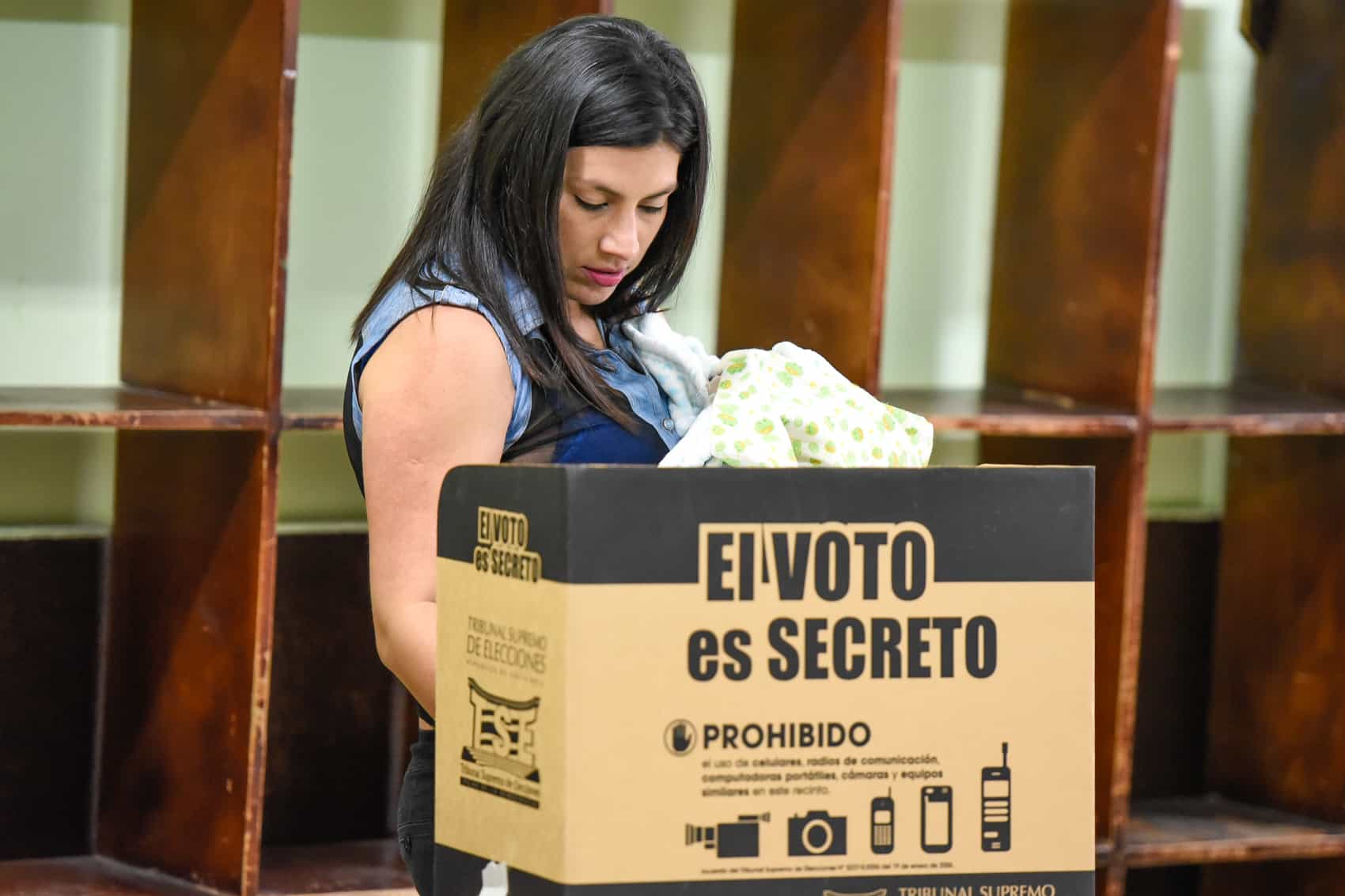
Democracy: The TSE has, to the best of its ability, thoroughly fulfilled its function of guaranteeing that popular will prevails in the election of our leaders. Some would like the TSE to have greater powers, to become almost a police force for Costa Rican political behavior. Others would rather take away its powers to control party finances. The discussion won’t end. In fact, it’s a good thing for the institution in charge of organizing our elections to remain a work in progress, especially in times of such change in our political culture.
For example, the Tribunal has taken its time to elevate the importance given to the election of legislators, which should be on a par with the election of the president, if not more important. If those inside the TSE feel they should be exempt from criticism – well, sorry.
Education: Change is just as important in our elementary and high schools. Public education should be reconceived every year so it can be adjusted as necessary. We should include roadway safety education and human rights in our curricula: the first, because we’re killing each other in the streets, and the second, because our national discourse needs nourishment. We need a new balance between humanism and utility. No one gets ahead with great values alone, and no one wants a robot in a mortarboard.
Let’s also talk about the quality of public education and educators compared to private institutions that, because of their quality, are winning over more and more middle-class families and middle-class family budgets. We will rue the day when the only people who go to public schools are families who can’t afford a public school. (And we will rue the day when we discuss education during our political campaigns only to attract the votes of the enormous teachers’ unions.)
Justice: The Judicial Branch, or the institutions it comprises, needs to come down from the altar of perfection. It has never been perfect, and it’s not perfect now, although its quality and coverage have been exemplary in a regional context.
Let’s talk about the slowness of justice, the cases that are simply forgotten when journalists stop asking about them, the intrigues among internal sectors or the political pressures on judges and magistrate, as former magistrate José Manuel Arroyo pointed out. Let’s talk, too, about the world of job perks that separate this branch from the Costa Rican reality, which generates widespread ill will. Citizen trust has been reduced over the last decade, and that, speaking of justice, becomes a defect within the system.
We must avoid a situation where the application of justice escapes that system of guarantees and where, furthermore, human rights are degraded, that being another of Costa Rica’s international calling cards.
Social equality: Finally, we turn to the Caja, that institution so vital to our universal health-care system, which has made this society more egalitarian. It’s like a 75-year-old grandmother who has had a long, fruitful life, but is slow, with diseased finances. She is the victim of political calculations, of powerful internal parasites. Her future is at great risk.
Both the Caja’s health-care and pension systems require serious and urgent reforms. I want to believe that this election cycle might provide a platform for a discussion of the solutions that will provide the greatest common good, not just for the Caja’s employees (54,000, one for every 85 people) or for those who are in power, as we saw from 2007-2009.
We know that not everything can be fixed with a law or the promise of a decree. The work of restoration is complex, because we’re talking about true pillars of Costa Rican democracy, collective works of many decades – and we can’t just hang a “Closed for Maintenance” sign in front.
May our 200th birthday find us working hard to improve them.
Read more of Alvaro Murillo’s “No Sugar, Please” columns here.
Álvaro Murillo is an experienced journalist who specializes in political coverage and has written for La Nación, Semanario Universidad and El País. In “No Sugar, Please,” his twice-monthly column, he explores politics in its broadest terms, from the halls of government to community life. Connect with him on Twitter.





