

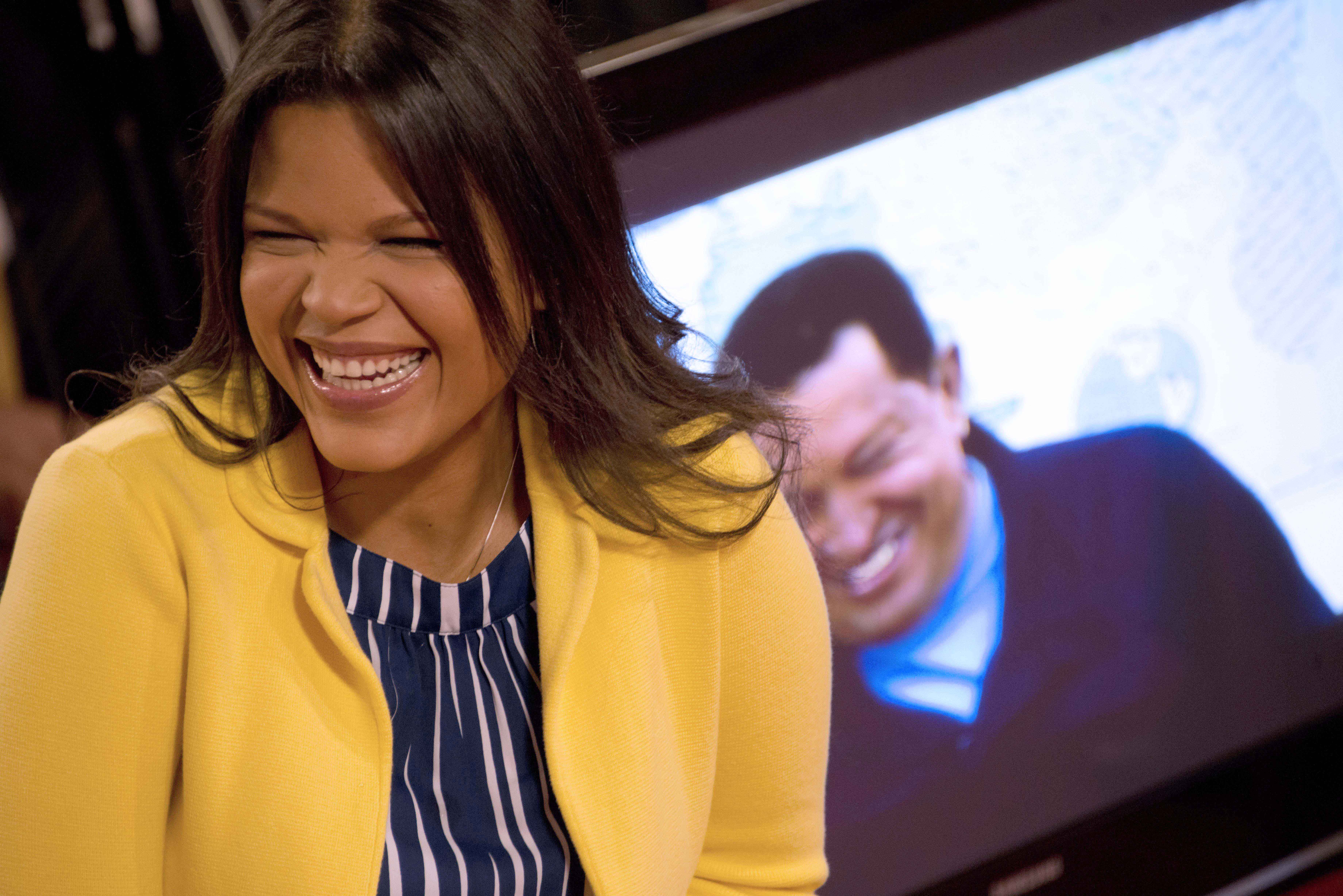
A single mom, a brazen businesswoman, a party girl, and social-media rock star — María Gabriela Chávez is many things. But the bona fide that counts on Chávez’s résumé is her bloodline. She is the daughter and longhaired likeness of the late Hugo Chávez Frías, Venezuela’s former charmer-in-chief, who ruled this sharply divided land of 29 million for 14 years with one foot on the balcony and the other on the throat of the opposition.
Chávez died of cancer last year, but the aura endures. And ever since, pretenders to Chavismo’s legacy have maneuvered to claim some of the glory. Few have climbed as high as María Gabriela, who, at age 33, with a journalism school diploma and no known job history, has just been named by President Nicolás Maduro as alternate ambassador to the United Nations.
With the highest inflation rate in the hemisphere, spiking crime and vanishing supplies of everything from eggs to antibiotics, Venezuelans aren’t easily impressed. But word of naming the new envoy to a plum post at the world’s leading multilateral organization chafed on even the most calloused compañeros.
Until a week ago, María Gabriela, second in line of the four Chávez heirs, was known mainly as her father’s favorite with a taste for high living and a reputation for scandals. Her most visible activity is feeding her Instagram page and keeping her 968,000 Twitter followers in Chavista aphorisms and factoids. Monday’s offering was an item on the giant incoming asteroid scheduled to end life on Earth in 2880.
A year-and-a-half after her father’s death, she has yet to clear out of La Casona, the official presidential residence. Even as she and her older sister, Rosa Virginia, help themselves to the palace linen and staff, Maduro and the First Lady, Cilia Flores, have been relegated to La Viñeta, home of the vice president and guest quarters for visiting dignitaries.
The word in Caracas is that she’d grown accustomed to the whims of her father, who, after his divorce, rarely traveled abroad without María Gabriela on his arm in the role of virtual first lady.
Desde el cielo veré los triunfos de nuestra revolución, no me despido "Estaré en sus corazones @Maby80 @LindaSobehAli pic.twitter.com/UfBmYvysXm
— 𝔸ℕ𝔻ℝ𝔼𝕊 𝕄𝕆ℝ𝔼ℕ𝕆 ® (@ANDR3Z77) August 15, 2014
Venezuelans know her by another honorific: the rice queen. The moniker commonly refers to a goodtime girl, as ubiquitous on the party circuit as rice is on a bride. In this case, it also refers to the Chávez scion’s involvement in a murky import deal, in which she contracted a shadowy company to buy rice and corn flour from Argentina at a stiff premium.
The deal prompted a call last month for a corruption investigation by opposition lawmakers in Venezuela and Argentina. Hence, the whispers in Caracas that the sudden career upgrade was less an homage to the patriarch than a ploy to armor plate the Comandante’s daughter with diplomatic immunity against inconvenient legal probes.
But another motive might better explain the instant ambassadorship. To strengthen his hand and suffocate rebellion, Chávez systematically centralized power, undercutting rivals he couldn’t co-opt. And to keep a lid on palace intrigue, he turned to Cuba, swapping cut-rate Venezuelan oil for Castro Inc.’s best technology, domestic espionage.
As well as her beatified dad’s blessing, María Gabriela also inherited his private line to Havana. And that, says Diego Arria, a former Venezuelan envoy to the U.N., is the logic of sending an ingenue to Manhattan.
What the “infant diplomat” lacks in job training, Raúl Castro’s commissaries will supply in well-turned motions and speeches, ready for the teleprompter. “The Cubans are practiced in the workings of the U.N., in part because it’s one of the only international forums where they can still operate,” Arria says.
This means little now, but the stakes could rise if Havana’s proxy grabs a non-permanent seat on the Security Council, which is expected to vote on new rotating members in October. That would put the pariah of the Antilles closer to the head table of global governance.
Better still if Caracas’s ranking envoy, Samuel Moncada, happens to be absent, in which case Havana’s newest best friend will have her go at the microphone. Expect Chavista thunder and rice showers.
Mac Margolis is Brazil bureau chief for Vocativ.
© 2014, Bloomberg News





