

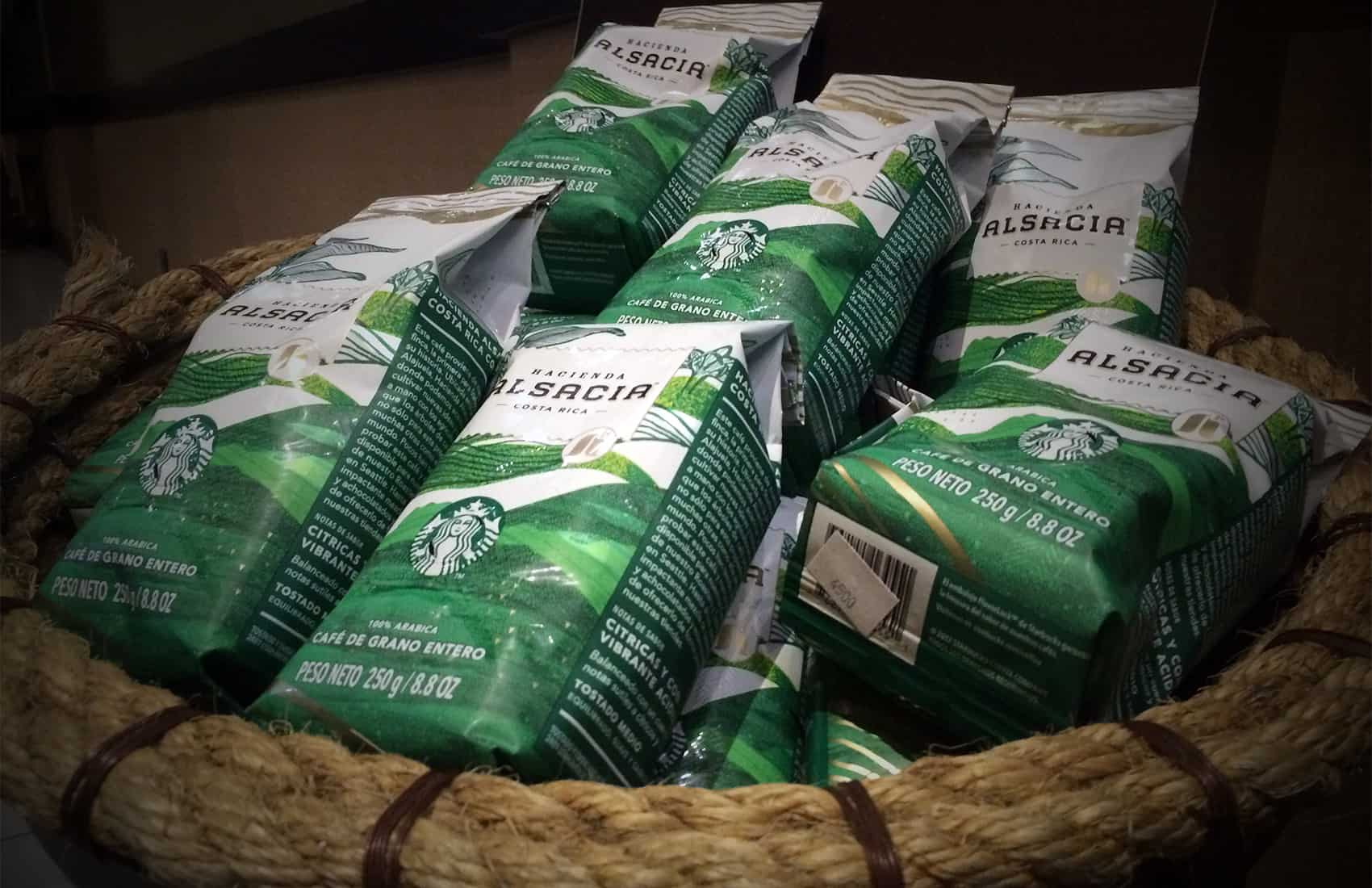
How do you say “Venti Pumpkin Spice Latte” in Spanish? Coffee drinkers in Costa Rica who lean toward that type of concoction have until about November to figure it out. That’s when Starbucks, the global coffee behemoth, usually rolls out its holiday specialty coffee drinks. The company announced last week it will open its first retail location in Costa Rica this May.
“We want to bring to the Costa Rican consumer the Starbucks experience,” said Manuela Valásquez, Starbucks director of marketing in Central America. “The Starbucks experience is comprised of many elements contained in the Starbucks store. What we want to offer [customers] is a place where, after their work, after their studies or outside of their homes, they can have a place for activities like spending time with their families or having chats with their friends; a place where they can finish their university studies or close a business deal.”
Costa Rica consumes almost 18.6 million kilograms of coffee annually, according to Ronald Peters, executive director of the Coffee Institute of Costa Rica (ICAFE). That’s an average of roughly 4 kg per person each year. Peters estimates the 2011-2012 coffee harvest in Costa Rica will total approximately 2.2 million 46-kg sacks, more than 101 million kg.
So, Ticos know a thing or two about coffee, and despite the fact that the country remains unadorned by the Starbucks’ green-and-white, two-tailed-mermaid logo, Ticos know the company, too.
“We are some of the principal suppliers of Starbucks, and they are the No. 1 individual buyer that Costa Rica has for its coffee,” Peters said. “Opening a café here gives national consumers a style [of drinking coffee] that is known globally, and in this way promotes the consumption of coffee. That is important for us.”
Starbucks, Peters said, buys around 200,000 46-kg sacks, or about 9.2 million kg of Costa Rican coffee each year.
But patrons of the coming Starbucks location won’t be getting their java straight from Costa Rican coffee growers, according to Velásquez. Coffee the company buys from Costa Rica will be exported to the United States for roasting, blending and packaging before being sent back for sale in Tiquicia.
“We have our roasting plants in the United States,” Velásquez said. “We have experts there to define what type of blends to develop for this or that type of coffee. We’re going to look for the best beans from producer countries, take them to our roasting plants where we have our development teams always looking for the best blends. There, we roast the coffee, and once that is done, the coffee is packaged and sent out again to all our markets.”
Costa Rican coffee bought by Starbucks generally ends up in blends with other beans from the region, Velásquez said. So, for example, your grande iced coffee with soy milk could have Nicaraguan, El Salvadoran and Costa Rican flavors swimming around inside.
Starbucks, according to information on the company website, has more than 15,000 locations in 50 countries worldwide. Ric Rhinehart, executive director of the Specialty Coffee Association of America, said a presence in Costa Rica makes sense.
“The announcement by Starbucks of their intention to open operations in Costa Rica is a positive affirmation of our belief that the creation of strong internal consuming markets directly benefits both farmers and consumers,” Rhinehart said in an email to The Tico Times. “Many businesses, individuals and institutions have had a hand in the promotion of quality coffee to the Costa Rican consumer, and Starbucks’ entry is a good indication that a sound market for coffee exists.”
“It is remarkable to reflect on the changes of the last 20 years and to appreciate the transition from a time when a Costa Rican farmer was unlikely to ever taste his own product to a new reality where he can buy it in a cup prepared in Costa Rica,” Rhinehart added, hitting on the same sticky point that Café Britt founder Steve Aronson mentioned when asked about Starbucks opening a store in Costa Rica.
“I hope they’re going to serve Costa Rican coffee,” Aronson said.
In the past, Aronson explained, 91 percent of Costa Rica’s coffee – all the best stuff by law – was exported, while 9 percent of the dregs stayed in the country for domestic consumption.
“If you ask somebody who’s over 40, they’ll say things like ‘I grew up knowing that Costa Rica had the best coffee in the world, but we never got to drink it,’” Aronson said.
Costa Rica’s coffee import laws changed in 1991, allowing for a more upscale domestic consumer market for the product to develop, Aronson said.
Starbucks’ Velásquez could not comment on the kinds of prices Costa Rican coffee drinkers will face when they approach Starbucks baristas in May.
As to whether Starbucks will sell Tico java to Tico drinkers, Velásquez said Costa Rican coffee is sold at every Starbucks location as a percentage of a regional blend.
Coffee Exports Up
Coffee exports for the month of January are up slightly over January of last year, and exports over the last quarter of 2011 are up more than 9 percent from the same period in 2010-2011, the Coffee Institute of Costa Rica announced on Wednesday.
January 2012 exports totaled 138,460 60-kilogram sacks, only a 0.6 percent increase from January 2011, when the country shipped out 137,596 sacks.
From October 2011 through January 2012, exports totaled 326,250 60-kg sacks, a jump of 9.3 percent over the same period in 2010-2011, when Costa Rica exported 298,451 sacks.





