

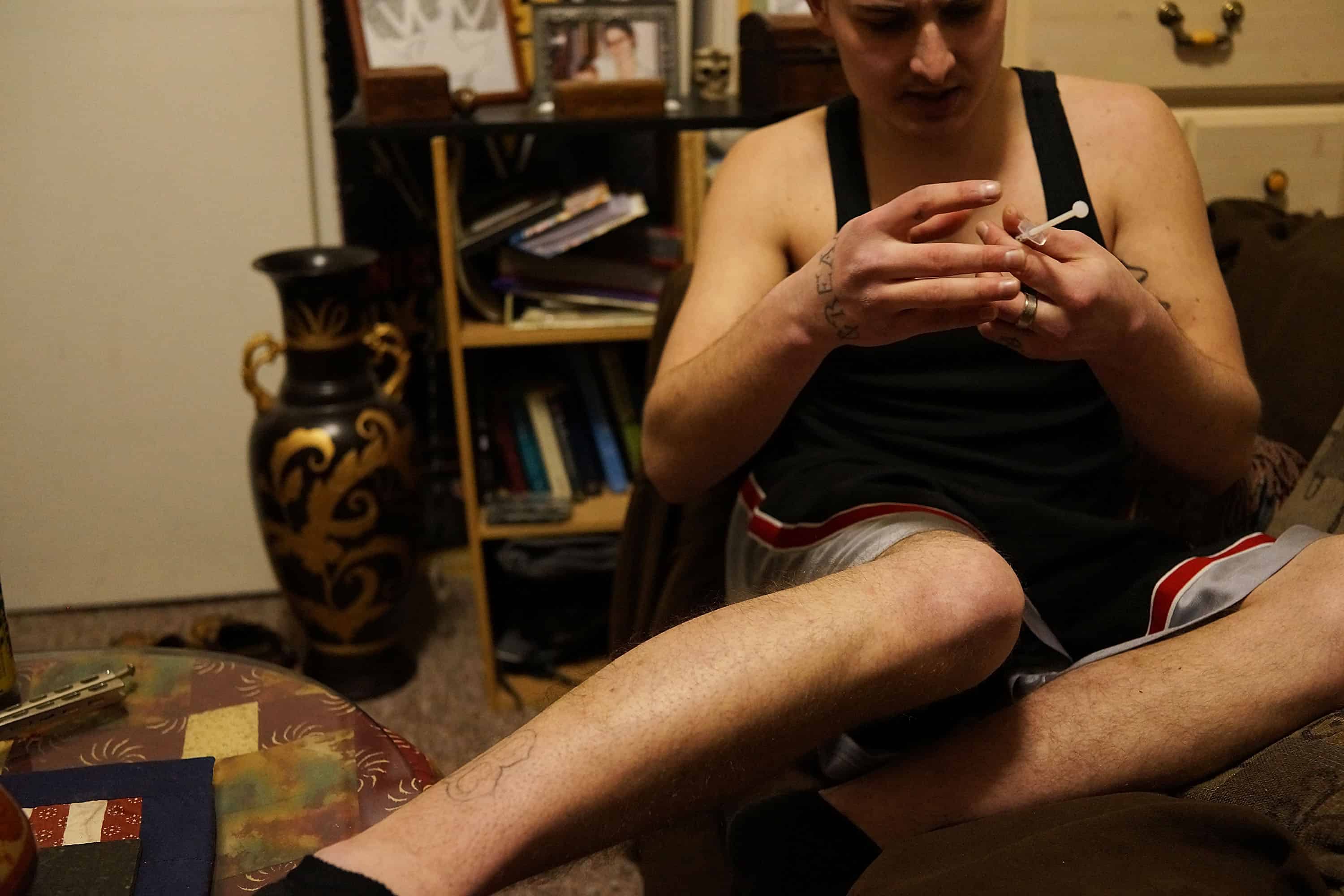
WASHINGTON, D.C. – White House officials announced Tuesday that they will seek nearly $1.2 billion in new federal funding over the next two years to address the growing problem of heroin and prescription opioid use, an epidemic that has become an increasingly important policy priority among the nation’s politicians.
The centerpiece of the proposal is $1 billion in mandatory funding over two years to expand access to treatment for prescription drug abuse and heroin use, $920 million of which would go to the states. Another $500 million, some of which is a continuation of existing funds, would support work by the departments of Health and Human Services and Justice to expand not just treatment but access to the overdose-reversal drug naloxone, and support targeted enforcement activities.
Officials from both parties have intensified their focus on opioid use as it has taken an increasingly heavy toll on rural communities, as well as urban ones: Last month, U.S. President Barack Obama appointed Agriculture Secretary Tom Vilsack to lead a new interagency effort focused on addressing the issue in rural areas, while Senate Majority Leader Mitch McConnell, R-Ky., and Senate Minority Leader Harry Reid, D-Nev., have agreed to take up legislation on the issue. The total number of U.S. deaths linked to opioids – a class of drugs that includes prescription pain medications as well as heroin – reached 28,648 deaths in 2014, exceeding the number of deaths stemming from car crashes.
Speaking to reporters Tuesday, Health and Human Services Secretary Sylvia Matthews Burwell, a native of West Virginia, said that “no community has been immune” to the problem, though her home state has been hit particularly hard.
“Personally, I know the families who have suffered deeply from loss, and continue to struggle in their families,” she said, adding that the money the administration is seeking “would mean a significant investment in this fight.”
The funding includes $460 million over two years for what Burwell called “evidence-based intervention efforts,” adding that while it would have to be spread out, “we want to try to move that money as quickly as possible” to the states.
Related: At US-Mexico border, a flood of heroin, meth show drug trade is changing
While lawmakers appeared poised to approve new funding in the coming year to tackle the problem, it is unclear whether they will accept the administration’s proposal or push for a different strategy. Sen. Rob Portman, R-Ohio, whose bipartisan Comprehensive Addiction and Recovery Act is set to be marked up Thursday in the Senate Judiciary Committee, said in a statement that “if the White House is serious about fighting the heroin epidemic, the president will signal his support” for the bill.
“This is the only bipartisan legislation that includes a comprehensive and evidence-based approach to help communities combat this epidemic,” Portman said. “It has significant support from both sides of the aisle, as well as from doctors, nurses, first responders, those in recovery, and other experts in the field. I support providing additional resources to help fight this epidemic. We must also ensure that the programs we have in place focus on proven methods for helping law enforcement and supporting long-term recovery of individuals and families who most need our help.”
Michael Botticelli, who directs the White House Office of National Drug Control Policy, said the administration and lawmakers such as Portman share the goal of working “to ensure that we have a comprehensive, unified response” to the epidemic, though the White House is not ready to endorse the legislation yet.
“When we have worked with leadership in Congress, with folks who are leadership of committees, there is a significant, I think, interest in helping to deal with this issue and [knowing] that resources are part of the equation in terms of our response to this,” Botticelli said.
And while the epidemic has expanded dramatically under Obama’s watch, Botticelli said the administration’s work had begun to show signs of success in some areas. “We have made some progress, but we need to do more, particularly in terms of people accessing treatment,” he said.
Read the White House’s 2011 national Prescription Drug Abuse Prevention Plan
© 2016, The Washington Post





