

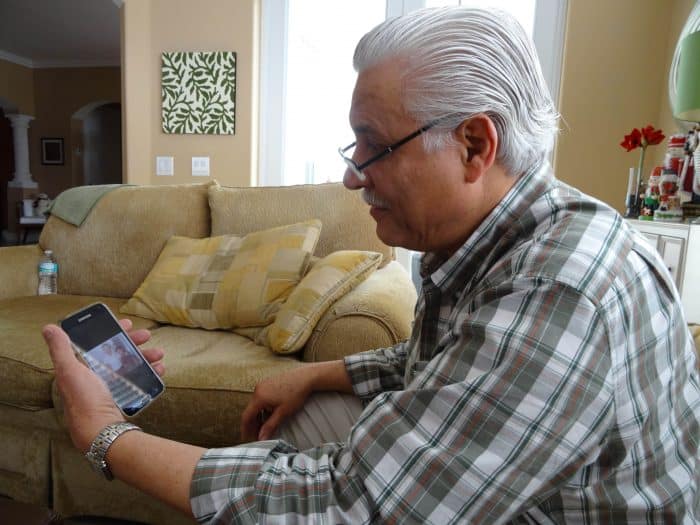
MIAMI – At the start of the Cuban revolution, Javier Llorens was one of thousands of children who left the island unaccompanied for the United States, thinking it would be temporary.
He is now 64 — and is still in the United States.
Like many of the Cuban children who headed to the U.S. as part of what is now known as Operation Pedro Pan, named after the fictional leader of the orphaned Lost Boys, Llorens tells of a bittersweet experience.
“It was very hard, but from a good perspective, I would not be the person I am today without having gone through this crisis,” Llorens, now a dentist and married with two daughters, tells AFP.
Llorens began life in the U.S. in one of the shelters that was set up in Florida to receive some of the 14,000 children in an exodus from Cuba that began on Dec. 26, 1960 and lasted until October 1962.
He left Cuba with his 16-year-old brother on Aug. 15, 1962 — a date he says is etched in his memory.
“I remember having a rather bad cold with fever, but we had to leave — we had been making preparations for months and months. We needed to have courage,” he said.
Llorens’s parents made the difficult decision to temporarily part with their young children, fearing indoctrination by Fidel Castro’s communist government, a fear that spread among other families in Cuba.
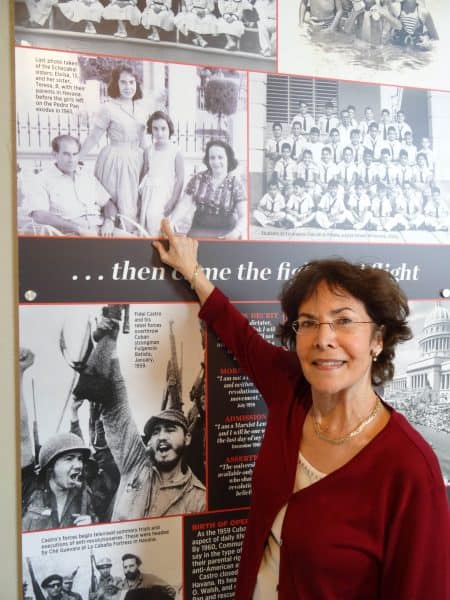
“When the government of Fidel Castro took power in Cuba in 1959, everything changed. They started to strip people of their personal freedoms, they limited freedom of the press, they took away people’s homes,” says Eloisa Echazabal, who was 13 when she ended up in Miami on Sept. 6, 1961 with her younger sister and three cousins.
“The final straw for my parents was when the government took over private and religious schools, and communism began to be taught in public schools.”
A boy named Pedro
About half of the children who came to the United States were met by family or friends at the airport, according to Operation Pedro Pan Group, Inc., which documents the stories of those who participated in the program.
The operation was created by the Catholic Welfare Bureau of Miami at the request of parents in Cuba to provide an opportunity for them to send their children to Miami to avoid indoctrination.
The other half of the thousands of children were cared for by the CWB, under the direction of a young Irish priest named Bryan Walsh, at a network of temporary shelters in Miami and then homes in other U.S. states.
After diplomatic relations were severed between the United States and Cuba in 1961, the CWB was authorized by U.S. officials to notify parents in Cuba that visa requirements had been waived for their children.
This meant that Cuban children were able to travel by commercial flights to Miami.
Walsh first became aware of the plight of unaccompanied Cuban children when a Cuban man brought a 15-year-old boy to see him who had come to Miami to live with relatives, but the family had hit hard times and wanted to find foster care.
That boy was named Pedro, and Walsh discovered there were many more like him — alone, and in a strange country.
Reunited
Echazabal went with her sister to an orphanage in the state of New York, where she later lived with a family.
“I remember it was not the happiest days of my life. It was hard to adjust to living in the orphanage,” she says.
Nine months after coming to the U.S., she was reunited with her parents.
“I know others with Peter Pan who had happy experiences, and others who had worse experiences than mine. I’m not complaining — it’s just the way it was,” she adds.
Llorens had to wait five long years to see his parents again, and the reunion was not without its difficulties.
“It had been so long that they looked at me like the little boy who had left Cuba all those years ago, but I had been through a lot and had developed into a teenager who had become used to fending for himself for years,” he says.
According to Operation Pedro Pan Group, by 1966, about 90 percent of children who were in shelters were reunited with their parents.
Echazabal, 67, says she has seen many in the program go on to make hugely successful lives for themselves in the United States.
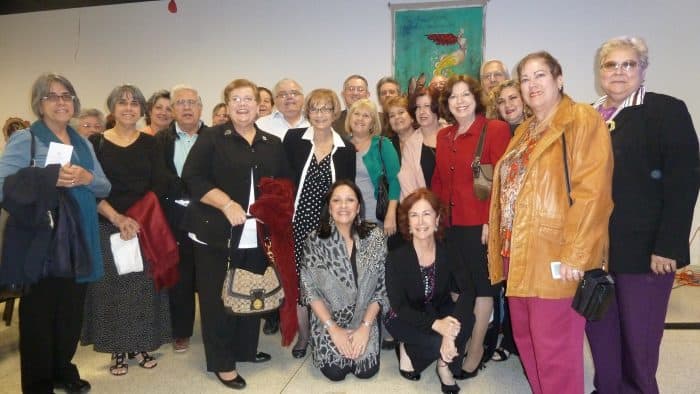
“There are doctors, lawyers, engineers and mayors. All of those in Pedro Pan, we feel like siblings because this experience unites us,” she says.
“Every time we meet, we talk about things relevant to today, but we always come back to discuss what we went through.
“There are more than 14,000 of us, and each had a different experience.”





