

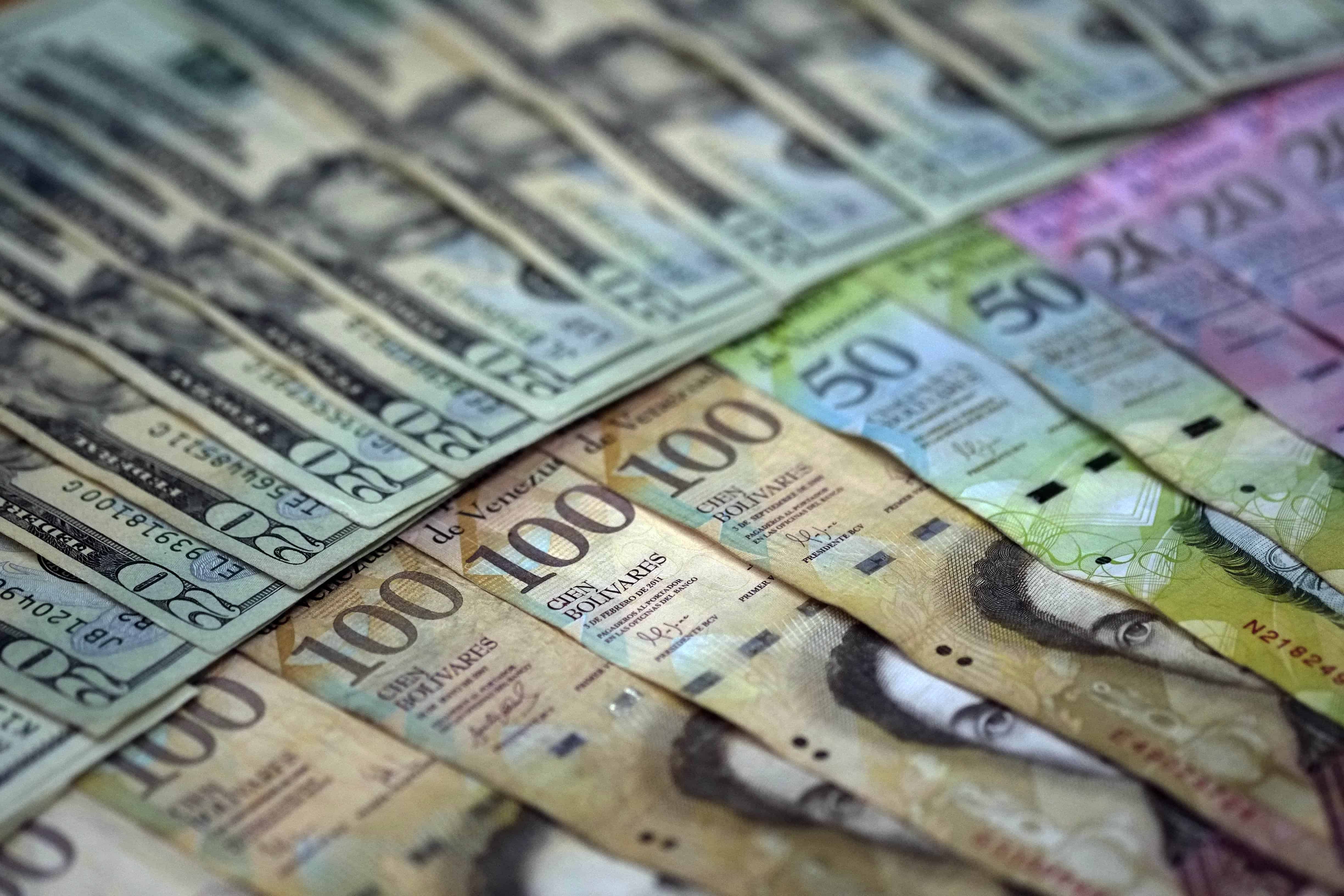
The stunning collapse of Venezuela’s bolivar in black market trading this month — it fell to as low as 423 bolivars per dollar from 279 at the start of the month — has left Venezuelans scratching their heads, with many wondering why it has sunk below the value of gold and hard currency the central bank has to back it.
Venezuela has maintained strict currency controls since 2003 and currently has three legal exchange rates of 6.3, 12 and 199 bolivars per dollar used for priority imports. On the black market, where people and businesses turn when they can’t obtain government approval to purchase dollars at the three legal rates, the bolivar has weakened 82 percent in the past year to 397 bolivars per dollar on May 26, according to dolartoday.com, a widely watched website that tracks the exchange rate in the Colombian border city of Cucuta.
While steep, the 29.7 percent decline this month is not unprecedented. The currency fell 33.3 percent in November of last year, 19.7 percent in January 2014 and 25.7 percent in October 2013. Monthly losses of more than 10 percent became frequent starting in mid-2012. Since the start of 2011, the currency has increased in value in only 10 of the past 53 months. The general trajectory has been down, and fast.
The country’s annual inflation rate stood at a reported 69 percent in December, the last month the central bank reported data. Barclays Plc said on May 20 that inflation was currently in the “triple digits.” Foreign reserves fell to a 12-year low of $17.5 billion on May 22.
Something has changed, though. For years, the black-market rate had closely tracked the so-called implicit rate — the number of bolivars in circulation divided by foreign reserves. Sometimes it even came in below the implicit rate, meaning people had confidence that bolivar was worth more than just the gold and cash the central bank had to back it up.
That all started to change last year though, with the black market rate starting to accelerate far ahead of the implicit rate. Even with Venezuela’s international reserves at a 12-year low, which weakens the implicit rate as the central bank has less assets to back its ever-expanding money supply, the black- market rate is now about three times higher than the implicit rate.
“Why are Venezuelans now looking at the price of the dollar in Cucuta instead of the implicit rate? Because it’s the most expensive price,” Ronald Balza, an economist at the Andres Bello Catholic University in Caracas, said in an interview. “Dollars are assets that Venezuelans don’t want to exchange for the bolivar, because they feel the bolivar is going to lose value.”
To put it simply, it appears that Venezuelans have lost all faith in the bolivar and seem willing to pay whatever it costs for greenbacks. How low the bolivar will continue to slide is anyone’s guess. But if history is a guide, there doesn’t appear to be a limit.
© 2015, Bloomberg News





