

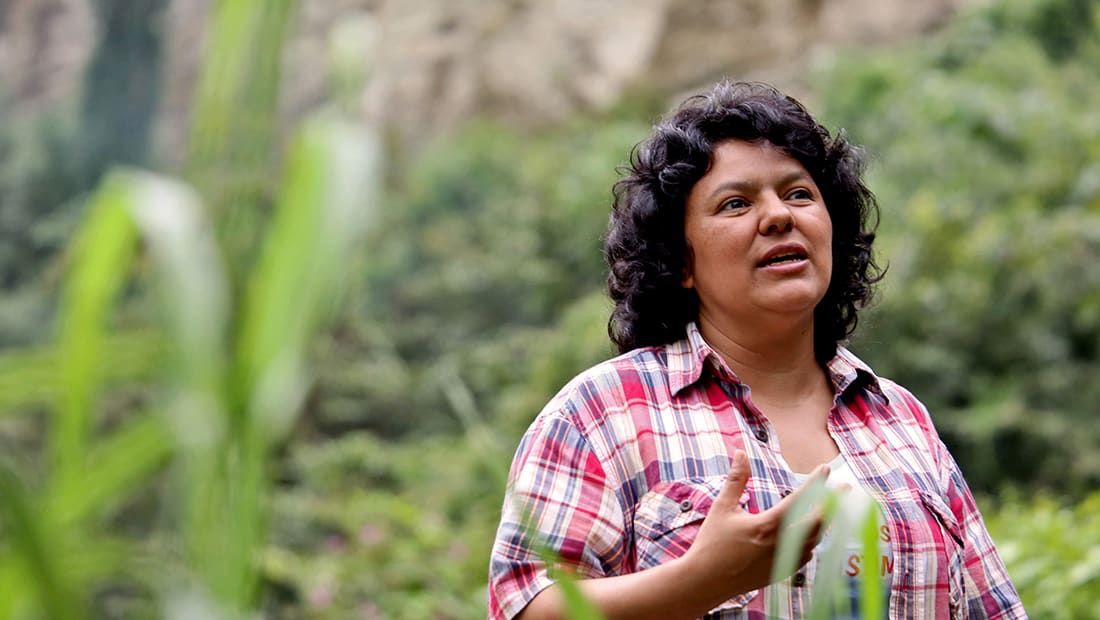
Honduran indigenous rights leader Berta Cáceres is used to being under pressure. For years she and a group of fellow Lenca activists have faced violence, death threats and constant surveillance while waging peaceful protest against a hydroelectric dam project in their territory. But this week, Cáceres, 42, faced a different kind of pressure as she stood before audiences in Washington D.C. and San Francisco to receive the most prestigious environmental award in the world.
On Monday, Cáceres and five other recipients — one for each inhabited continent — were awarded the Goldman Environmental Prize honoring grassroots environmental activists. Along with international recognition of their cause, each prize winner receives $175,000.
“I feel very satisfied, it’s an honor to receive the award,” Cáceres said in a phone interview with The Tico Times. “It’s brought hope because we know that there are people who are watching and this will help us reinforce the rights that these people have in their territory.” For Cáceres, this hope is crucial because her fight is far from over.
The problems began in 2009 following the Honduran military coup when the newly installed conservative government approved concessions for 47 hydroelectric dams. One of these projects, the Agua Zarca dam, would displace hundreds of indigenous Lenca people and affect other communities downstream.
The campesinos and indigenous groups that inhabit the territory were not consulted prior to the concessions’ approval, in direct violation of Honduran law.
Watch the Goldman Prize’s video of Berta Cáceres working in Honduras
Cáceres rallied the National Council of Popular and Indigenous Associations (Copinh), a group she co-founded in 1996, to fight the dam project, starting with peaceful protests in the Honduran capital. They filed complaints against the dam with the Honduran government and denounced the project in more than 150 indigenous council meetings.
In 2013, Cáceres organized a roadblock to the dam’s construction site, blocking machinery from starting construction. The peaceful blockade escalated the conflict, causing clashes between the military, police and the dam’s private security. During one protest at the dam’s main office, a police officer opened fire on the crowd, killing one of the protestors, Tomás García.
Another protestor — 14-year-old Maycol Rodríguez — was found dead after his activist father had received death threats. According to Cáceres, she and other campaigners have been threatened and even tortured. “The threats are constant, they don’t stop, threats of kidnapping, threats against my family, threats of murder,” Cáceres said. “But my situation is very similar to other activists in other organizations all throughout Honduras.”
According to a report released Monday by international NGO Global Witness, Honduras is the most dangerous country in the world to be an environmental or land rights activist. Between 2002 and 2011, 111 activists were killed in Honduras. In 2014 alone, 12 activists were killed, which is more than any other country per capita. More than two-thirds of the deaths reported globaly last year occurred in Central and South America, including in Costa Rica and Guatemala.
Hydroelectric dams, mining and logging are the main drivers of these conflicts in Honduras, along with the repeal of several environmental laws, according to the Global Witness report. Cáceres’s group and others in Honduras also face increased militarization and threats from private security.
Despite these obstacles, Copinh’s campaign has been remarkably successful. After spending nearly a year locked out of the construction site by roadblock, one of the project’s main funders, Chinese hydropower giant Sinohydro, backed out in 2013 citing concerns over serious conflicts in the area.
For now, construction on the dam has been effectively halted, but a number of investors are still funding the project. “There is still much to be done,” Cáceres said. “We are going to go back with more enthusiasm; more hope and more will to stop these companies.”





