

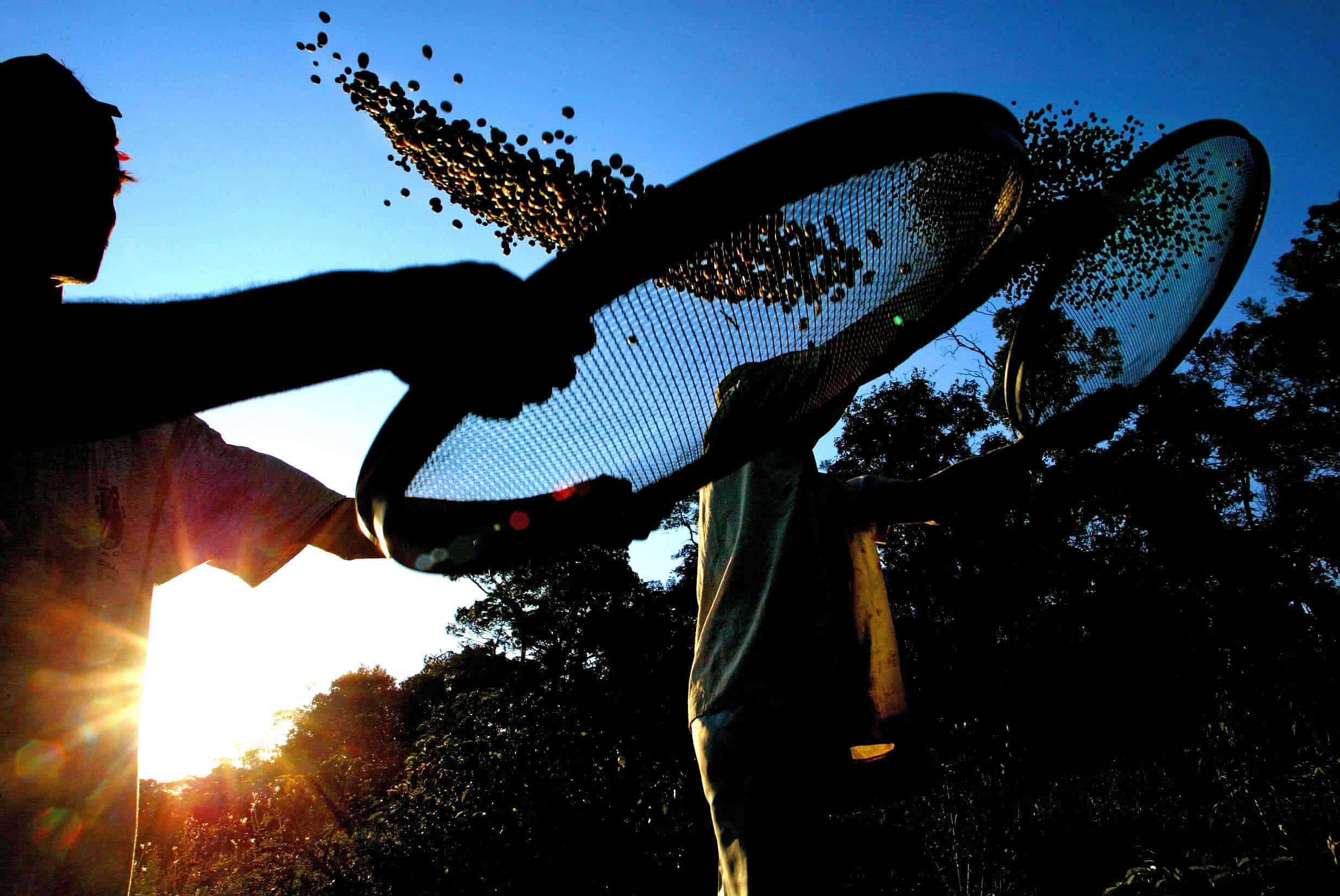
A consortium of scientists announced Thursday in Science that they’ve sequenced the coffee genome for the first time. By determining all of the genes that make up robusta coffee, a plant variety that accounts for about one-third of the world’s consumption, they’ve opened the door to better breeding practices and even genetic engineering.
The researchers were most surprised by the genes used to produce caffeine. There are several theories as to why a plant would want to give its leaves and berries an energy buzz: It might be meant as a deterrent against leaf-eating bugs, to make surrounding soil less hospitable to rival seedlings, or to turn potential pollinators into happy caffeine addicts. Whatever the drive, plants such as tea, coffee and chocolate developed enzymes to make the addicting (and sometimes toxic) compound.
But when researchers compared the coffee genome to that of chocolate, they found that the enzymes used to make caffeine in the two plants aren’t closely related enough to share a common ancestor. In other words, coffee and chocolate found their way to caffeination independently of each other. So while the reasons for evolving caffeine production are still hard to pinpoint, we know it was a valuable enough trait to inspire multiple adaptations. Scientists don’t have a genome for tea yet, so we can’t be sure whether it developed caffeine on its own, as well.
Some members of the group are proceeding to sequence arabica coffee, which produces the world’s fancier varieties of coffee bean. Since arabica is a hybrid of robusta and another variety of coffee plant, it has a duplicated genome. With twice as much genetic information to sift through, Victor Albert, the lead author and a professor of biological sciences at the University at Buffalo, said, this becomes “a much more complicated affair.”
Albert and his colleagues have high hopes for the useful application of the sequencing. “When we compared the coffee to several other species, we saw a huge enrichment in disease-resistant genes,” he said. “Those can now be rapidly explored in more detail, and could be of use in both coffee breeding and in the molecular modification of coffee.”
The obvious route, he said, would be to make coffee crops more resilient to climate change and increased pest problems. But his team’s work on coffee’s caffeine-producing enzymes could also help take the buzz out of your brew. “This might make it possible to knock off caffeine production in a variety of coffee plant,” Albert said, “So to make decaff coffee, you wouldn’t have to go through the process of extracting the caffeine. You could just grow coffee beans that don’t make it at all.”
© 2014, The Washington Post





