

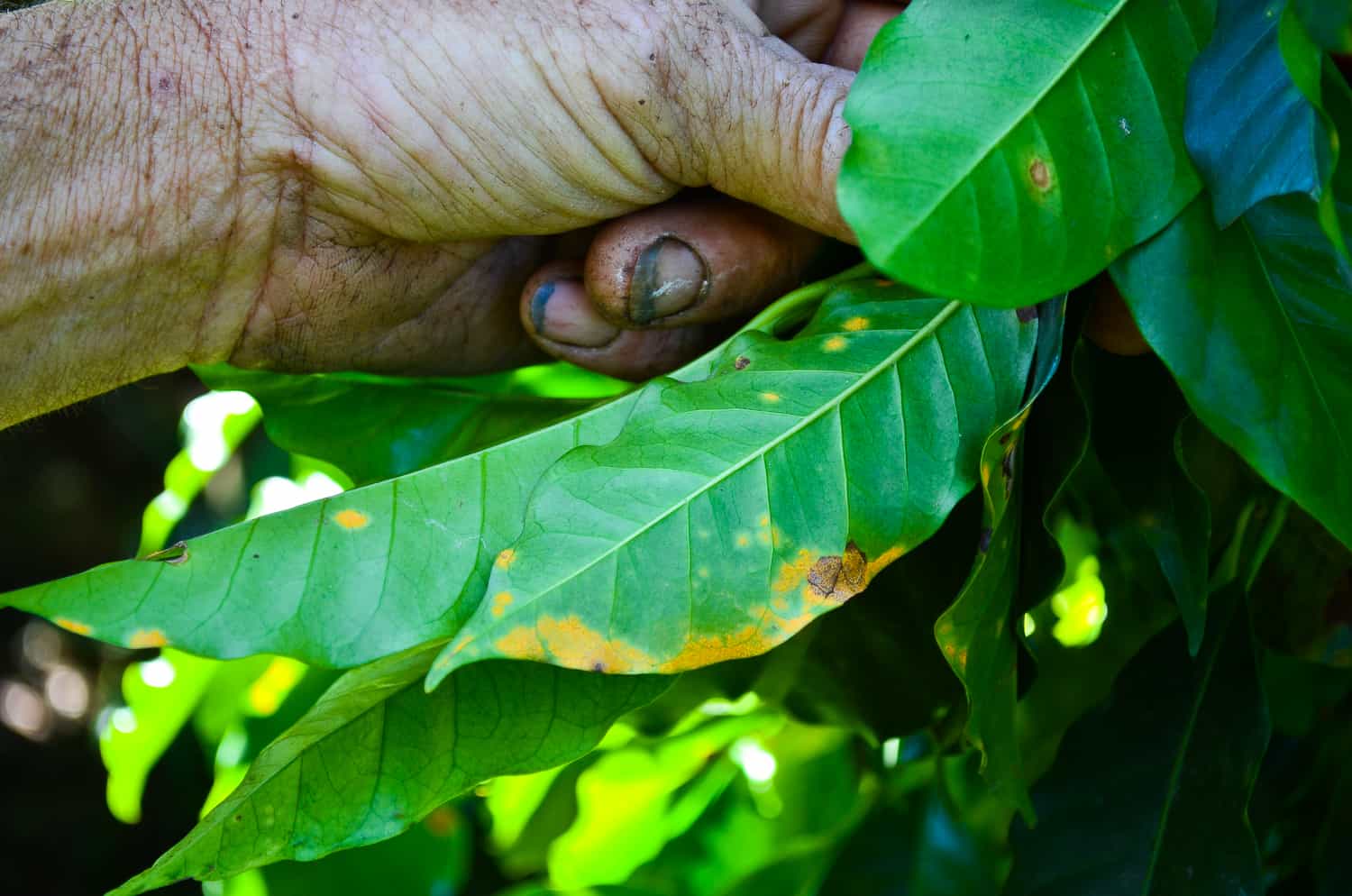
A new smart phone app could help warn coffee farmers in Costa Rica about an impending outbreak of the fungus roya, or other pests. Developed by the United Nations Food and Agriculture Organization, Satcafe crowdsources information from farmers across Central America to help avoid another region-wide coffee plague. Starting Thursday, specialists from the FAO will train technicians and farmers on how to use the new app.
In 2012, Central America’s coffee harvest was decimated by roya, causing nearly $1 billion in damage across the region. Several countries in the isthmus, including Costa Rica, declared a state of emergency in response to the crisis. Since then, harvests across the region have been significantly affected by the fungus, which attacks the plant’s leaves and turns its fruit dried and black. Experts named climate change and poor maintenance, among other factors, to blame for the spread of roya.
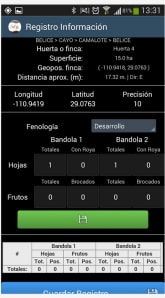
Gustavo Bornemann, a FAO consultant for the region, compared the app to the crowdsourced traffic and map app Waze, warning farmers when there is trouble on the horizon. Farmers can walk out into their fields, input the data directly into the app and upload it immediately if they have Internet access. Otherwise, participants can download the data to a computer for upload later.
Bornemann said the vagaries of public funding for collecting field data on roya or other pests often lead to inconsistent or unreliable information about conditions in coffee fields. By decentralizing the data collection with a free app, available on the Google Play store for Android devices, FAO hopes to harmonize the information collected about roya, climate and other pests spanning Central American countries and the Dominican Republic.
“On an individual level, farmers know their farm and what to do, but this is a regional problem that requires more information for governments to act on,” Alejandro Lagunes, a specialist with the FAO, told The Tico Times. “Pests don’t stop at national borders,” he added.
Participating farmers will be assigned a QR code that identifies them and their farm. Any information they generate based on sample sizes of 30 plants will be private and anonymously added to the region’s data. The crowdsourcing effort has gotten off on a good foot with a pilot project in the Dominican Republic. Farmers and government agencies will be able to view the public information and maps online at siatma.org.
FAO developed the app with the support of PROMECAFE, a regional coffee organization, the Central American Integration System, and the Tropical Agricultural Research and Higher Education Center, among others.
Miguel Barquero, plant health coordinator for the National Coffee Institute (ICAFE), said that the app will help streamline the collection and analysis of field data, providing up-to-date recommendations to some 20,000 farmers who receive alerts from ICAFE. The ICAFE coordinator said one of the challenges facing the initiative is making sure that farmers and technicians have the tools in hand to collect the data.
“It’s about making sure that farmers modernize their tools, without that, we can’t move forward,” Barquero said.
“People told me that producers don’t participate, but I don’t think that’s always true,” Lagunes said, thinking back on a successful crowdsourcing experiment with citrus farmers in his native Mexico. “When people understand that there is information that they can use, they’ll participate,” he said.
Barquero said that there have not been significant changes in the spread of the fungus during the last five months. Thanks in part to more active management of the fungus, ICAFE estimates that coffee production in Costa Rica will grow 4.5 percent during the 2014-2015 season over the same period last year to more than 1.55 million 60-kilogram sacks of processed coffee. The regions of Pérez Zeledón, Coto Brus and Turrialba are the most affected by roya.
The next challenge facing recovering coffee farmers will likely be the drought affecting many countries in Central America. Costa Rica has seen an 18 percent decrease in rainfall this year, which can contribute to conditions conducive to fungal growth on coffee tree leaves.
Correction Aug. 26, 2014: This post originally reported Alejandro Lagunes’ name as Lagunas.





