

Although Shakespeare’s Juliet spoke true when she said, “A rose by any other name would smell as sweet,” she was referring to given names passed on to us by parents and ancestors. What others choose to call us, or what we choose to call ourselves, is a different matter. To understand what really lies behind the labels others give us or we give ourselves, it is useful to look at the origin and history of these labels.
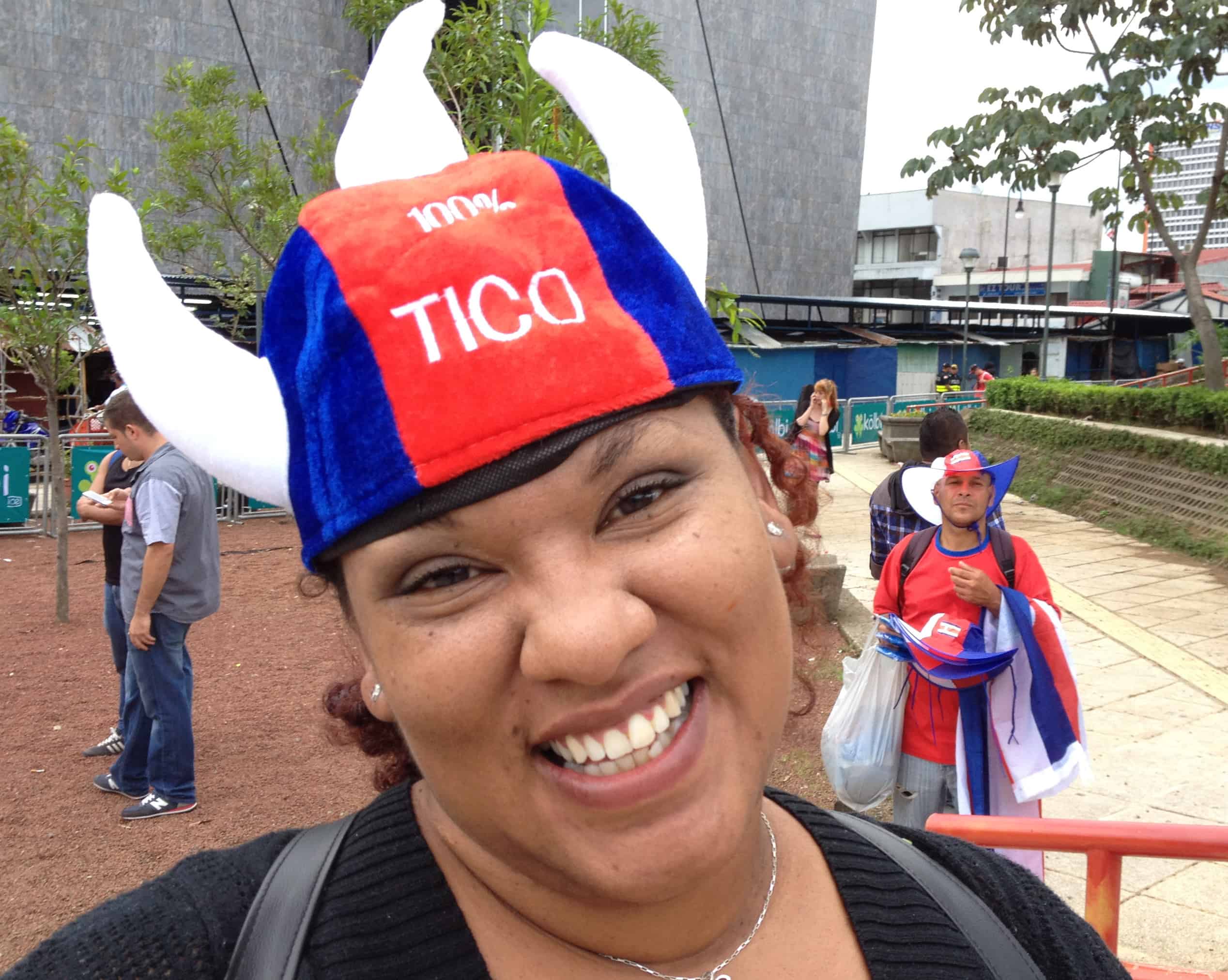
Many of you may already know that the origin of the word tico, the affectionate name for Costa Ricans, comes from the diminutive “-ico.” This suffix, applied to the ending of a to/ta word like gato/gata (cat), indicates small size, youth, familiarity, or fondness. Typically, to say “little cat” or “kitten,” a Spanish-speaker would say gatito. However, Costa Ricans often say gatico. This suffix was, and still is, used so extensively by Costa Ricans that they came to be known as ticos. It’s an endearing term, free of the sarcasm and prejudice of racial slurs, and Costa Ricans proudly use it for themselves. Just as an Oregonian might call themselves a “Webfoot,” a Costa Rican is proud to be a tico.
But what about the word gringo, the name they give us? They haven’t always called us gringos. Some years back, we were simply machos. Only in Costa Rica does macho mean “blond” or “North American.” While macho can still refer to a U.S. citizen, gringo has largely replaced it. Although in parts of the Americas, gringo can mean any foreigner or English-speaker, most ticos use it to designate only U.S. citizens.
Their interpretation of gringo may actually be historically accurate. Two popular stories about its origin involve U.S. citizens. One theory suggests that U.S. soldiers during the U.S.-Mexican War often sang “Green Grow the Lilacs.” Mexicans began identifying the soldiers by the song’s first words, “green grow,” which became gringo in Spanish.
Another theory is that gringo was once used to refer to Texan soldiers, who supposedly wore green uniforms, or “green coats,” as the Mexicans called them. Spanish pronunciation transformed “green coats” into gringos. Initially, it referred to Texan soldiers, then Texans, and eventually all U.S. citizens. However, it’s unlikely that the soldiers themselves would call each other “green coats,” so the origin remains questionable.
Some linguists believe the term is too widespread to have emerged so recently and suggest it may trace back to at least 16th-century Spain. At that time, foreigners were called griegos (Greeks) – similar to the English phrase, “It’s Greek to me.” This is referenced in Cervantes’ Don Quixote, and over time, griego may have evolved into gringo.
Whether any of these theories are true is uncertain. What is certain is that the word’s presumed origins are anything but friendly, and gringo is still an insulting term in Mexico. In Costa Rica, however, whether it’s pejorative depends more on the speaker’s attitude and tone than on the word itself. If they don’t like us, it may have a sarcastic edge. If they do, it can be a convenient and sometimes affectionate way to distinguish us from other foreigners.
This brings us back to the original point: What’s in a name? Ticos rarely call us americanos because, as Central Americans, they are also Americans. Sometimes, they refer to us as norteamericanos, but this term also applies to Mexicans and Canadians. The most accurate term, estadounidense, is seldom used. So what are they to call us if not gringos?
Perhaps the real issue isn’t what they call us, but what we call ourselves. We are like the Sioux Native Americans, whose word for themselves meant “the people.” We don’t acknowledge that others in the Americas exist. We don’t even have a word like estadounidense (Unitedstatesian?). We are simply Americans, the one and only. This term likely originated during colonial times and has persisted ever since. However, we should consider that our self-designation as “Americans” may seem arrogant to others in the Americas.
So, what’s in a name? I leave the answer up to you. As for me, when ticos ask about my nationality, I never say I’m American. Sometimes, I say I’m estadounidense. Increasingly, I find myself saying I’m gringa. I don’t know – I’ve grown rather fond of the word.





