

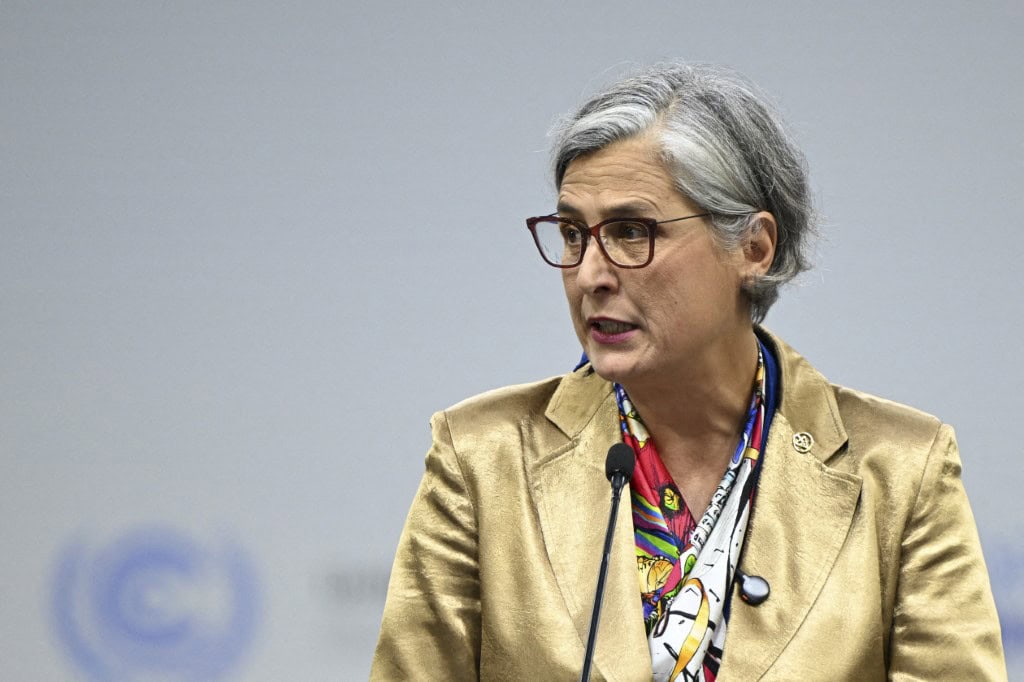
Francesca Albanese, the United Nations special rapporteur on the occupied Palestinian territories, spent last night inside Juan Santamaría International Airport after Costa Rican immigration authorities refused her entry. Hours later, the Constitutional Court ordered that she not be removed until it rules on her case.
Albanese, an Italian lawyer, arrived yesterday afternoon on a flight from Paris. She had been invited by the University of Costa Rica (UCR) to receive an honorary doctorate at a ceremony scheduled for this morning. Omer Badilla, director general of the General Directorate of Migration and Immigration, said in a video statement sent to media that the immigration police applied a rejection under the General Law of Migration and Immigration because Albanese is the subject of an international alert for alleged links to terrorist acts.
He did not say which body issued the alert or what acts it referred to. The directorate said separately that the refusal rested on national security grounds and that Albanese had been placed at the disposal of the airline that flew her in, so it could arrange her departure.
Albanese has denied any link to terrorism. Speaking to local media from the terminal, she called the accusation ridiculous, said not even the United States had gone that far, and asked authorities to present proof or apologize. She said she had been told informally that the decision was related to agreements with Washington.
The U.S. government sanctioned Albanese in July 2025 over her work as rapporteur, a move criticized at the time by UN High Commissioner for Human Rights Volker Türk. Israel barred her from entering its territory in February 2024.
Late Thursday, the Constitutional Chamber, known as Sala IV, admitted a habeas corpus petition challenging the refusal. In a resolution signed last night by Magistrate Luis Fernando Salazar Alvarado, the court ordered immigration authorities to ensure Albanese does not leave Costa Rica until the case is decided, unless she chooses to go freely, with legal counsel and after being warned of the consequences.
The court gave the immigration director and the head of the Professional Migration Police 24 hours from notification to file a sworn report with certified copies of the relevant documents. Under the Constitutional Jurisdiction Law, disobeying the order is punishable by three months to two years in prison or a fine. Magistrate Anamari Garro Vargas was assigned to the case.
One petition was filed by Frente Amplio lawmaker Joselyn Sáenz, who argued that U.S. sanctions are not binding on Costa Rica and do not by themselves justify a rejection under national immigration law. Her filing asks whether the refusal is tied to those sanctions or to Costa Rica’s commitments under the Shield of the Americas security framework with Washington and requests that Albanese be allowed to contact her lawyer and the Italian consulate.
The UCR administration called the situation extremely serious, asked immigration authorities and the Foreign Ministry to explain the legal basis for the decision and requested due process for Albanese. The university’s governing council said it deeply regretted the situation and reaffirmed its commitment to academic freedom.
Türk said he was very concerned and urged Costa Rican authorities to reconsider urgently and allow her entry. Israel’s ambassador to the UN, Danny Danon, publicly praised the decision.
The case comes as President Laura Fernández, who took office in May, has moved Costa Rica closer to Israel and the United States. Last week the country shifted its stance on UN votes on Israel and the Palestinians and in May the government said it could open an embassy in Jerusalem. UN special rapporteurs have raised concerns about Costa Rica before, including a 2025 warning that the country’s judicial independence was at risk.
It was unclear early this morning whether Albanese would be able to attend the ceremony. The court’s ruling, expected once immigration authorities file their report, will decide whether she can enter or must leave and may clarify how far foreign sanctions and unexplained security alerts can shape who is allowed into the country.





