

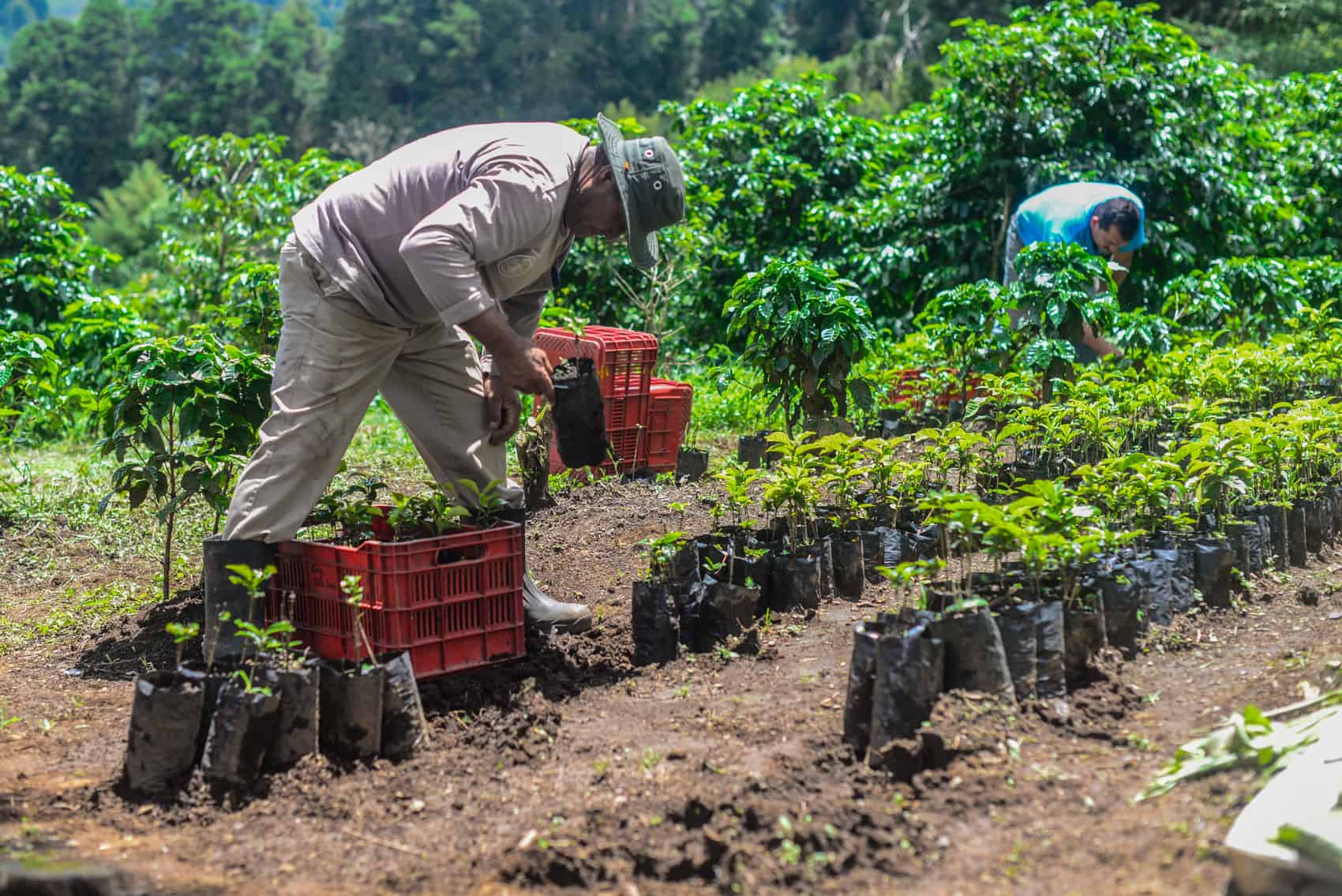
Costa Rica’s coffee growers now expect a harvest 10% to 15% smaller than first estimated as El Niño’s irregular rains and rising heat reach farms across the country, according to the Coffee Institute of Costa Rica (Icafé). Rice, banana, melon and cattle producers are issuing similar warnings, and the Central Bank now projects that the farm sector will shrink next year.
Miguel Barquero, deputy director of Icafé, said irregular rainfall delayed fertilization by about 30 days and that harvest estimates have fallen across the country’s coffee regions. He added that the quality and weight of export-grade green coffee are also being affected, while the National Meteorological Institute (IMN) projects higher temperatures in December and January.
In its October Monetary Policy Report, the Central Bank of Costa Rica (BCCR) lowered its outlook for agriculture, which it now projects will grow 0.7% in 2026 and contract 0.5% in 2027. The bank cited a larger drop in coffee production, lower onion and sugarcane output, the effects of El Niño and higher international fertilizer prices. As recently as April, it had projected 0.8% farm-sector growth for 2027.
The BCCR said pineapple and coffee are especially exposed because much of their production sits in areas where rainfall is expected to be scarce, and higher temperatures could spread fungi and plant disease. For livestock, it expects less pasture and water to lower productivity and raise operating costs. In its July report, the bank had already warned that climate shocks could create a negative supply shock, mainly in agriculture, and add to inflationary pressure.
Citing IMN projections, the BCCR said El Niño is expected to remain in the very strong category from October 2026 through February 2027 before easing to strong in March and April, in line with global forecasts of an El Niño peak in December. Rainfall is forecast to drop about 60% in the North Pacific and about 40% elsewhere on the Pacific coast, in Upala, Los Chiles, Guatuso and the Central Valley. The Caribbean slope and the rest of the Northern Zone are expected to see 10% to 15% more rain than average.
That split is already visible in rice fields. Mainor Cruz, executive director of the National Rice Corporation (Conarroz), said the Brunca region and the Central Pacific have reported losses tied to rainfall deficits, while the Huetar Norte region has reported problems from excess rain. He said the losses cannot yet be quantified and that a technical assessment is underway, with November a key month for the North Pacific harvest.
On the Caribbean side, the National Banana Corporation (Corbana) said excess rain has affected nearly all banana-growing cantons, with some plantations flooded for 12 to 36 hours. A plantation needs about 200 millimeters (7.9 inches) of rain a month, but some Caribbean areas recorded 280 millimeters (11 inches) in two days in August, the same wet pattern that has threatened the region’s cacao harvest. Corbana said temperatures running 0.5 to 1 degree Celsius (0.9 to 1.8 degrees Fahrenheit) above average favor black sigatoka, a fungal disease, and that El Niño effects could last until June 2027.
Sigurd Vargas, president of the melon and watermelon exporters’ chamber Caproexmes, said producers expect a strong rise in pests, mainly insects, during the November-to-May season. He also warned of possible flowering losses from heat and said planted area, hiring and exports are likely to fall because of the exchange rate, input costs and higher diesel prices, pressures that coffee growers have also blamed for job cuts on farms. Vargas said the Agriculture Ministry has not responded to a bio-input proposal the sector submitted on May 26.
Pineapple growers have not yet felt an impact, according to Abel Chaves, president of the pineapple producers’ chamber Canapep. He said losses could come from excess rain in the Atlantic zone, which blocks machinery access, and that because harvests are planned a year ahead, any drop in volume would likely appear in late 2026 or early 2027.
Cattle ranchers expect the hardest blow once the dry season sets in. Luis Diego Obando, executive director of the Livestock Corporation (Corfoga), said national production has not yet been affected, though rain has already caused problems in the northern zone. He said producers are building water reservoirs and pasture reserves and that Corfoga is coordinating with the National Emergency Commission (CNE). Costa Rica has already issued its first red alert at sea as drought hits Guanacaste.
Together, the warnings describe a dry season in which too little rain on one coast and too much on the other could shape what reaches the country’s markets. With the Central Bank flagging possible pressure on prices and officials already warning of risks to water supplies, the coming months will test farms, food budgets and public planning alike.





