

Two sloth conservation organizations working in Costa Rica helped shape a bipartisan bill in the U.S. Congress that would ban most imports of live sloths into the United States. The measure follows the deaths of dozens of sloths brought to Florida for a tourist attraction that never opened.
U.S. Representatives Maxwell Alejandro Frost, a Democrat, and Laurel M. Lee, a Republican, both of Florida, introduced the Stopping Legalized Organized Trafficking and Harm to Sloths Act, or SLOTHS Act yesterday. The date coincided with International Sloth Day an the bill was developed with the Sloth Protection Alliance, a coalition formed this year by The Sloth Conservation Foundation (SloCo) and The Sloth Institute (TSI). Both organizations carry out research, rescue and conservation work in Costa Rica.
The legislation responds to the case of Sloth World Orlando, a planned attraction that intended to charge visitors for close encounters with sloths. According to the Florida Fish and Wildlife Conservation Commission (FWC), the business imported 61 sloths from Guyana and Peru between December 2024 and March 2026.
Most of those animals died before the attraction could open. The conservation groups put the death toll at 58, while an investigation by Orange County authorities documented 57 deaths. FWC inspection records show the sloths were held in makeshift warehouses in Orlando and Orange County. Necropsy reports released by the agency found systemic viral infections in several of the animals, along with neurological, respiratory and gastrointestinal disease and signs of immune suppression.
Investigators ultimately found insufficient evidence to pursue criminal charges against the facility’s personnel. Surviving sloths were surrendered to the Central Florida Zoo and Botanical Gardens in Sanford, where some later died, and the FWC temporarily suspended sloth imports into the state in May.
Rebecca Cliffe, founder and executive director of The Sloth Conservation Foundation, said the groups promised after the deaths to do everything in their power to keep such a case from happening again. According to Cliffe, the Florida deaths exposed a much larger problem in which hundreds of wild sloths are captured and sold each year.
The SLOTHS Act would prohibit importing live sloths into the United States for commercial purposes, including the exotic pet trade and attractions that let visitors handle or interact with the animals. Research by The Sloth Institute has identified Miami as the main entry point for live sloth shipments into Costa Rica.
Limited exceptions would remain for scientific research and conservation breeding. Certain transfers to accredited zoological institutions would still be allowed under specific conditions, and dead specimens could be imported for research. The bill sets two tiers of financial penalties. Violations could bring civil fines of up to $20,000, while anyone who knowingly breaks the law could face criminal fines of up to $100,000.
Authorities could also confiscate illegally imported animals and revoke the federal permits of violators. The measure would not apply to sloths already living in the United States. The proposal has drawn support from the Association of Zoos and Aquariums, the Animal Welfare Institute and the International Fund for Animal Welfare.
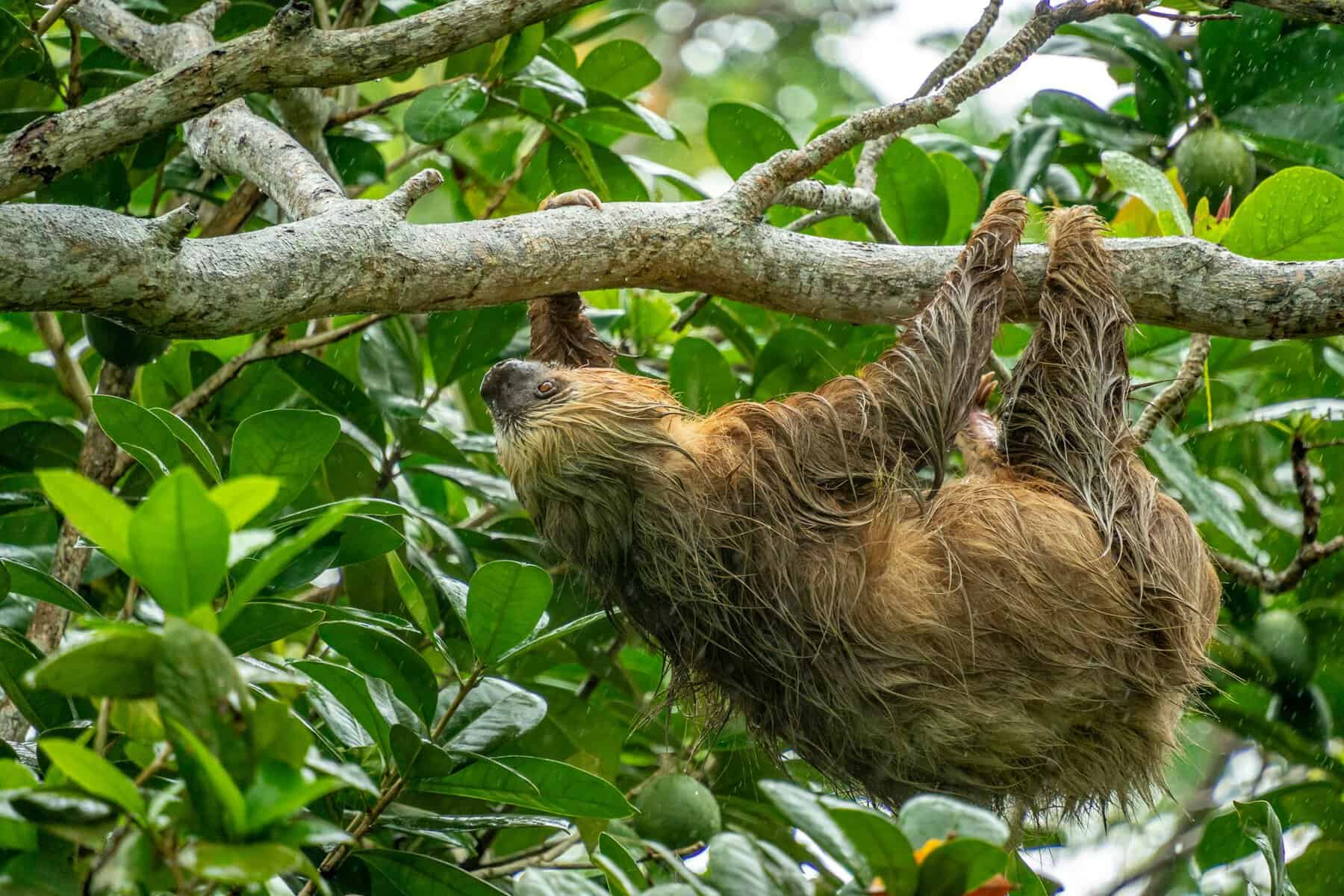
Costa Rica is home to two native species, the brown-throated three-toed sloth and Hoffmann’s two-toed sloth. Both are among the most recognizable animals in our forests and are commonly seen in areas such as Manuel Antonio, the southern Caribbean coast and around La Fortuna, as outlined in our guide on where to see sloths in Costa Rica.
The Sloth Institute, co-founded by Sam Trull, focuses on rescuing, rehabilitating and releasing injured and orphaned sloths. The Sloth Conservation Foundation, led by Cliffe, conducts research and works to protect wild sloths and their habitat. Both groups regularly treat animals hit by vehicles, electrocuted on power lines or displaced by deforestation and development, problems Costa Rica has also addressed through its recent wildlife crossings law.
Costa Rican law already restricts capturing and keeping wild animals. Conservationists say, however, that international demand continues to drive trafficking in countries where sloths live naturally, a trade that Costa Rican authorities have warned is increasingly tied to organized crime.
The two organizations argue that the popularity of sloths on social media and in hands-on wildlife experiences has created dangerous demand for animals poorly suited to captivity. Sloths have specialized diets and sensitive digestive systems, and long-distance transport and frequent handling can cause severe stress and illness.
There is no indication that any of the sloths that died in Florida came from Costa Rica. By limiting access to one of the world’s largest markets for exotic animals, however, the groups say the bill could reduce pressure on wild sloth populations across Central and South America.
The SLOTHS Act must still pass both chambers of Congress and be signed by the president before it can become law. For the conservationists behind it, its introduction marks a first step toward keeping sloths in the forests where they belong.





