

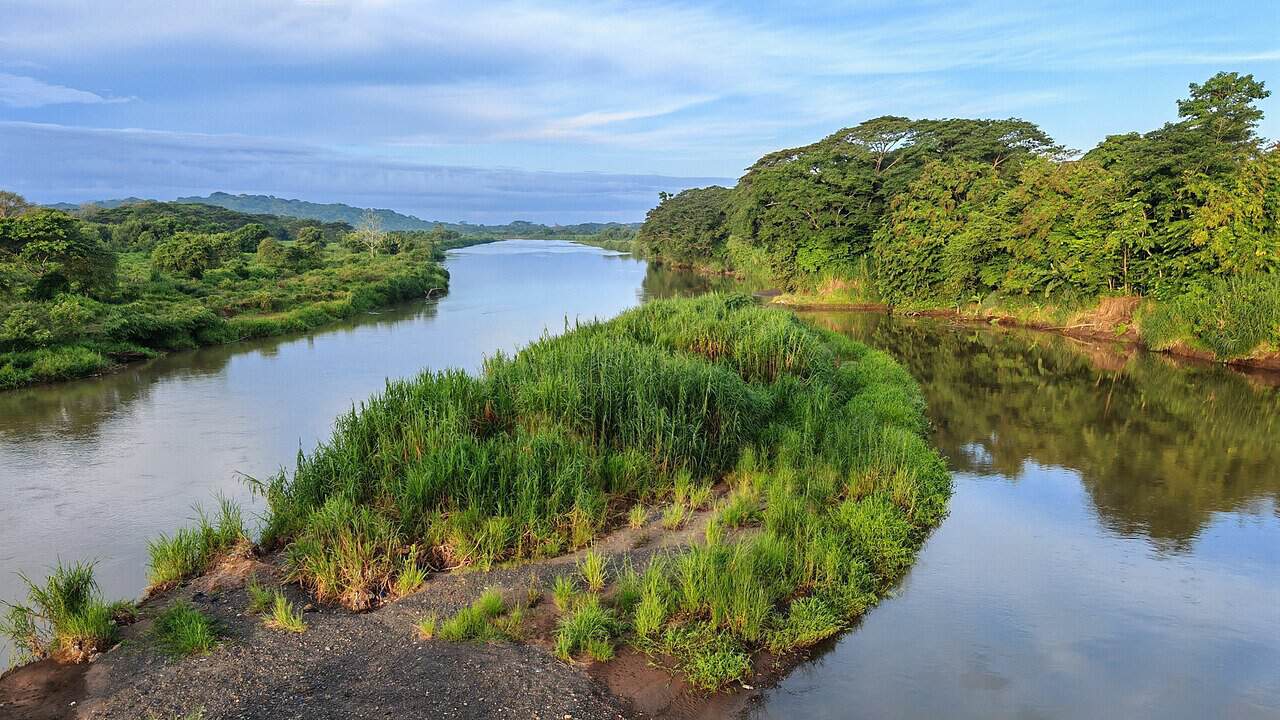
Environmental authorities are preparing legal action after inspectors found a long walkway, dock and floating platform extending into a protected area along the Río Tárcoles, with officials warning that the construction could be affecting mangrove habitat.
Officials from Costa Rica’s National System of Conservation Areas (SINAC), inspected the site on Friday after an environmental complaint had been pending for nearly four months. Inspectors documented a 148-meter-long walkway, roughly 486 feet, leading toward the river, along with a 15-meter dock and a floating deck used to board boats.
The inspection also found a parking area and two structures being used for storage and bathrooms. According to SINAC, part of the infrastructure is located within legally protected areas and the channel of the Río Tárcoles. Officials also said there could be damage to mangrove vegetation, although the extent of any environmental impact has not yet been established.
SINAC’s Orotina office said the findings will now be referred to the appropriate judicial and administrative authorities. Inspectors recorded the visit under inspection report No. 2570 and prepared a separate technical report detailing what they found. The case began on June 9, when environmental attorney Walter Brenes Soto filed a complaint alleging that docks and floating structures were operating along the Tárcoles without the necessary permits.
A first attempt to investigate the complaint on June 25 did not find the structure now documented by SINAC. Officials from the Ministry of Public Works and Transport (MOPT), and the Municipality of Garabito searched approximately one kilometer of the area but were unable to find the dock listed in the complaint.
During that visit, officials did find a different dock at Playa Azul associated with Cocodrile Man Tour and the Garabito municipality placed closure seals on it. Authorities also spotted a boat tied up on the opposite bank of the river in an area resembling the location shown in material submitted with the original complaint
Municipal officials checked Costa Rica’s National Territorial Information System and found that the approximate location appeared on official maps within a wetland and a biological corridor. At the time, however, inspectors could not reach the site and did not confirm either the structures or environmental damage.
The permit situation also raised concerns as MOPT reported that its Directorate of Port and Coastal Engineering and Construction had not issued technical approval for any dock on the Río Tárcoles and as of the June inspection, had no public or private application pending for one.
The lack of a follow-up to the SINAC inspection eventually reached Costa Rica’s Constitutional Chamber (Sala IV). Brenes filed a appeal on September 11 challenging the delay. On September 28, the court agreed to examine the complaint and ordered SINAC’s executive director and the regional director of the Central Pacific Conservation Area (ACOPAC), to provide reports on what authorities had done in response to the environmental complaint.
SINAC subsequently acknowledged the delay and said access to the site had been difficult because inspectors needed boat transportation to reach the area. The agency said the complaint remained active and under investigation. The October 2 inspection followed. The case comes amid broader scrutiny of development and tourism infrastructure around the Tárcoles River.
Earlier this year, prosecutors opened a separate investigation involving a tourist crocodile viewing platform near the Tárcoles bridge over allegations that construction entered a protected river area. The developer in that case disputed claims that the project lacked the required permits.
As for the newly inspected dock, several important questions remain unanswered. Publicly available reports do not identify the owner or operator of the structure, and SINAC has not yet announced whether authorities will look to remove it, order operations suspended or pursue criminal charges.
For now, SINAC has confirmed that infrastructure extends into protected parts of the Río Tárcoles area, that possible impacts to mangrove habitat are being examined, and that the findings will be turned over to authorities for further action.





