
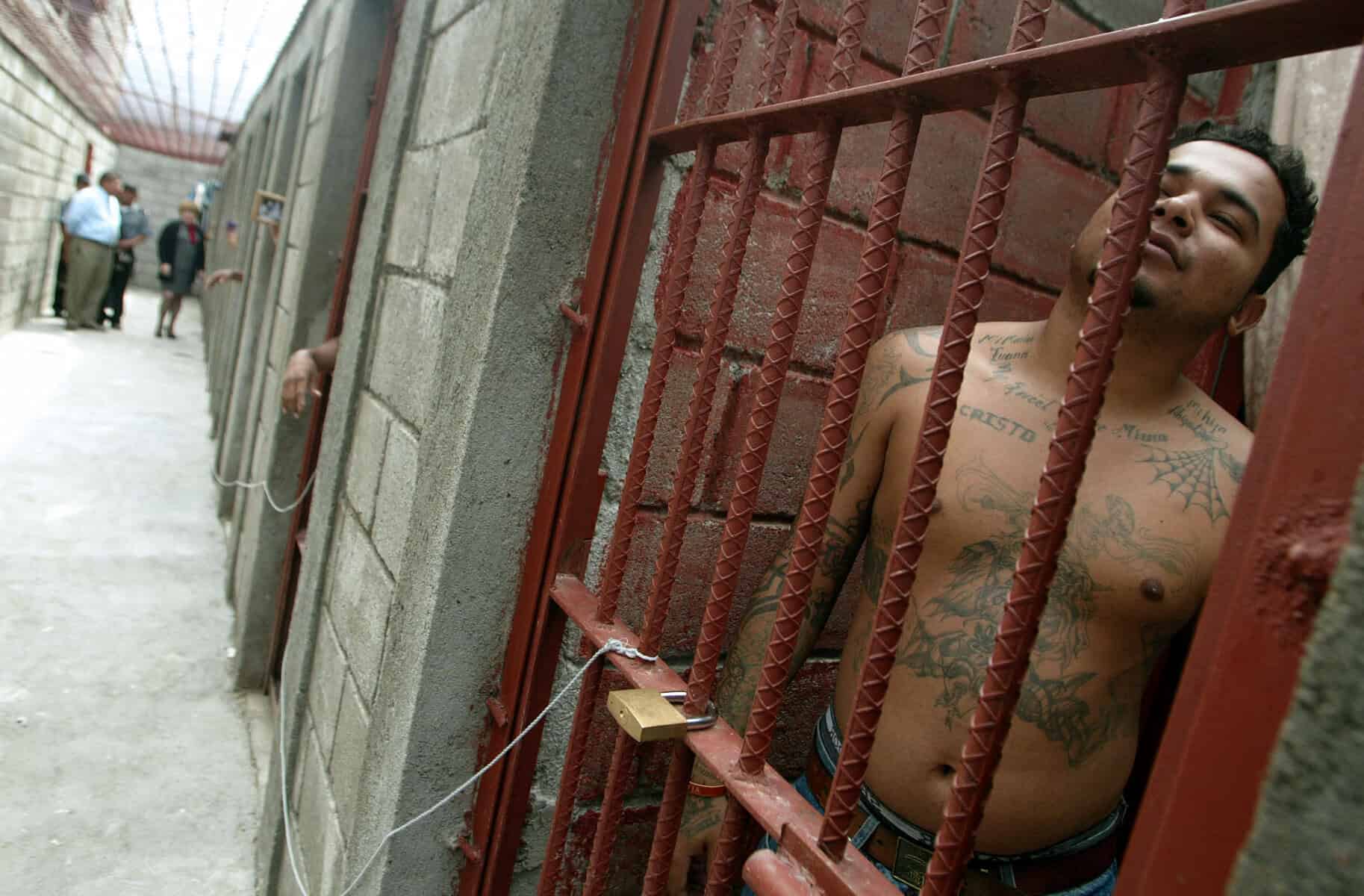
Yesterday, Honduras adopted measures that tighten prison conditions, similar to those imposed by the government of Salvadoran President Nayib Bukele, as part of a strategy against gangs and drug trafficking. Gangs such as Barrio 18 and its archrival Mara Salvatrucha operate in Honduras and have been linked to drug trafficking and the country’s high homicide rate of 24 per 100,000 inhabitants, four times the global average.
The prison restrictions approved by Congress, at the request of the right-wing government of President Nasry Asfura, follow last Friday’s designation of several criminal groups, including gangs, as terrorist organizations. The measures are aimed at isolating high-risk prisoners and eliminating alternatives to imprisonment for alleged members of those criminal organizations.
The package amends the Criminal Procedure Code and establishes that suspected members of those groups will be sent to maximum-security prisons following their arrest. It also stipulates that prisoners belonging to those criminal groups will be allowed only one hour of sunlight and outdoor time, either individually or in small groups of no more than two people.
The measures also call for the creation of specialized courts dedicated exclusively to cases involving members of those groups. The provisions were approved on the same day that Shield of the Americas, the Washington-led regional anti-drug alliance, announced an agreement to combat around 20 criminal organizations across the region.
Bukele’s anti-gang campaign, which has reduced homicides to historic lows, has been carried out under a state of exception that has led to the imprisonment of about 92,000 people without judicial warrants since 2022. Asfura, an ally of U.S. President Donald Trump, took office in January with reducing crime as one of his main objectives.