

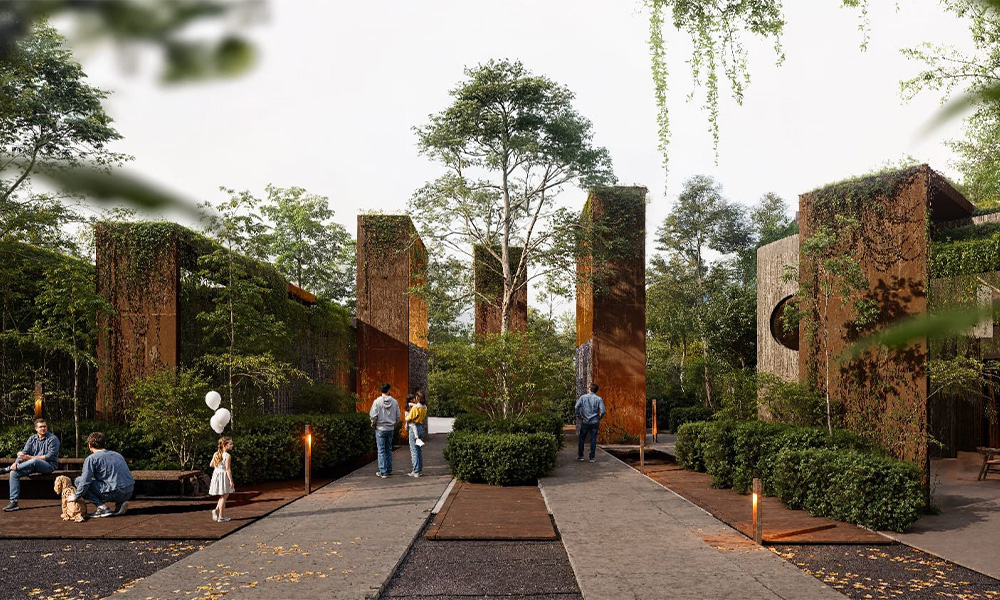
San José residents will get another chance to walk the grounds of the former Simón Bolívar Zoo on Saturday, October 3, when the site in Barrio Amón opens to the public for a free celebration of International Coffee Day. The event runs from 10 a.m. to 4 p.m. and brings together coffee tastings, local design, food, vinyl records, live music and walking tours of the capital. The main attraction will be the National Chorreador Championship, where competitors show off their skill with the chorreador, the simple wooden stand and cloth filter that Costa Ricans have used for generations to brew their daily cup.
The setting is fitting as Barrio Amón was built largely by the coffee elite of the late nineteenth and early twentieth centuries, and the park sits on the edge of that historic neighborhood above the Torres River. For many Costa Ricans the visit will also carry a dose of nostalgia. Families returned to Simón Bolívar for generations, and for countless children it was the first place they ever saw a lion, a tapir or a scarlet macaw up close. The park has been closed to regular visitors since May 2024 and opens only for occasional events while it is transformed into the country’s first urban natural park.
Its story begins in 1884, when Swiss naturalist Henri Pittier created a garden of plants and animals attached to the Costa Rican Geographic Institute near the Liceo de Costa Rica. Neighbors complained about the noise, and the collection was eventually moved to the northern side of the city on land donated by the Otoya family in 1906. An executive decree dated July 5, 1916 formally founded the national botanical garden and zoo, and the park opened to the public on July 24, 1921, timed to the birthday of Simón Bolívar, the South American liberator whose name it carries.
For its first three decades the park was managed by the neighboring National Museum. Oversight passed to the Ministry of Agriculture in 1953 and later to the national parks service. Over the years people from across the country sent in wildlife ranging from boas and coral snakes to anteaters, sloths, deer, coatis, armadillos and pacas. In 1948 the education minister even asked the zoo for a tapir, marmosets and a black panther so that Costa Rican children could send them as a gift to the children of Los Angeles.
In its final years the collection included jaguars, ocelots, margays, jaguarundis, spider monkeys, capuchin monkeys, sloths and kinkajous, along with a small lagoon where caimans, mud turtles, tree frogs and herons shared the water. The private Fundazoo foundation took over administration in 1988, but criticism of conditions at the zoo grew steadily in the decades that followed.
The turning point was Kivú, a lion who spent 18 years at Simón Bolívar. Authorities ordered him moved to a rescue center in December 2016 because of the conditions in which he was kept, and he died of kidney complications in February 2017. His case became a rallying cry for animal welfare groups, and the courts later rejected a lawsuit Fundazoo filed against the state over his death.
In 2022 the government announced it would not renew the foundation’s contract, and the zoo closed for good on May 10, 2024. Its animals were taken to the Rescate Wildlife Rescue Center in La Garita de Alajuela for veterinary evaluation, with the goal of releasing those healthy enough to return to the wild and finding permanent care for the rest.
In February 2025 the government declared the property Costa Rica’s first urban natural park, a new category of protected area administered by the National System of Conservation Areas. Six months later the Environment Ministry, the Culture Ministry and the Municipality of San José unveiled a master plan for the 2.63 hectare site, which forms part of the Torres River Interurban Biological Corridor. Its guiding idea is to give new meaning to what the site inherited rather than erase it.
Under the plan every animal enclosure will be removed, and the focus will shift to restoring the forest, the streams and the lagoon while protecting the park’s historic architecture. The old cages will be converted into spaces for recreation, education and art exhibitions. The National Museum will relocate part of its natural history collection to the grounds, and the design also calls for cultural performances, a wildlife observation tower and café areas. Officials want the park to anchor a cultural circuit linking it with the National Center for Culture, the Film Center, the National Theater Workshop, the Old Customs House, the National Library and the National Museum.
The full project is expected to cost $8 million (about ₡4 billion) over ten years, including construction and operations, with the first two stages budgeted at roughly $1.3 million (₡640 million). The plan is divided into phases, beginning with the basic work needed to open the gates, followed by the recovery of existing buildings and, in the final stage, new infrastructure. Officials originally hoped to welcome the public by the end of 2026, but more recent projections point to 2027.
Until then, special events such as the Amón Cultural festival in March and this month’s Coffee Day celebration remain the only way inside. Admission on October 3 is free, and visitors will be able to stroll the paths of a place that shaped childhood memories for much of the country, now seen through the lens of what it is about to become.





