

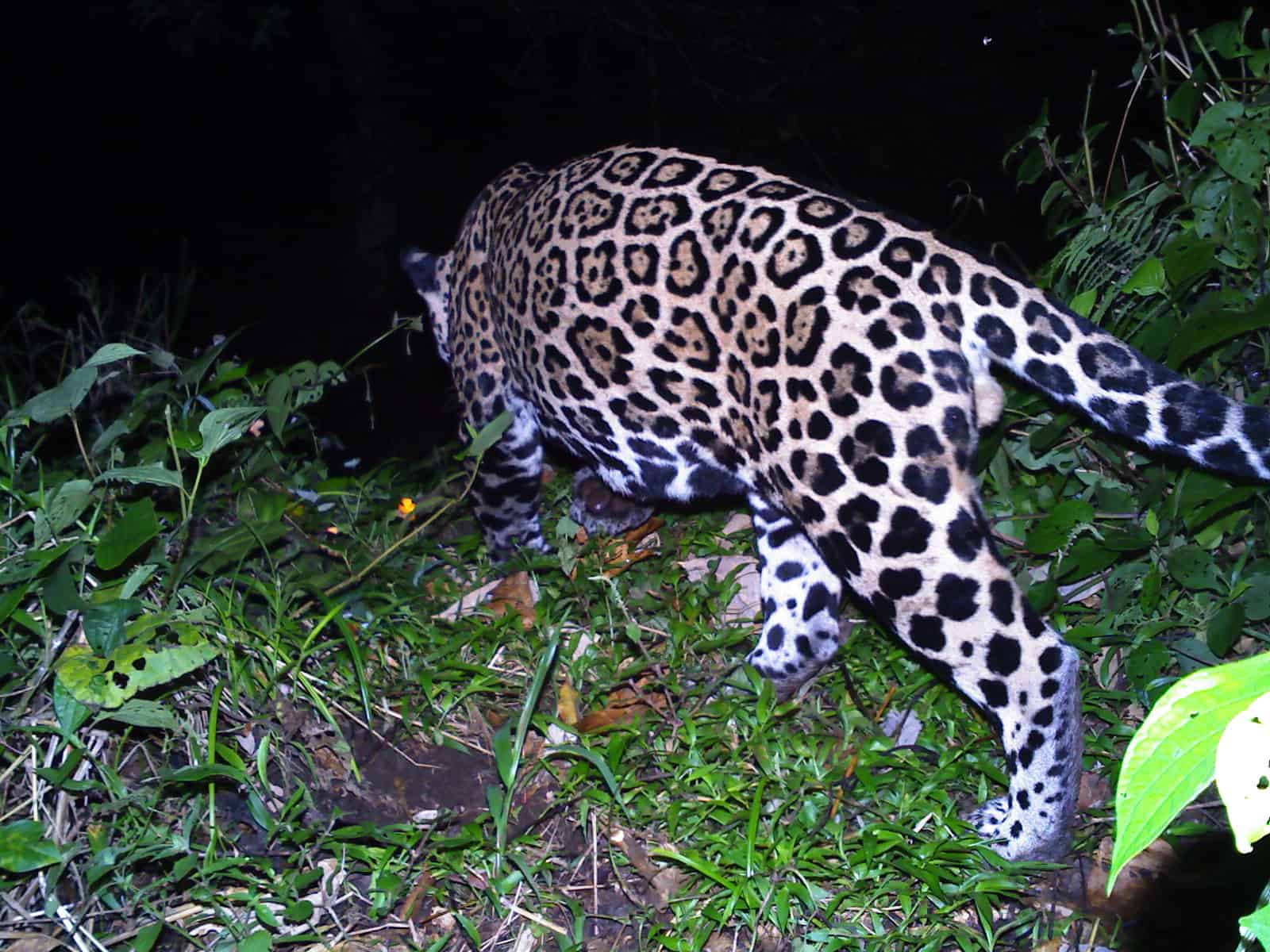
A jaguar that had not been recorded by a wildlife camera in Costa Rica since 2023 has been photographed again on the Osa Peninsula, giving researchers a rare confirmation that the animal survived a long stretch with no trace of its movements. The jaguar, known as Encanto, was first seen by Fundación Las Oncas on May 23, 2023. After that record, the animal disappeared from its camera-trap network entirely.
No further photographs or video followed and researchers were left unable to say whether Encanto had died, shifted to another part of the landscape, or simply stopped crossing in front of the lenses. That silence ended on April 18, 2026, when the jaguar was recorded again, nearly three years after the first detection.
The gap does not mean the animal was absent from the Osa Peninsula for that entire period. Jaguars range across large territories, and even an extensive camera network covers only a fraction of the forest at any moment. What the new image does establish is that Encanto survived, and eventually moved back through an area under monitoring.
Fundación Las Oncas operates roughly 35 camera traps across the Osa Peninsula and the Cordillera de Talamanca to track jaguars and other wildlife. The devices run around the clock, documenting animals that would otherwise be nearly impossible to observe in dense tropical forest.
Individual jaguars can be told apart because the pattern of spots on each animal, known as rosettes, is unique. Researchers compare a new image against photographs taken months or years earlier to determine whether the same cat has returned. That turns a camera-trap frame into something more useful than an unusual wildlife picture.
Over time, the records show which jaguars are using an area, how often they pass through, and when an animal vanishes or comes back. The cameras also capture behavior, movement patterns and the presence of prey species. In Encanto’s case, the rosette pattern supplied the evidence needed to confirm the identification after a long absence.
The return carries particular weight on the Osa Peninsula, one of the most important areas for jaguar conservation. Long-term research by the National University’s Jaguar Program has flagged declining records of jaguars and their prey across the Osa Conservation Area, with hunting identified among the pressures on both.
One animal reappearing on a camera is not evidence that the wider population is recovering. But sustained records of individual jaguars help scientists judge whether the cats are still moving through particular parts of the landscape and where. Maintaining connections between remaining forest blocks is among the central challenges. Jaguars need large territories and do not confine themselves to park boundaries, so protecting forest inside places such as Corcovado National Park addresses only part of the problem.
Forested corridors linking protected areas allow jaguars and other wildlife to move between habitats in search of food, territory and mates. Las Oncas has directed part of its work toward keeping the Osa Peninsula connected to the Cordillera de Talamanca, and says camera-trap data helps pinpoint which stretches matter most for that movement.
The organization does not publish the precise locations where individual animals are recorded, a precaution that reduces the risk of the information being used to track or disturb them. Jaguars in Costa Rica face habitat fragmentation, loss of prey and conflict with people. Animals are also killed in retaliation after attacks on livestock.
Their presence is treated as an indicator of ecosystem health, because sustaining a population of large predators requires extensive habitat and healthy numbers of other wildlife. Encanto’s reappearance adds one more data point about the jaguars still moving through the forests of the South Pacific.
After nearly three years without a record, a single camera hidden in the trees was enough to confirm the animal was still there.





