

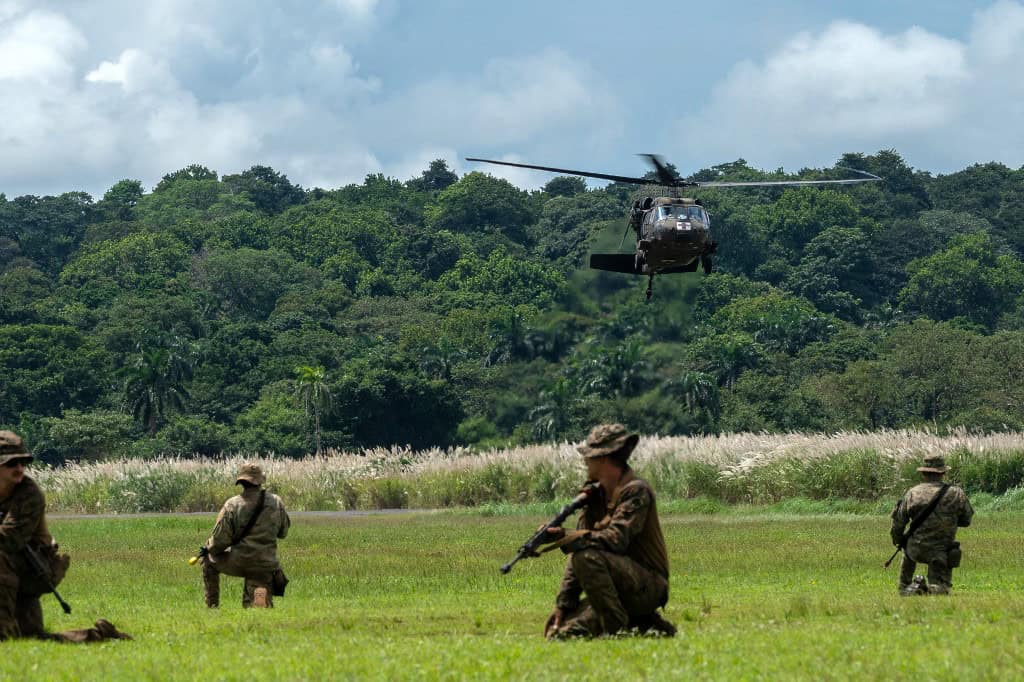
President Laura Fernández said US ground operations on Costa Rican soil would be good for national security if they pursued shared targets, while stressing that nothing concrete is under way and that any such deployment would require approval from the Legislative Assembly.
Fernández made the remarks in an interview with Reuters published Friday from Casa Presidencial in San José. Asked directly about the possibility of United States forces operating on the ground in Costa Rica, she said such an operation would obviously benefit national security if it involved pursuing a common objective against transnational crime, transnational drug trafficking or transnational terrorism.
The president indicated the subject had come up months earlier in conversation with Washington, and that she had explained which legal channels Costa Rica would require for anything of the kind. She was clear that no initiative is currently in motion.
The comments land against a specific backdrop. On August 13, US Defense Secretary Pete Hegseth told reporters in Panama that Washington intends to extend its campaign against alleged drug traffickers from international waters onto land, working alongside partner governments. Hegseth said at the time that the United States was working with Ecuador, Colombia and other partners to bring the fight to trafficking organizations on land.
That campaign at sea began in September 2025 and has drawn sustained criticism from jurists and human rights organizations who argue the strikes amount to extrajudicial killings. Ecuador launched joint missions with US forces in March. Hegseth also said Colombia, Guatemala and Honduras had agreed to allow joint operations on their territory, though Guatemala publicly denied reaching any such agreement.
Costa Rica has cooperated with the United States on security for years, principally through joint maritime patrols against drug trafficking. It is also a founding member of Shield of the Americas, the multinational coalition announced by President Donald Trump and formalized at a Miami summit on March 7, which then-president Rodrigo Chaves attended. Reuters reported that Costa Rica committed to coordinating efforts against transnational criminal organizations, particularly drug cartels.
Any move from maritime cooperation to boots on the ground would run into the Constitution. Article 12 abolished the army as a permanent institution in 1948. Article 121, subsection 5, gives the Legislative Assembly the exclusive power to grant or withhold consent for foreign troops to enter national territory and for warships to remain in ports and airfields.
Legislative analysts have said that authorization requires a qualified majority of 38 of the Assembly’s 57 deputies. Fernández’s Pueblo Soberano party holds 31 seats — the largest governing bloc since 1982, but seven votes short of that threshold. The Assembly authorized the entry of Salvadoran forces in 2024, though that case involved a humanitarian mission and is not a direct precedent.
Fernández also told Reuters she is not considering asking Congress for a state of emergency or the suspension of constitutional guarantees, a possibility she had raised during her campaign. Such declarations, popularized regionally under El Salvador’s Nayib Bukele, suspend core rights in exchange for expanded police powers.
Data from the Judicial Investigation Agency cited in the interview recorded 381 homicides in the first half of 2026, a decline of 14 percent from the same period in 2025. Violence tied to drug trafficking nonetheless remains at historically high levels, and crime dominated the February election that brought Fernández to office in May.
The president used much of the interview to renew her confrontation with the judiciary. She said she has been highly critical of how slowly the courts move, of specific cases in which judges released convicted offenders well before their sentences were served, and of administrative failures and potential corruption within the Judicial Branch.
Fernández has backed significant cuts to the judiciary’s budget and supports a proposal to shift appointment of the attorney general from the Supreme Court to Congress. Judicial authorities have rejected the corruption accusations and asked the president to produce evidence, arguing that the cuts planned for 2026 and 2027 would weaken democratic checks and the capacity to fight organized crime.
For a country that built much of its national identity and its international standing on the absence of an army, the question the president has now put into open circulation is a significant one. Nothing has been proposed, no request has reached the Assembly, and the votes to approve one do not currently appear to exist. But the conversation is no longer hypothetical, and it will run through the same Assembly session calendar as the judicial budget fight already under way.





