

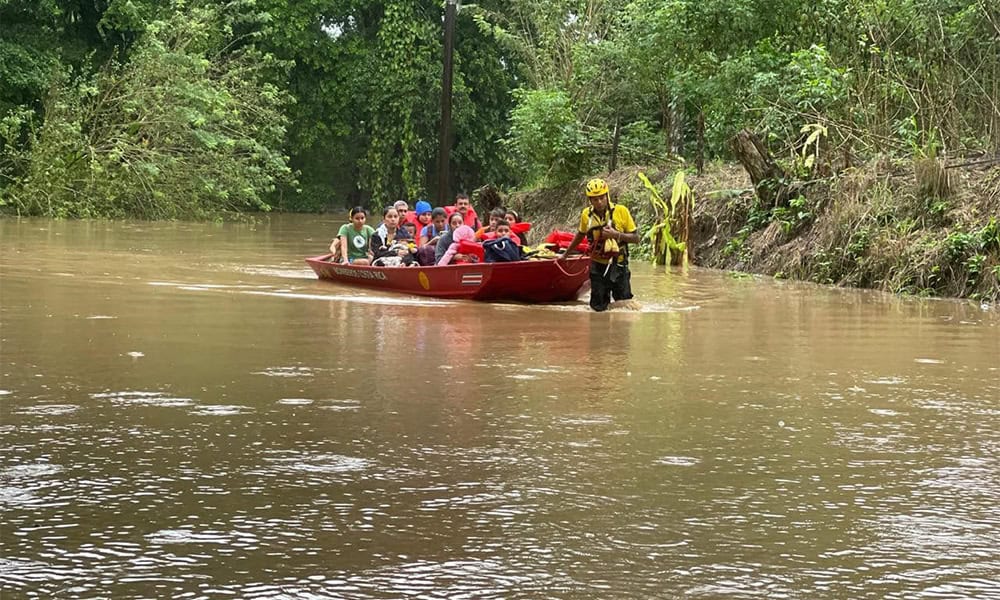
August gave us two very different versions of Costa Rica’s rainy season, with unusually little rain falling around Liberia while parts of the Caribbean recorded some of their wettest conditions in decades. Liberia, the capital of Guanacaste and a major gateway for tourists visiting the northwestern Pacific coast, received just 26.2 millimeters of rain during the entire month, or a little more than 1 inch.
At the other end of the spectrum, Canta Gallo in the northern Caribbean recorded 1,781 millimeters, or about 70 inches, during August. The Canta Gallo total made August 2026 the wettest month recorded there during the station’s 30 years of data, according to figures from Costa Rica’s National Meteorological Institute, known as the IMN and Canta Gallo was not alone.
Limón recorded 1,031 millimeters, or about 40.6 inches, making it the wettest August there in 27 years of records. Farther south, Manzanillo received 769 millimeters, or about 30.3 inches, its wettest August in 28 years. The Manzanillo total was roughly double the previous record for the month.
The Caribbean’s unusually wet month was driven by a combination of tropical waves, the position of the Intertropical Convergence Zone and moisture carried into Costa Rica by Caribbean trade winds. This combination repeatedly produced heavy rain over the Caribbean and northern area in August and some of the most intense weather came in the middle of the month.
For example, on August 15 and 16, the IMN counted 20 records for maximum rainfall over a 24-hour period. Mountainous areas of the Caribbean received between 200 and 360 millimeters, roughly 8 to 14 inches, in just 48 hours. Nine weather stations in the northern and southern Caribbean also registered their wettest August 16 on record, with the IMN reporting that the affected stations had at least 10 years of historical data.
By August 17, some stations had already received more rain than they would normally expect during the entire month. In some locations, accumulated rainfall had reached between 100% and 170% of the normal August amount before the month was even two-thirds finished. The situation in Liberia could hardly have been more different.
Only 26.2 millimeters (about 1 inch) fell there during August, showing how sharply rainfall can vary across Costa Rica even during the same weather systems. The northwestern area of Guanacaste and the Caribbean coast often experience very different weather patterns because of the country’s mountains and the direction from which moisture arrives.
The contrast is especially notable for anyone traveling here on vacation since someone spending August along Costa Rica’s Caribbean coast could have experienced days of intense tropical rainfall, while someone staying around Liberia and parts of northern Guanacaste may have encountered considerably drier conditions.
The August numbers also show why broad descriptions such as “rainy season” can be misleading in Costa Rica. Weather can vary dramatically between the Pacific, Central Valley, northern region and Caribbean, sometimes over relatively short distances.
The IMN continued to report unstable conditions in the Caribbean toward the end of August. On August 28, for example, Canta Gallo recorded as much as 110 millimeters of rain in a matter of hours, while forecasters warned that the Intertropical Convergence Zone remained close to Costa Rica and that trade winds were continuing to push moisture toward the country.
August 2026 will therefore go into Costa Rica’s weather records not because everything was exceptionally wet or dry, but because opposite extremes were occurring at the same time.





