
Most of the world’s chocolate begins its life far from where it is eaten. Cacao is grown in one country, shipped as a raw commodity to another, and turned into a bar somewhere the trees have never been seen. In Guanacaste, we set out to prove there was another way: to grow, ferment, roast, and wrap a bar of chocolate on Costa Rican soil, start to finish.
This year, our Maleku Chocolate 70% Dark Chocolate earned a Bronze medal at the International Chocolate Awards Americas competition, placing among the top dark chocolates judged across Latin America and the Caribbean. The winners were just announced. It adds to a collection of ten international awards the brand has earned since its first harvest, and it happened in a small factory on the coast of Guanacaste.
A Name That Carries a Responsibility
Our flagship line is named Maleku Chocolate after the Maleku people, one of Costa Rica’s Indigenous communities, whose relationship with the land in the country’s northern reaches stretches back centuries. Costa Rica is racing to preserve Indigenous languages and traditions that are at real risk of fading, and cacao sits close to the heart of that heritage. Long before it was a luxury good in Europe, cacao was cultural and even sacred across the Americas.
Choosing that name was not a marketing decision. It is a responsibility. It commits us to farming in a way that honors the land rather than exhausts it, and to telling an honest story about where fine chocolate in Costa Rica comes from. The Maleku are one of the smallest Indigenous groups in the country, and their language is among the most endangered. If this article does one thing beyond introducing you to a chocolate bar, we hope it sends you to read about who the Maleku are. That story is older and richer than ours, and it deserves the attention.
Chocolate Grown Where History Runs Deep
Every bar of Maleku Chocolate comes from a single certified organic farm in Llano Azul de Upala, at the base of Tenorio Volcano in Costa Rica’s northern lowlands. The cacao grows shaded under rainforest canopy, the way it has always preferred to grow, without synthetic chemicals. The same farm holds a pre-Columbian archaeological site registered and dated to roughly 300 BC to 300 AD. People have worked this ground for more than two thousand years. Growing cacao on it is not something we take lightly.
We are also in the early stages of reforestation work at a second farm, El Higueron, where we are establishing new plantings and rebuilding forest cover.
From the Bean to the Bar
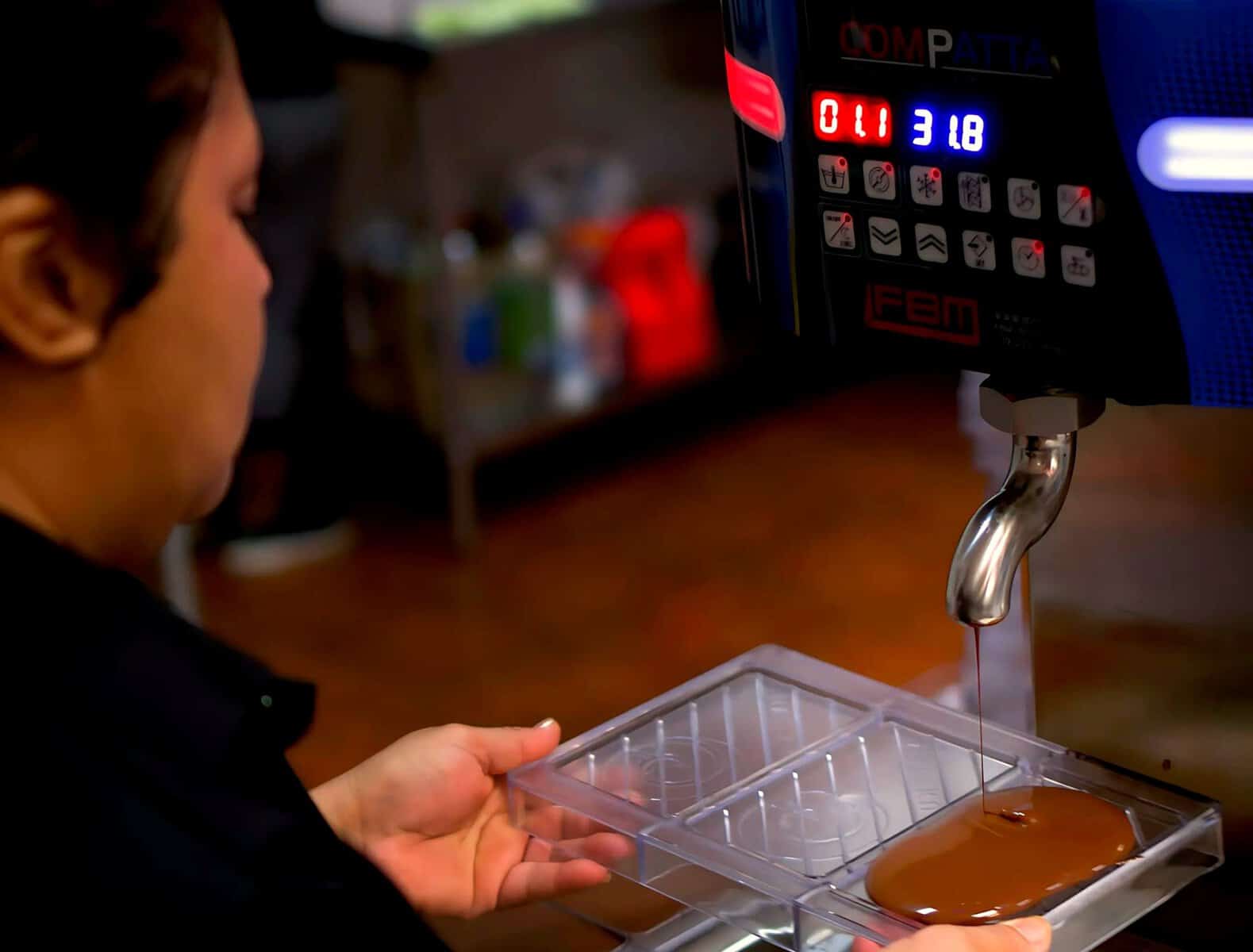
Once the cacao is harvested, we ferment the beans in wooden boxes with banana leaves and dry them in the sun on the farm in Upala. From there they travel to our factory in Playa Brasilito, on the Guanacaste coast a few hours away, where they are roasted, ground, tempered, molded, and hand-wrapped. In the finished bar you can taste the tropical fruit, honey, and floral notes that come from our own trees rather than from anything added later. The factory runs almost entirely on Costa Rica’s renewable energy, and we use every part of the pod, keeping waste to a minimum.
This is what people mean, or should mean, when they say single-origin: not a label, but a bar you can trace back to the soil it grew in.
Why It Matters for Costa Rica
Costa Rica has long exported its raw materials and imported the finished versions of them. Coffee taught the country what happens when the value is added somewhere else. Doing the hard, unglamorous work of finishing a product at origin, and then having it judged among the best in the world, is a small argument that this country can keep more of what it grows.
A medal is a small thing next to that larger question, but it is not nothing. It says that a bar grown, fermented, and finished in this country can stand beside the best in the world, and that there is no reason the value has to be added anywhere else. For a place that has spent a century sending its harvest abroad to be finished, that feels worth holding onto.
Gideon Rubin is the founder of Blue Valley Chocolate, a bean-to-bar chocolate maker in Playa Brasilito, Guanacaste. Learn more at bluevalleychocolate.com.
By Gideon Rubin, Founder, Blue Valley Chocolate