
Costa Rica charges you exactly one fee to leave the country by land, and it is $8. That is the whole amount. If someone at a border post asks you for more than that or asks you to hand cash to a person rather than pay at a bank window or a kiosk, you are not looking at a government charge.
This matters right now because of a case working its way through the courts on the Caribbean side. A Fuerza Pública officer assigned to the Limón area had been suspended from duty since March 26 at the request of prosecutors in Bribri, the office whose territory covers the Sixaola crossing. The allegation against him was concusión which is an offense a public official commits by demanding money they have no right to collect.
He was shot and killed in Batán on Sunday. He was never tried, and the investigation into both the killing and the original allegation continues. But the case is a reminder that the fee structure at a land border is simple enough that you can memorize it, and that knowing it is your best protection.
The only fee Costa Rica charges you to leave
The land exit tax is $8 per person. It breaks down as $5 for the tax itself, $2 for phytosanitary scanning, and $1 for animal health inspection through SENASA. At the Central Bank’s reference rate on August 10, that is roughly ₡3,630. The tax exists because agricultural inspection at land crossings costs money, and Costa Rica funds it from the people who use those crossings. It has been in force since December 2013 under Ley 9154.
Everyone leaving on foot or by car pays it, every time. There is no residency exemption, no discount, and no reason for the amount to vary by crossing, by day of the week, or by how busy the line is. A single national law sets it, and the Banco de Costa Rica is the only institution authorized to collect it.
Costa Rica charges you nothing to enter by land. If you are asked for an entry fee coming back in, that is not a real charge either.
Pay it before you leave home
The easiest way to avoid the whole problem is to pay online before you travel. Go to bancobcr.com (In Spanish) and pay with any Visa or Mastercard, debit or credit, issued anywhere. You do not need to be a BCR customer, and the bank adds nothing on top of the $8. You will get a PDF receipt by email. You do not need to show it at the border, because immigration registers the payment automatically when your passport is scanned. Bring it anyway. A receipt in your hand ends an argument before it starts.
If you would rather pay in person, BCR collects at the border posts at Sixaola, Peñas Blancas, Tablillas and Sabalito, at its Paso Canoas branch 150 meters (about 165 yards) south of the crossing, and at its Liberia business center. Bring valid identification and the passport you will actually travel on. You can pay in dollars or colones at the day’s rate.
The payment does not expire on a date. It stays valid until your exit and your subsequent re-entry are recorded, so paying a few days ahead costs you nothing.
If someone asks you for more
The Banco de Costa Rica states plainly that the official rate is $8.00, and it publishes a channel for reporting overcharges. Write to usuarioscoimsa@bancobcr.com, or call 2211-1111, extensions 13711, 13726 or 20607. Pay online so there is nothing to negotiate at the window. Refuse to hand money to anyone who is not behind a bank counter or an official kiosk. Ask for a receipt for every payment and treat the absence of one as the signal it is.
Note the crossing, the approximate time and the window or booth number. If a uniformed official is involved, that detail is what makes a complaint actionable rather than a story. You will also find informal helpers at Sixaola and Paso Canoas offering to walk your paperwork through for a tip. They are not officials and they are not required. Nothing at either crossing needs an intermediary, and the exit tax in particular is a personal transaction that no third party can complete for you.
If you are driving across
Taking your own vehicle out is a separate process from the exit tax and costs more. You need a digital exit circulation card, arranged through BCR, and there is a bank fee plus fiscal stamps on top of the $8 you pay for yourself. Confirm the current amounts with BCR before you go rather than at the border. Many people crossing to Bocas del Toro skip this entirely and leave the car in the guarded lot on the Costa Rican side at Sixaola, since the onward trip runs by boat anyway.
Coming back in
Immigration decides how long you get, and the rules changed in November 2025 under a directive that sorts countries into four groups. If you hold a passport in the first group, which covers the United States, Canada, the United Kingdom, the EU states and about 60 countries in all, you can be given up to 180 calendar days. That period cannot be extended, though if the officer grants you fewer than 90 days you can apply for up to 90 more.
Second-group nationals get up to 30 days initially, extendable to a maximum of 90, and need at least 90 days of passport validity to enter at all. None of this is automatic. The officer at the window decides the number, and 180 days is a ceiling rather than an entitlement. Carry proof of onward travel within the period you are asking for.
Arriving without it is one of the most common reasons people are turned back, and a land crossing gives you fewer options than an airport when that happens. If you are leaving and returning specifically to reset your permitted stay, understand that nothing obliges an officer to grant you a fresh 180 days, and that the government has said publicly it is looking at this practice.
What happens on the Panama side
Panama sets its own fees and its own entry requirements, and they are not the same as Costa Rica’s. Panamanian immigration asks for a passport with at least six months of validity, onward travel out of Panama, and proof you can cover your stay — officially a minimum of $500, which you can show with cash, a credit card, a bank statement or an employment letter.
Amounts circulating online for the Panamanian side are years out of date and contradict each other, so check migracion.gob.pa or ask the Panamanian consulate before you travel. Bring small dollar bills. Apply the same rule you use in Costa Rica: pay at an official window and get a receipt for anything you hand over.
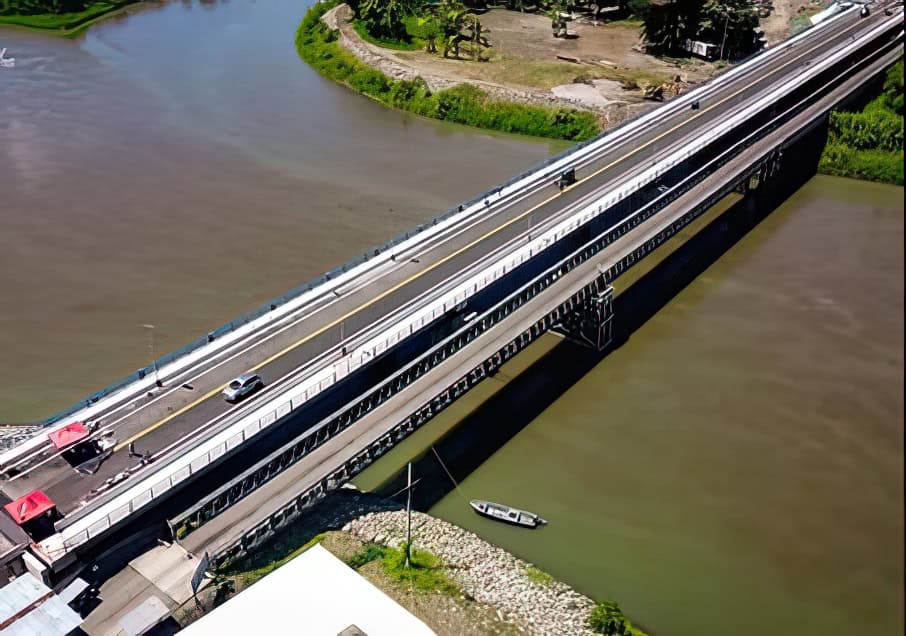
One more thing worth knowing at Sixaola. Panama runs an hour ahead of Costa Rica, and the two immigration posts keep their own hours. Arrive with enough of the day left that a slow line on one side does not strand you on the bridge between two closed offices.