

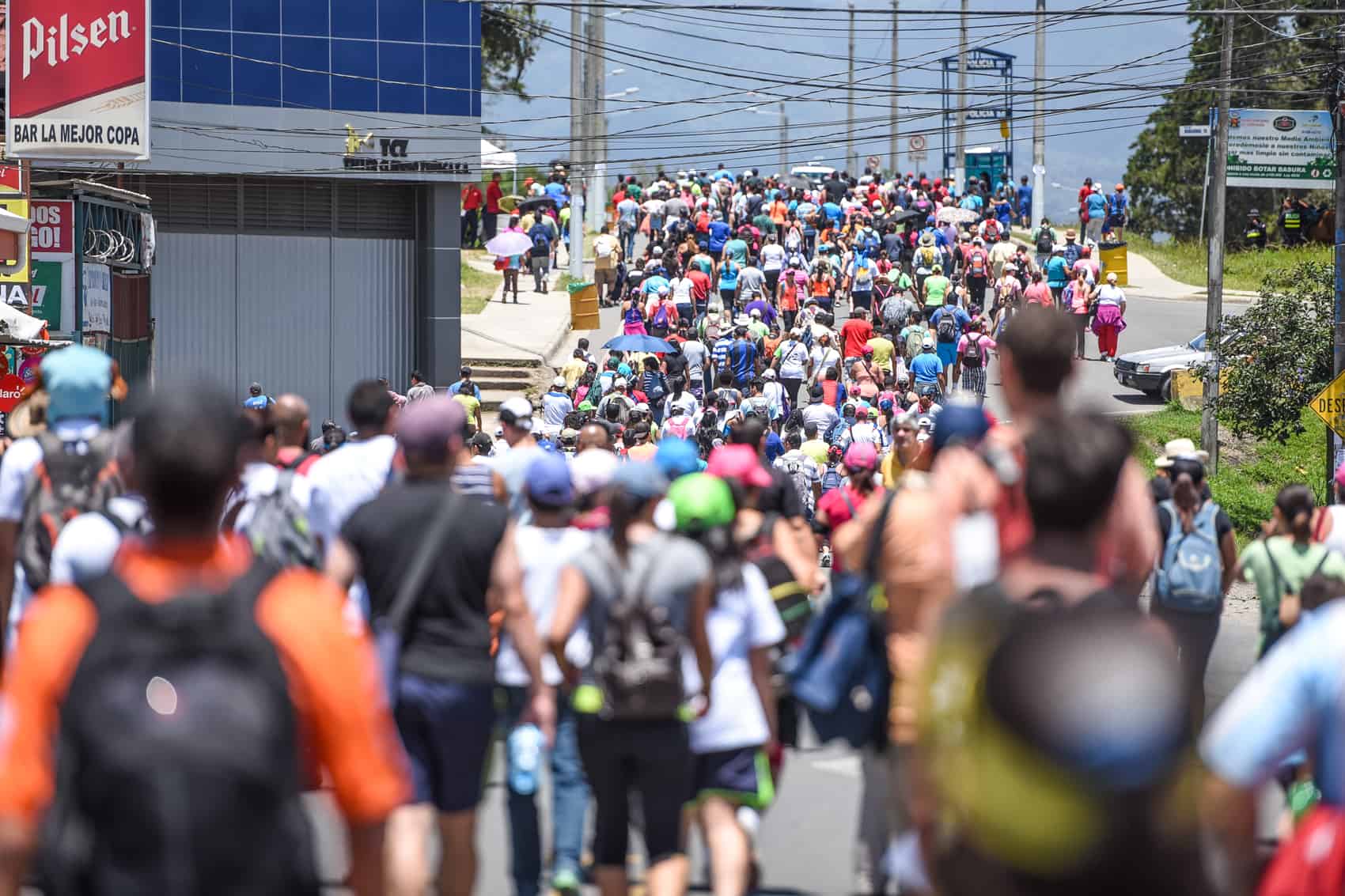
Costa Rica’s Romería entered its busiest time today as hundreds of thousands of pilgrims began converging on Cartago under one of the country’s largest annual security, emergency and traffic operations. After days of advance pilgrimages, transportation preparations and weather warnings, the main flow of walkers is expected from Saturday afternoon through early Sunday morning.
Authorities are preparing for the point when roads between San José and Cartago shift from mixed traffic to corridors dominated almost entirely by pedestrians. More than 500 Fuerza Pública officers have been assigned to the operation, joined by approximately 150 traffic officers, municipal police, emergency crews and health workers. Surveillance includes patrols, drones and hundreds of municipal cameras monitoring the route through San José, Montes de Oca, Curridabat, La Unión and Cartago.
The Costa Rican Red Cross has deployed more than 850 personnel, 145 emergency vehicles and nine aid stations. The medical posts are located in San Pedro, La Galera, Tres Ríos, El Fierro, Ochomogo, Taras, the Basílica de Nuestra Señora de los Ángeles, El Cristo and Conventillos.
A network of 25 hospitals and clinics in Cartago, San José and Alajuela has also been placed on alert to receive patients who require more care than can be provided along the walking route. The scale of the response reflects the type of emergencies that typically increase as the crowds grow. Exhaustion, dehydration, blisters, muscle injuries and complications involving chronic health conditions account for many of the calls for help.
Pilgrims should stop immediately if they experience chest pain, serious shortness of breath, dizziness, confusion or unusual weakness. Anyone needing help can approach a police officer or Red Cross station or call 9-1-1. The most significant traffic changes begin taking effect Saturday afternoon.
Heavy vehicles and trucks carrying hazardous materials are prohibited from traveling on the Florencio del Castillo highway between Hacienda Vieja and the La Lima intersection from noon Saturday until noon Sunday. Authorities also plan to close the approximately 4-kilometer (2.5-mile) section between the Fuente de la Hispanidad in San Pedro and the antigua Galera at around 4 p.m.
The closure could begin earlier if the number of walkers makes it unsafe to continue sharing the road with vehicles. Other restrictions around Zapote, Curridabat, Hacienda Vieja, La Galera, Tres Ríos and central Cartago will intensify as the afternoon progresses.
A vehicle-free security perimeter covering roughly three blocks around the Basílica will remain in place during the busiest period. Residents who live within the restricted area may be allowed to enter, but other drivers should avoid central Cartago. Drivers who do not need to travel to Cartago should stay away from the Florencio del Castillo corridor from Saturday afternoon through Sunday morning.
Route 218 through Ipís, Vista del Mar and Rancho Redondo remains the main alternative for all types of vehicles. Route 212 through Patarrá, Coris and the La Lima industrial area is another option, but it is recommended only for light vehicles. Route 251, commonly known as the old road to Cartago, should not be treated as a traffic shortcut. That road is being used as part of the official pedestrian route between La Galera, Tres Ríos and Taras.
The Tres Ríos toll station will stop collecting tolls from 6 p.m. Saturday until 6 a.m. Sunday. Drivers must still reduce speed when passing through the toll structures. The special train operation between Cartago and San José began at 9 a.m. Saturday and will continue without interruption until midday Sunday. Trains leave once per hour during the day before increasing to departures every 35 minutes from 8 p.m. onward.
The service is expected to carry approximately 26,000 passengers, but long lines remain likely during the early hours of Sunday when large numbers of pilgrims finish the walk at approximately the same time.
Lumaca’s regular Cartago bus stop will move temporarily to the side of Plaza de Deportes La Soledad from midday Saturday until 6 a.m. Sunday. Departures will be added according to passenger demand, including connections toward several communities in the Greater Metropolitan Area.
Weather remains another concern, although conditions are not expected to involve uninterrupted rain. Cartago began today under cloudy skies, with occasional rain and possible afternoon thunderstorms. Walkers may encounter drizzle, wet pavement and reduced visibility, particularly around Ochomogo and other elevated sections of the route.
Pilgrims should carry a lightweight poncho or rain jacket and protect phones, documents and medication from water. Umbrellas can be difficult to manage in dense crowds and strong gusts. Cloud cover should not be mistaken for protection from the sun. Ultraviolet radiation is expected to remain high around midday, making sunscreen, a hat and regular hydration necessary even when temperatures feel mild.
Comfortable footwear is one of the most important precautions. Pilgrims should wear shoes they have already used for long walks rather than new shoes that may quickly cause blisters. Light food, water, identification and essential medication should also be carried. People with diabetes, heart conditions, respiratory problems or other chronic illnesses should speak with a doctor before attempting a long route and should not skip medication during the walk.
Anyone walking after dark should wear light-colored or reflective clothing. On roads without sidewalks, pedestrians should face approaching traffic and remain in a single line where possible. Headphones should be avoided. Walkers need to hear approaching vehicles, trains, emergency crews and instructions from police officers.
Crossing or walking along railway tracks is particularly dangerous because trains will run throughout the night. Pilgrims should use marked crossings and never attempt to cross in front of a moving train. Parents should keep children close and make sure they carry contact information in case they become separated. Older adults and people with limited mobility should avoid the most crowded hours or arrange a shorter starting point.
Authorities are again asking participants to leave dogs and other pets at home. The distance, crowds, wet pavement, vehicle traffic and limited access to water can quickly place animals in distress. Pilgrims should carry only what they need and keep phones, wallets and other valuables secured. Large gatherings can create opportunities for theft, especially near transportation lines, crowded intersections and the entrance to the Basílica.
Cartago is also enforcing a 24-hour ban on the sale and consumption of alcohol within the designated pilgrimage area. The restriction runs from noon Saturday until noon Sunday. Unauthorized street vending is also prohibited along several sections of the route. The pilgrimage will culminate Sunday with the main religious celebrations honoring the Virgen de los Ángeles, Costa Rica’s patron saint. Traffic pressure is expected to shift direction after the ceremonies as thousands of pilgrims begin leaving Cartago at once.
Drivers approaching the area Sunday should remain prepared for lane reversals, police checkpoints, overcrowded buses and delays that may continue beyond midday.





