

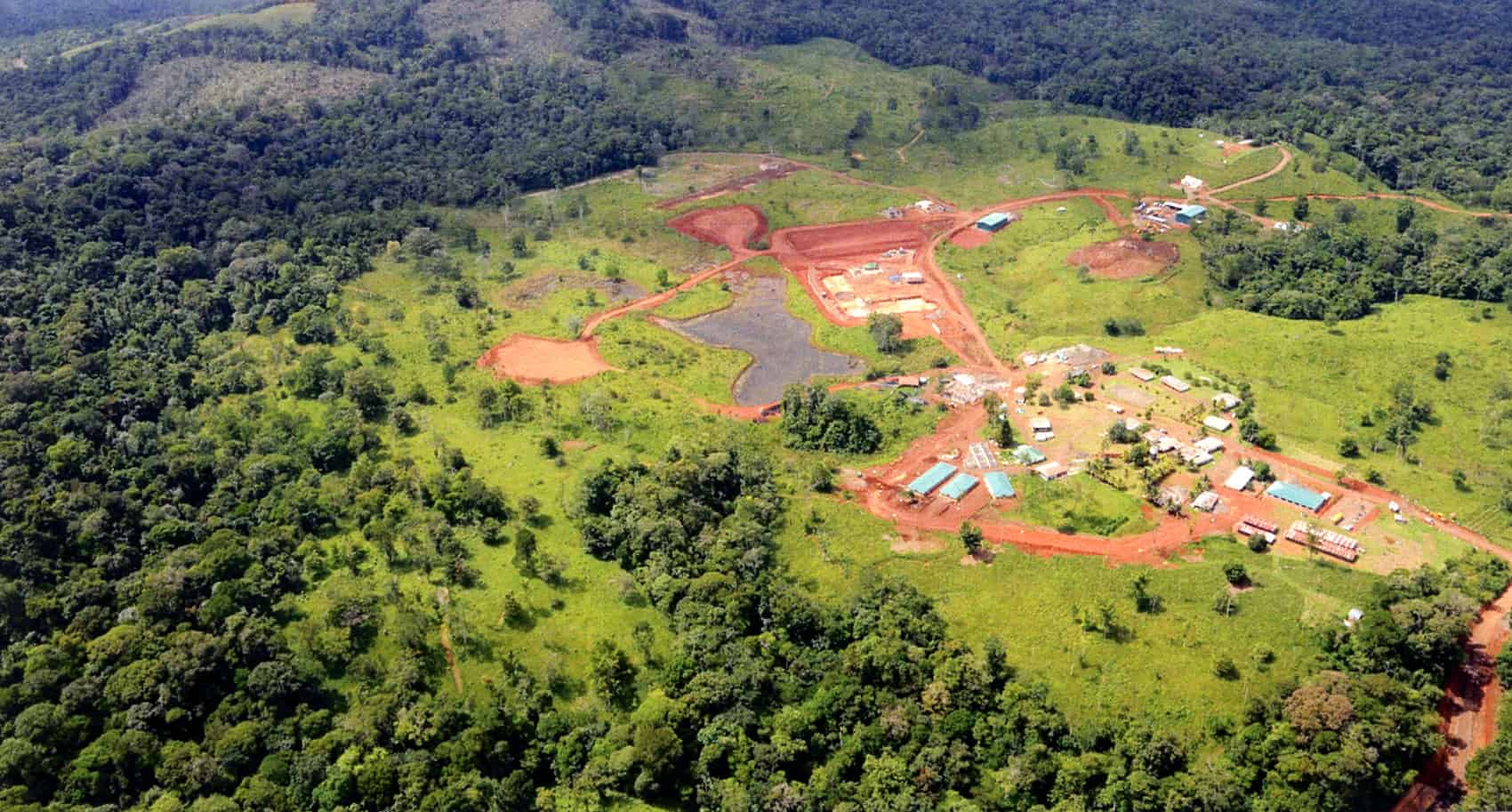
Costa Rica is facing one of its most difficult environmental and security tests in years as illegal gold mining spreads through Crucitas, a remote area in the northern zone near the Nicaraguan border.
What began as a disputed mining concession has become a broader national crisis involving organized crime, toxic contamination, unsafe tunnels, foreign miners, border tensions and a bitter debate over what Costa Rica should do with gold reserves estimated to be worth billions of dollars.
The roots of the conflict go back more than a decade. The Crucitas gold project, once held by Canadian company Infinito Gold, was cancelled after years of legal challenges over environmental damage and irregularities. Costa Rica later banned open-pit metallic mining, turning Crucitas into a symbol of the country’s environmental policy. But the end of the legal project did not end mining in the area.
Illegal miners, known here locally as coligalleros, moved into the abandoned zone and built an extraction network that has grown far beyond small-scale panning. Authorities now describe the operation as semi-industrial, with activity spreading across more than 3,000 hectares near the border.
The damage is visible in the forest, soil and waterways. Illegal miners use mercury and cyanide to separate gold from raw material, leaving toxic residues that threaten nearby ecosystems and communities. The Constitutional Chamber has also cited risks involving contamination of water sources and ordered the state to keep supplying potable water to affected communities while long-term infrastructure is completed.
Security officials have documented more than 130 larger processing pits or excavation areas tied to the illegal operation. The activity has expanded from the original Crucitas site into nearby areas, including Conchudita, increasing pressure on police and environmental authorities.
The human cost has also grown. Last year, two young Nicaraguan brothers died after becoming trapped in an illegal mining tunnel in Crucitas. Their deaths underscored the danger faced by workers who enter deep, unstable shafts with no safety controls, no oversight and no emergency protections.
Costa Rican authorities say most of the miners operating in the area are Nicaraguan nationals who cross the border illegally. Security Minister Mario Zamora has warned lawmakers that the operation is no longer isolated or improvised, but tied to organized criminal networks that move gold-bearing material out of Costa Rica.
Zamora has told legislators that sacks of sediment extracted from Crucitas are transported across the border into Nicaragua, where they are allegedly purchased or processed by Chinese-linked mining companies. The issue has added a diplomatic layer to the crisis, with Costa Rica and Nicaragua holding border talks earlier this year over illegal mining and cross-border crime.
The Constitutional Chamber, known as the Sala IV, has now ordered urgent action. In a ruling earlier this year, the court found repeated institutional failures involving security, health, environment and access to drinking water. It ordered a permanent and indefinite police presence in the area, stronger immigration controls at border points, continued surveillance to stop illegal mining, and a coordinated government plan for environmental protection, restoration and mitigation.
The court also warned that officials who ignore its orders could face penalties. Lawmakers are now debating how far the state should go. Costa Rica has already strengthened penalties for illegal mining, and a new bill would raise prison terms for those involved in illegal extraction and related support networks.
The harder question is what happens to the gold still underground. The College of Geologists of Costa Rica estimates that Crucitas and nearby Conchudita may contain gold reserves worth up to $10 billion. That number has sharpened the national debate.
Supporters of a regulated extraction model argue that Costa Rica is allowing criminal networks to steal a resource that could generate revenue for the state and local communities. They say a legal, supervised framework would give authorities more control over an area that is currently being exploited with no environmental safeguards.
Opponents argue that reopening the door to mining would betray Costa Rica’s environmental identity and could create new damage without ending illegal extraction. Frente Amplio and allied environmental groups are promoting a different route: a sustainable recovery plan centered on state control, conservation, research, soil and water cleanup, ecological tourism and local development without open-pit mining.
President Laura Fernández has made Crucitas one of the first major tests of her administration. She has invited all 57 legislators to visit the area on June 19 so they can see the damage firsthand before the debate advances further in the Legislative Assembly. For Costa Rica, Crucitas is no longer only a mining dispute. It is a question of sovereignty, environmental protection, public security and national identity.
Our country built much of its international reputation on conservation. Now it must decide how to respond when one of its most valuable natural resources is being extracted illegally, poisoning the land around it and forcing a country known for protecting nature into a fight over gold.





