

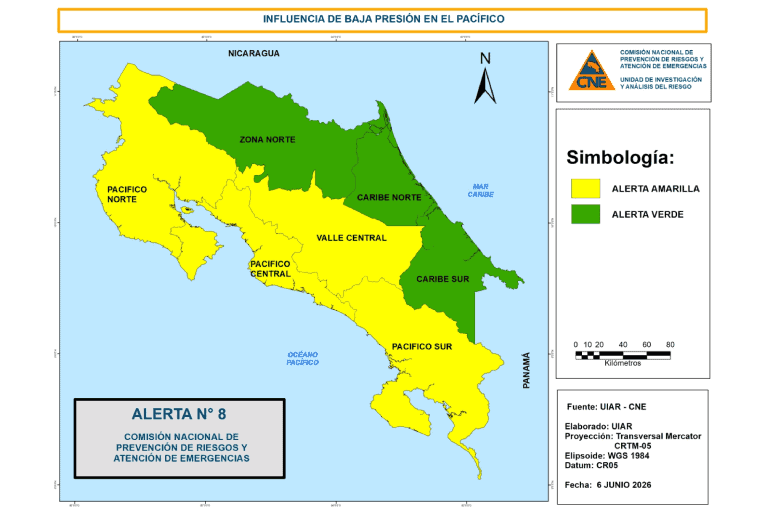
Costa Rica’s National Emergency Commission (CNE) raised the Pacific slope and Central Valley to yellow alert as heavy rains continue to increase the risk of flooding, landslides and sudden river rises in some of the country’s most visited regions. The alert covers the full Pacific side of our country, including Guanacaste, the Central Pacific and the South Pacific, along with the Greater Metropolitan Area and other parts of the Central Valley. The North Zone and Caribbean remain under green alert.
The warning comes as Costa Rica faces several days of unstable weather, with heavy downpours, thunderstorms and strong afternoon and evening rains expected to continue. Saturated soils are already a concern in parts of the Pacific, North Zone and Caribbean, increasing the chance of flooding and landslides if new rainfall falls over the same areas.
For anyone driving, the heavy rain can quickly affect mountain roads, river crossings, small bridges and routes between the Central Valley and the Pacific coast. Drivers heading to beaches, national parks, waterfalls or rural places should check conditions before leaving, avoid driving through flooded sections, and leave extra time for delays.
The Pacific coast is especially exposed because many areas, especially those that tourists go to, are near rivers, steep hillsides or low-lying roads. Flash flooding can develop quickly during intense rain, even when conditions appear manageable earlier in the day. Visitors staying near rivers or streams should stay alert to changing water levels, especially in the afternoon and at night.
Our Central Valley also faces risk from urban flooding, clogged drains, fallen trees and reduced visibility during thunderstorms. Strong wind gusts are possible in the North Pacific, the Nicoya Peninsula and the Central Valley, which could affect trees, signs, power lines and temporary structures.
Emergency officials are also asking residents and businesses not to dump garbage in streets, rivers or streams. Blocked drainage systems can turn heavy rain into flooding within minutes, especially in towns and neighborhoods that already struggle with runoff during the rainy season.
A yellow alert does not mean you should cancel travel plans across the country, but it does mean conditions can change quickly. Those traveling by car should avoid nighttime driving during heavy rain, monitor official updates, and ask about local conditions before going to any rivers, waterfalls or remote locations.
As if it’s not obvious already, Costa Rica is in its rainy season, when afternoon showers are common. This alert signals a higher level of concern because of the expected rain intensity, the amount of water already in the soil, and the risk that rivers and streams may rise quickly in vulnerable areas.
Authorities are urging people to report emergencies through official channels and avoid taking risks around flooded roads, swollen rivers and unstable slopes.
For current regional breakdowns and the weekly outlook, see the Tico Times forecast page





