

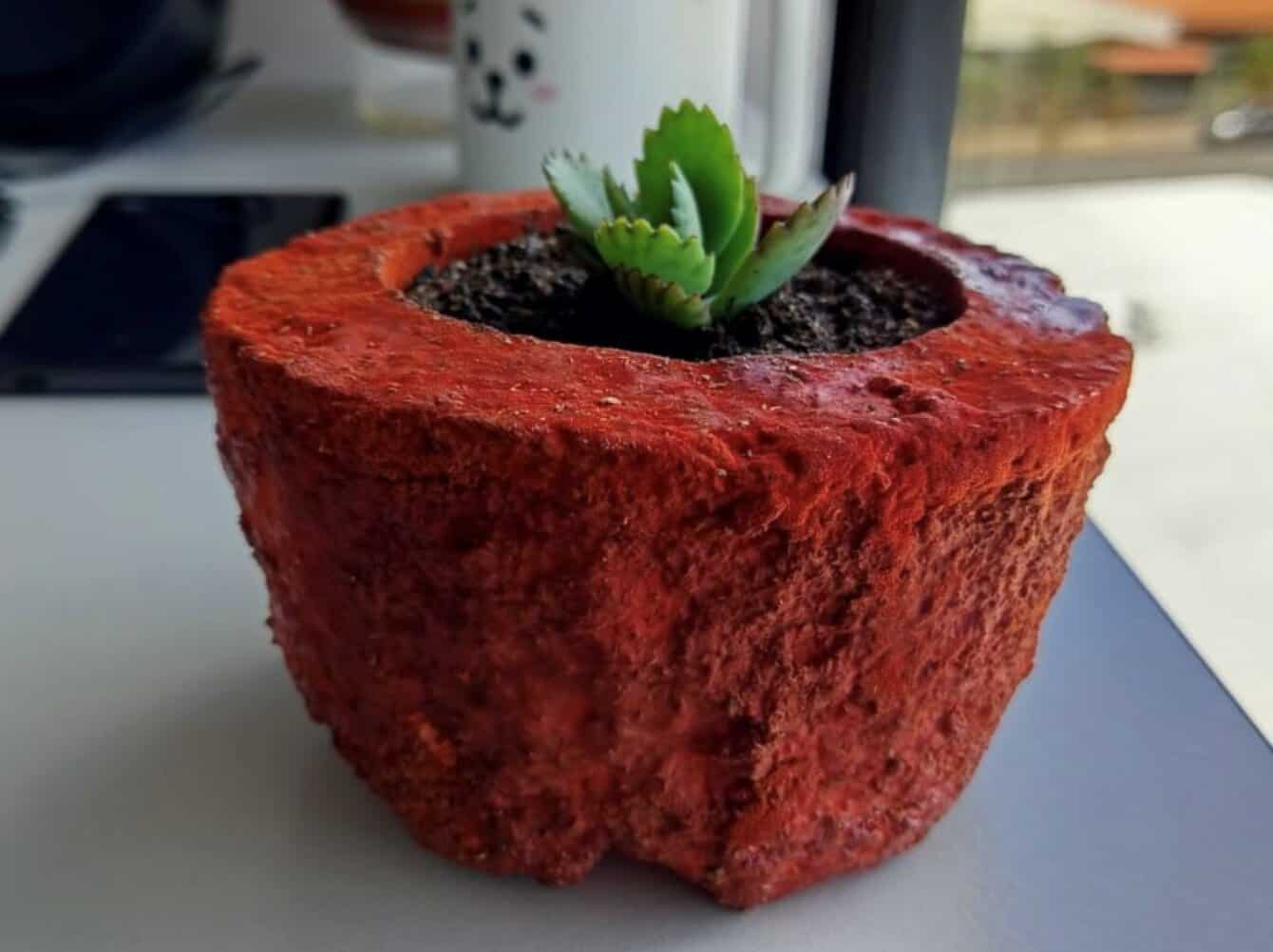
Costa Rican researchers are turning to fungi as a possible answer to one of our country’s most urgent environmental problems: what to do with the growing amount of organic waste sent to landfills.
The Laboratory for Research in Experimental Sciences, known as LICE, at the National Distance Education University, UNED, is developing a project that uses solid-state fungal fermentation to transform agro-industrial and household organic waste into edible mushrooms, agricultural bio-inputs, and biodegradable biomaterials.
The initiative comes as Costa Rica faces mounting pressure on its waste management system. According to Ministry of Health data cited in recent reports, each Costa Rican generates more than 400 kilograms of waste per year, adding up to more than 1.6 million tons of ordinary waste nationwide. The Greater Metropolitan Area is under particular strain, with the La Uruca and Aserrí landfills together receiving about 2,600 tons of waste per day and nearing the end of their useful life.
The UNED project, formally titled “Design of fermentation methodologies using solid-state fungi to process agro-industrial organic waste for the production of edible mushrooms, bio-inputs, and biomaterials,” proposes a biotechnology-based alternative to simply burying organic material.
Ronald Sánchez Brenes, LICE coordinator and researcher, said the work seeks to connect Costa Rica’s waste problem with a practical biotechnological process. “What we’re doing in this project is linking it to a biotechnological process, using fungi that allow us to break down the waste and transform it into value-added products,” Sánchez said.
The project is being developed in collaboration with the Municipality of Pérez Zeledón, which has a source-separated waste collection system. That separation is essential because it allows organic waste to be properly handled and used in the laboratory rather than mixed with other materials that would make treatment more difficult.
Researchers are working with fungi from the genera Pleurotus, Trichoderma, and Ganoderma. Each plays a role in turning waste into products with possible commercial or environmental value. Pleurotus can be used to produce edible mushrooms. Trichoderma is widely associated with agricultural bio-inputs that can improve soil quality and help protect crops. Ganoderma is being studied for its potential in biomaterials.
The project uses a range of organic residues, including hibiscus pruning from Bagaces, watermelon rinds from Guápiles, rambutan, pineapple and African palm waste from the Southern Zone, coffee pruning, and household organic waste.
Through solid-state fermentation, those materials can be broken down and redirected into three main product areas. In the food sector, the process can produce fresh or processed edible mushrooms. In agriculture, it can generate bio-inputs that support soil health and crop protection. In manufacturing, it may help create biodegradable biomaterials that could replace single-use plastics in packaging and similar applications.
For Costa Rica, the research has significance beyond the laboratory. Organic waste represents a major portion of municipal trash, and when it is buried in landfills, it contributes to space shortages, odors, leachate, and greenhouse gas emissions. Finding ways to recover value from that material could reduce pressure on landfills while creating new opportunities for agriculture and small-scale production.
The initiative also strengthens UNED’s applied biotechnology work and provides training opportunities for students in advanced laboratory methods, sustainability, and technology transfer. “For LICE, this represents an opportunity for innovation in laboratory practices and for training students in advanced biotechnology techniques and technology transfer,” Sánchez said.
While the project remains research-based, it points to a larger challenge now facing Costa Rica: moving from a waste disposal model to one that treats organic residues as raw material. With major landfills approaching capacity, researchers say solutions such as fungal fermentation could become part of a broader strategy to reduce waste, support farmers, and develop biodegradable alternatives to plastic.





