

Panamanian President José Raúl Mulino accused the U.S. Embassy of threatening to revoke visas of officials and business figures with ties to Chinese companies. Mulino made the comments during his weekly news conference on October 16, 2025. He described the alleged threats as inconsistent with the friendly relations he seeks with the United States.
“They’re free to give and take a visa to anyone they want, but not threatening that, ‘If you don’t do something, I’ll take the visa,’” he said. He added that the broader dispute between the United States and China “doesn’t involve Panama.” The accusations reflect intensifying U.S. pressure on Panama to limit Chinese economic involvement, especially around the Panama Canal. Washington has long viewed Beijing’s presence in the region as a strategic concern.
That pressure gained new intensity earlier this year when Panama’s Supreme Court declared unconstitutional the concession that allowed a Hong Kong-based operator to run two key ports at the canal’s entrances. The January ruling invalidated the original 1997 contract and its 2021 extension for Panama Ports Company, a subsidiary of CK Hutchison Holdings.
In February, the government published the decision in the official gazette and immediately ordered the Panama Maritime Authority to occupy the Balboa and Cristóbal terminals for reasons of urgent social interest. Officials took control of all equipment and operations.
The Panama Maritime Authority appointed APM Terminals, a subsidiary of Denmark’s A.P. Moller-Maersk group, to manage the ports temporarily while officials prepare a new concession process. President Mulino has stated that no single company will again control both terminals.
The court action and takeover prompted a sharp response from Beijing. In early February, China’s Hong Kong and Macao Affairs Office called the ruling “absurd” and warned that Panama would pay “heavy prices both politically and economically” if it did not reverse course. Mulino rejected the statement the next day. “Panama is a state governed by the rule of law,” he said, adding that the country “will not be threatened by any foreign power.”
The dispute has continued to ripple through maritime trade. In March and April, Chinese authorities sharply increased inspections and detentions of Panama-flagged vessels in Chinese ports. The U.S. Federal Maritime Commission and regional governments have described the actions as targeted economic pressure linked to the port ruling.
On April 29, the United States joined Bolivia, Costa Rica, Guyana, Paraguay and Trinidad and Tobago in a joint statement supporting Panama’s sovereignty. The countries said China’s moves politicize maritime trade and infringe on the rights of nations in the hemisphere. “Panama is a pillar of our maritime trading system, and as such must remain free from any undue external pressure,” the statement read.
Mulino has repeatedly sought to keep Panama out of the larger U.S.-China rivalry. In November 2025 he publicly denied reports that the United States was using Panamanian territory to prepare military operations against Venezuela. “Panama is not lending its territory for any hostile act against Venezuela or any other country,” he said at the time. The denial came after U.S. military training exercises in Panama drew speculation in regional media.
Panama has also taken other steps to address U.S. concerns about Chinese involvement. The country exited China’s Belt and Road Initiative and reviewed several infrastructure projects linked to Beijing. At the same time, Mulino has emphasized the importance of maintaining diplomatic and trade relations with China.
CK Hutchison’s subsidiary has launched international arbitration proceedings against Panama, seeking more than $2 billion in claimed damages. The case is expected to take years. Panama maintains that the court decision was strictly legal and that operations at the ports have continued without disruption under temporary management.
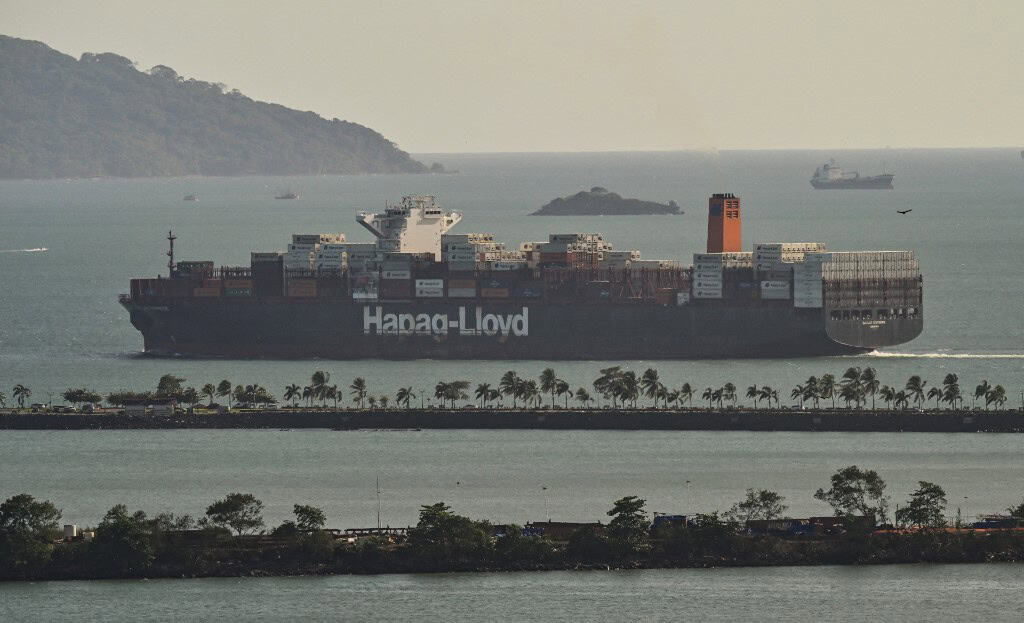
The developments highlight Panama’s central role in global trade. Roughly 5 percent of world maritime commerce passes through the Panama Canal, including about 40 percent of U.S. container traffic. Control of the ports at either end of the waterway carries both economic and strategic weight.
As of now, officials in Panama City say they continue to coordinate with all parties to ensure smooth port operations while preparing for a future bidding process that will bar any single operator from controlling both terminals. Mulino has described recent communications with Chinese diplomats as positive on the arbitration matter, while acknowledging the broader tensions.
.





