

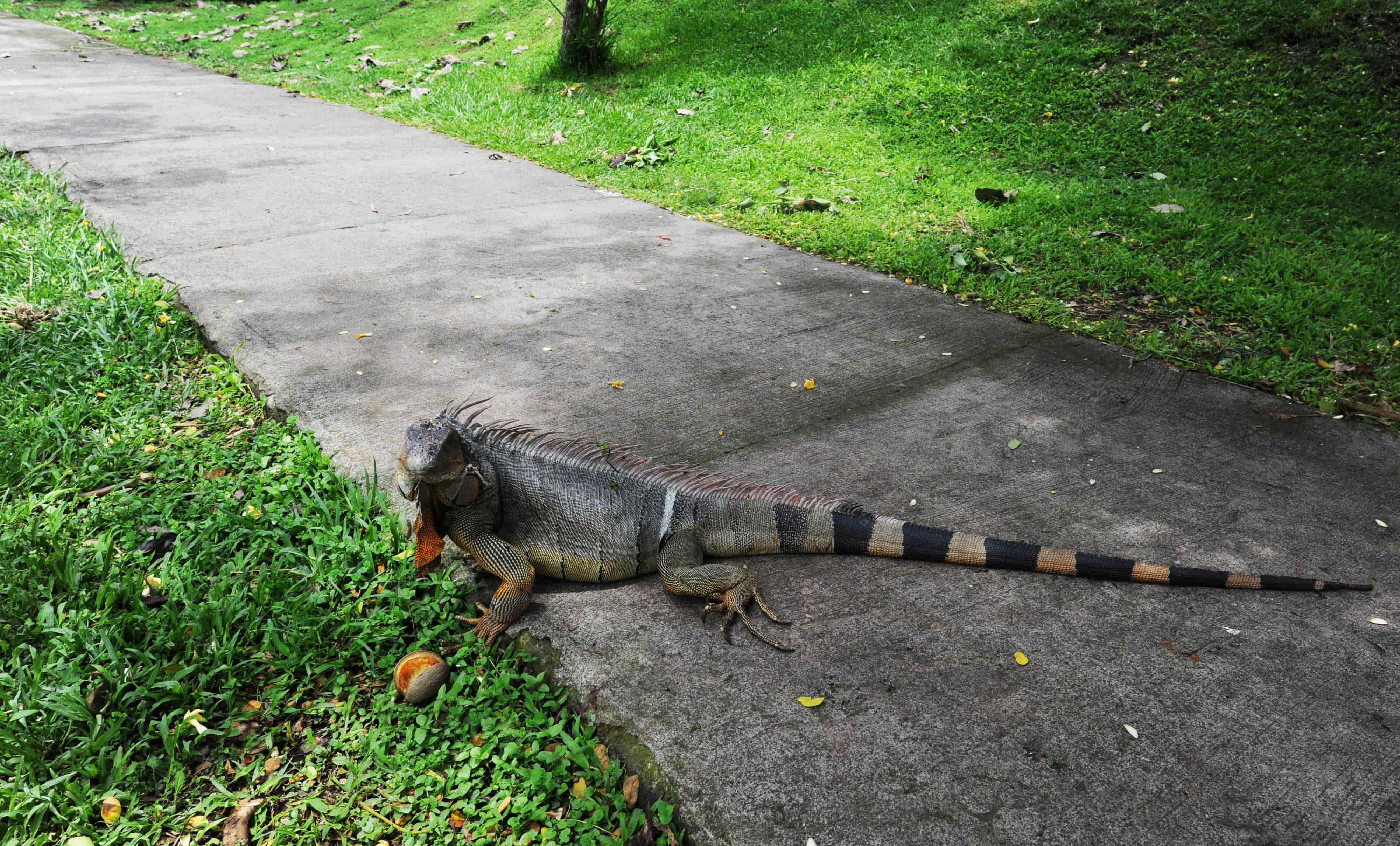
Residents of South Florida are seeing something unusual this week: iguanas dropping from trees during an intense cold snap. Videos and photos have spread quickly on social media, often jokingly described as “raining iguanas.” The explanation, though, is straightforward biology mixed with uncommon weather.
South Florida is going through one of its coldest stretches in years, with temperatures dipping close to freezing in some areas. That may not sound dramatic to people used to winter climates, but it is far outside the norm for a region defined by heat and humidity.
Iguanas, like all reptiles, are cold-blooded. They depend on external temperatures to regulate their body heat. When temperatures fall suddenly, their metabolism slows sharply. In cold conditions, iguanas can enter a temporary state known as cold stunning, or torpor. Their muscles stiffen, they become immobile, and they can no longer grip branches.
Because green iguanas often sleep or rest in trees, especially along canals and in urban areas, the cold can cause them to lose their hold and fall to the ground. In most cases, they are not dead. Once temperatures rise, many recover, regain movement, and carry on as usual.
Wildlife officials in Florida have advised residents not to handle fallen iguanas unless necessary. As temperatures warm, the animals can revive suddenly and may bite or scratch in self-defense. Local authorities have also established collection and response measures to deal with the situation humanely.
For Costa Ricans, the story may sound strange but not entirely unfamiliar. Iguanas are common across Costa Rica, and during cooler nights or in higher-elevation areas, reptiles are known to slow down and become lethargic. The difference is scale. Costa Rica rarely experiences cold spells that are sharp or widespread enough to trigger this kind of mass reaction.
Another factor is that in Florida, green iguanas are considered an invasive species. They are not native to the ecosystem and are known to damage vegetation, riverbanks, and infrastructure. Cold snaps can temporarily reduce their numbers, which is why these events often draw attention from both residents and officials.
In the end, falling iguanas are less a novelty than a signal of unusual weather. The episode is a reminder that sudden temperature swings can have visible and sometimes surprising effects on wildlife, even in places better known for sun than cold.





