

About thirty countries in Latin America and the Caribbean have been meeting in Panama since Monday to draft an emergency plan for Haiti, which is facing one of the region’s worst humanitarian crises amid gang violence. The meeting comes after the United Nations failed to raise even a quarter of the $908 million it requested in February 2025 from governments and international organizations to help Haiti, according to the Association of Caribbean States (ACS).
The goal is to speed up assistance to prevent the collapse of the country, the poorest in Latin America, which is mired in a deep economic, political, and social crisis driven by criminal gangs that control a large part of the territory. “Haiti is today at the center of one of the most serious humanitarian and security emergencies in the modern history of our region,” but “the harsh reality” is that humanitarian aid “remains dramatically insufficient,” ACS Secretary-General Noemí Espinoza warned.
“Through December 31, 2025, only 23.9% of the $908 million needed had been mobilized,” Espinoza added in an ACS document. The ACS-led meeting will run through Tuesday and includes representatives from Mexico, Colombia, Costa Rica, Guatemala, Venezuela, Honduras, the Dominican Republic, and Panama, among others.
The aim is to identify “viable pathways for more coordinated, coherent, and strategic regional action” that has a “real impact on the Haitian population,” Panama’s foreign minister, Javier Martínez-Acha, said at the opening of the gathering. “Haiti cannot wait, and the Greater Caribbean cannot remain indifferent,” he added.
The plan, in which the UN is also participating, is intended to assist more than six million Haitians—half the country’s population—who are expected to be affected during 2026 by violence, economic decline, and the widespread absence of basic services.
It is a “collective effort,” grounded in “clear and realistic priorities” to help Haiti, said Mexico’s government representative, Víctor Valtierra. Gangs—accused of killings, rapes, looting, and kidnappings—have devastated Haiti for a long time. In 2024 they even forced then–Prime Minister Ariel Henry to resign.
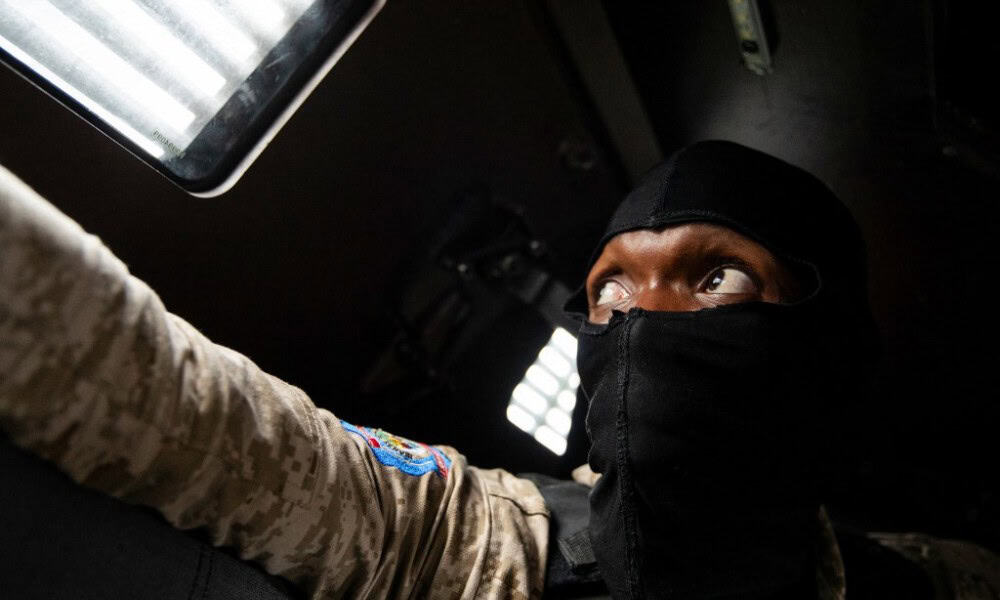
Haitian police are currently carrying out an offensive against these criminal groups with the support of an international force. Last Friday, U.S. Secretary of State Marco Rubio voiced support for Haitian Prime Minister Alix Fils Aimé to “fight terrorist gangs and stabilize the island.”





