
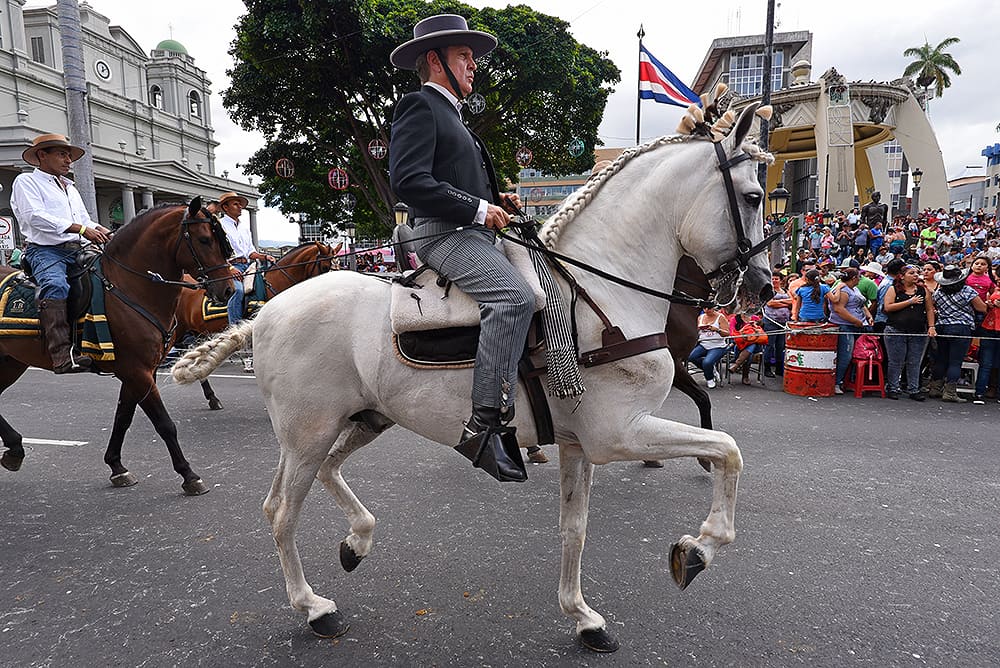
Thousands of riders and spectators gather today for El Tope Nacional, marking the Day of the Horseman in Costa Rica. This year, the event shifts from its usual spot in San José to San Ramón, drawing participants from across the country to showcase their equestrian talents.
The parade starts at 1 p.m. and runs until 3 p.m., with live coverage on Teletica. Organizers expect over 2,000 horses and riders to join the procession through the town’s main streets. Riders perform precise steps, a hallmark of Costa Rican horsemanship, while crowds line the route to cheer them on.
El Tope honors Costa Rica’s rural roots, where horses once played a central role in daily life. Families in the countryside relied on them for farming and transport during colonial times. Today, the event connects that past to the present, featuring sabaneros – Costa Rican cowboys – in their traditional gear.
Participants include men and women riders, known as sabaneras, who compete informally to stand out with sharp outfits and skilled maneuvers. Decorated ox carts, hand-painted by local artists, roll alongside the horses, adding color to the display. Marching bands provide music, and food stands offer local treats for attendees.
This parade kicks off the holiday season festivities in many areas, blending celebration with cultural pride. In San Ramón, the event highlights regional horse training, with Paso Fino horses executing dance-like steps after months of preparation.
Historically, El Tope has several possible origins. One ties it to the 1871 San José earthquake, when communities organized fairs to raise funds for rebuilding the Metropolitan Cathedral. Towns took turns hosting these “turnos,” and proceeds traveled to the capital on horseback, forming early parades.
| Year | Location | Key Date | Notable Details |
|---|---|---|---|
| 1871 | San José | Post-earthquake | Origins in fundraising parades for cathedral rebuild |
| Colonial Era | Various towns | Annual Fiestas de San Juan | Evolved from horse races |
| 20th Century | Ports to plantations | Ongoing | Tied to cattle drives for United Fruit Company |
| 2023 | San José | December 26 | Traditional national event with thousands of riders |
| 2024 | San José | December 26 | Featured Paso Fino performances and ox carts |
| 2025 | San Ramón, Alajuela | December 26 | Shifted location, broadcast on Teletica 1-3 p.m. |
Another story traces it to colonial horse races during the Fiestas de San Juan, which evolved into organized parades. A third links it to the 20th century, when the United Fruit Company imported cattle, and riders drove them from ports to plantations, inspiring national gatherings.
Regardless of its start, El Tope remains a key tradition. Smaller versions occur year-round in towns like Santa Ana, where one took place on December 21, and Desamparados, Alajuela. The national event, however, draws the largest crowds and best performers. For those attending, arrive early to secure a spot along the route. Streets close hours before the start, and the atmosphere fills with energy as riders prepare. The four-mile path allows ample viewing points, though front-row positions require dawn arrivals in busy years.
El Tope also boosts local economies. Vendors sell crafts, and hotels fill with visitors from other provinces. In San Ramón this year, the change in location brings fresh attention to the area, known for its coffee fields and mountain views. Riders train year-round for these moments. Horses learn specific gaits, responding to subtle cues from their handlers. This dedication shows in every step, captivating audiences both in person and on television.
Women have grown prominent in recent decades, riding alongside men and adding their flair to the competition. Their presence shows broader changes in Costa Rican society, where traditions adapt while staying true to their core. As the parade gets underway today, it reminds participants, watchers and visitors, of our country’s equestrian heritage. El Tope Nacional continues to unite people, preserving a piece of Costa Rica’s identity for future generations.