
Change is in the air. The threatening, gray, rain-filled clouds of September and October are starting to give way to the pleasing, fluffy, white clouds of dry season. That means high season is right around the corner and the near-empty local beaches are about to see a significant uptick in both Tico and foreign visitors.
For me personally, this transition has both positive and negative effects. I’ll miss the tranquility of only having to share the beach with a handful of other folks, but there’s also something enjoyable about being in the mix amongst happy families, singing cellphone speakers, and sandy soccer games. There are no mixed feelings for the local beach economy though. High season is only a positive thing.
When thinking of the beach economy, one tends to consider vacation rental homes, hotels, retail stores, and restaurants. These are the major players when it comes to where most folks spend their majority of their vacation funds. However, there exists another layer of the beach economy, one where five dollars goes a lot farther. This layer is made up of local micro-entrepreneurs and what they offer varies greatly from beach to beach.
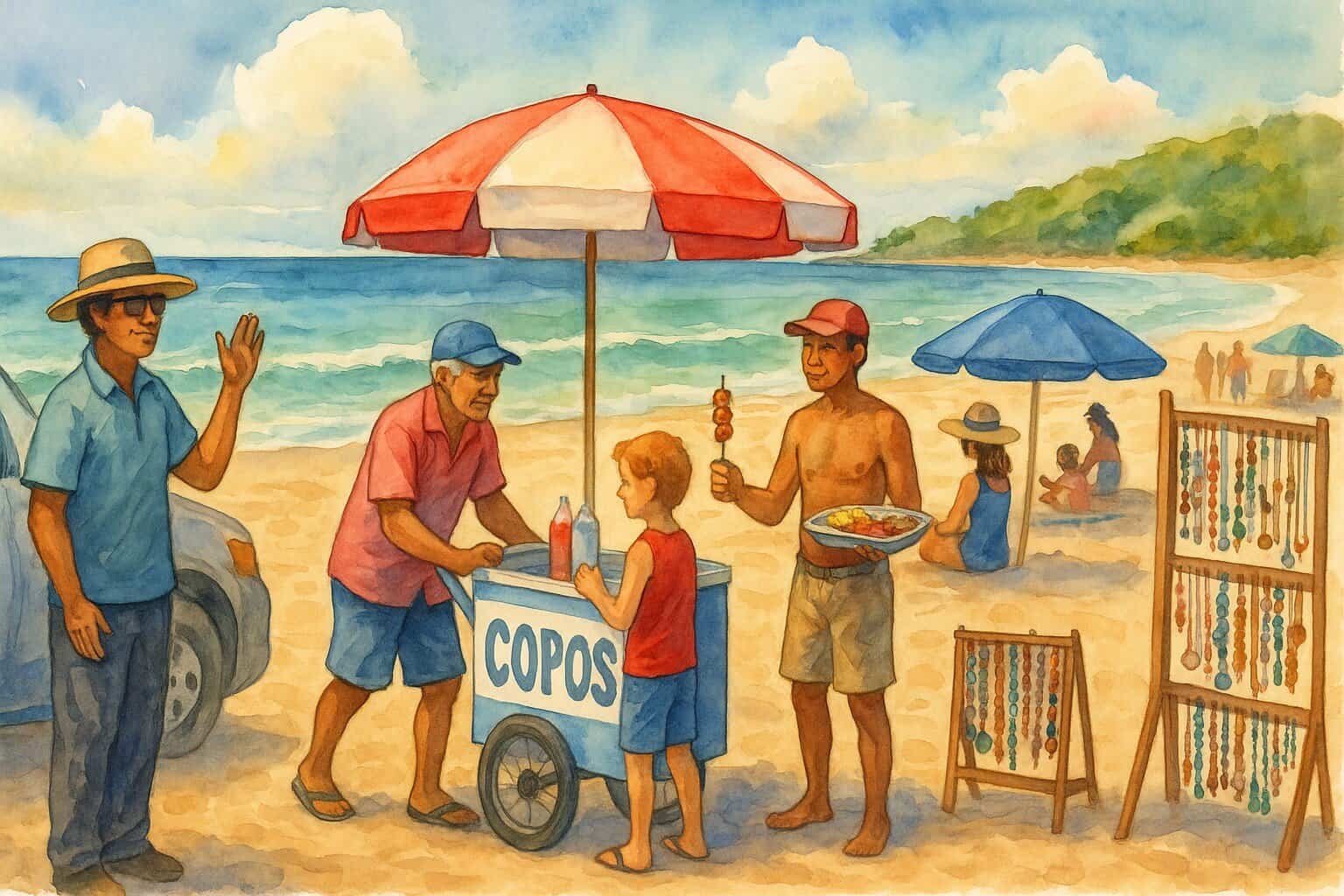
One of the most important players in this economy is selling peace of mind. As you slowly roll down the dirt road, avoiding potholes and beachgoers arriving on foot, and pull into the probably unofficial parking area, you’re escorted into a parking spot by a friendly guy with a beach hat and sunglasses. This is the local watchyman. His jobs are many. He’s a greeter.
He knows the current state of the surf. He’ll probably be able to sell you a cold coconut with straw in it. But his most important job is keeping your vehicle safe. Stealing from parked cars is a significant issue on Costa Rica’s beaches, but you can enjoy the sand and surf without worry because this guy’s keeping an eye on your car. The price of this service varies from zero dollars/ignoring the poor guy up to two-thousand colones ($4), a fee which may be presented to you with a handwritten sign.
Another major category of the local beach economy caters to those feeling a bit peckish. Again, the menu will vary greatly depending on which beach you’re visiting. The most common item for purchase is actually a drink, pipa fría, or cold coconut water, which you should definitely purchase because it’s delicious. The real fun comes with the food items that may be available.
Some of the offerings I’ve seen over the years include a guy with cooler in his trunk full of ceviche, i.e. fish ‘cooked’ in citrus juice (that may give your wife food poisoning), Argentinian empanadas, meat of unknown origin on a stick grilled before your very eyes, and, recently, a drive-able hotdog restaurant parked next to the parking lot.
My kids’ favorite beach snack is for sale on the weekends on our alternative beach, the one we go to when we don’t feel like going to the regular beach. The copo guy. Copos are a nightmare of shaved ice, powdered milk, sickly-sweet syrup, and sometimes condensed milk, chocolate cookies straws and even marshmallows.
I have no interest in them, but my boys love them, or more accurately, they love the first 25% of them and then leave the rest to be kicked over in the sand or on my beach chair. While I couldn’t be less interested in them, I absolutely love the method with which they’re sold. This guy pushes a homemade, wheeled cart through the sand and waves and delivers his treats beach-blanket-side.
There are plenty of other members of the local beach economy besides the watchyman and food vendors. There are folks selling touristy items like jewelry, hammocks, cigars, and wooden bowls, people renting big beach umbrellas, and young men offering jet ski rides and horseback riding tours. Right now each one of them is getting geared up for high season. So, if you’re heading to one of Guanacaste’s beaches in the coming months, bring some cash and be prepared to jump into the local beach economy with both feet.
About the Author
Vincent Losasso, founder of Guanacaste Wildlife Monitoring, is a biologist who works with camera traps throughout Costa Rica.