

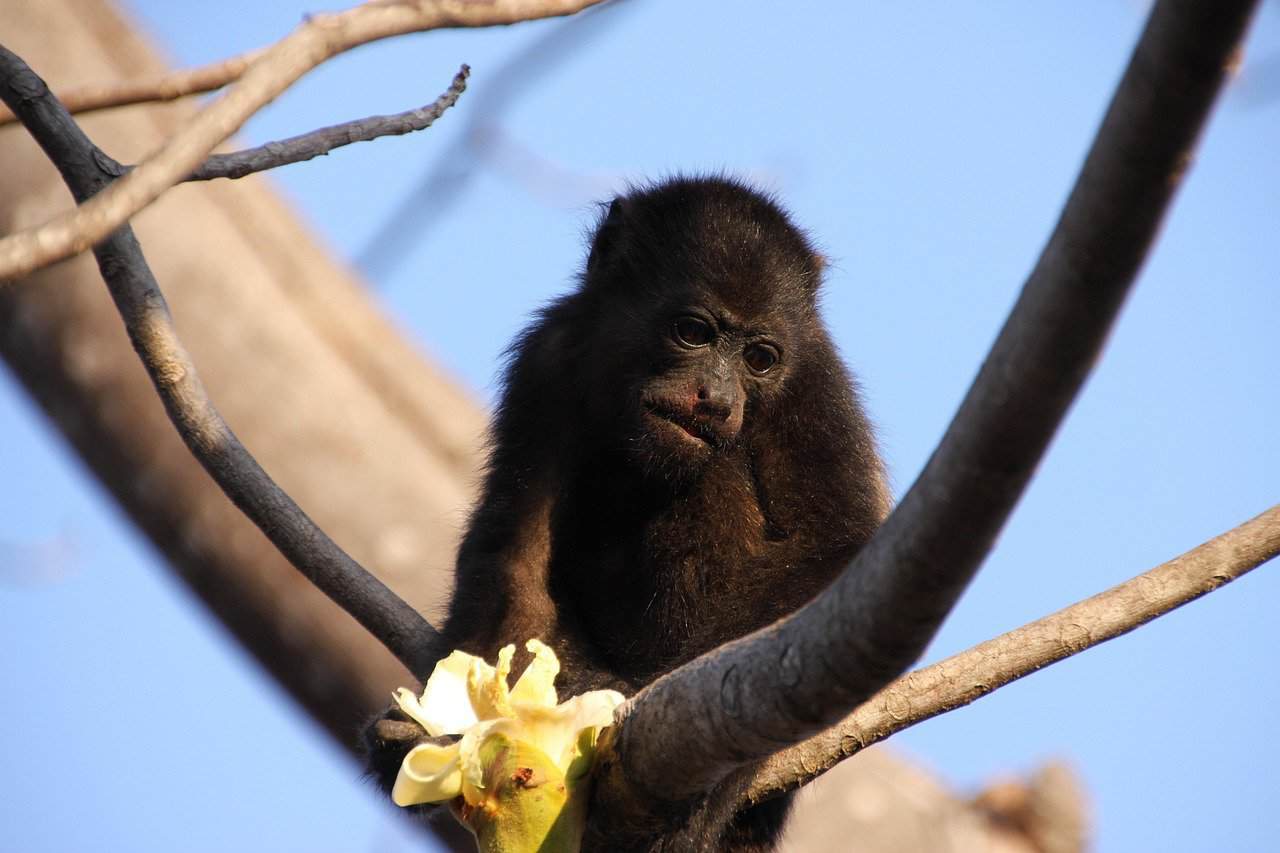
Howler monkeys in Costa Rica are facing a growing threat from bot fly larvae infestations, and new research points to tourism and land use changes as key drivers. A study by the Awá Science and Conservation Association, the University of Costa Rica, and the National System of Conservation Areas (SINAC) found that Cuterebra baeri, a bot fly species, is causing significant health issues for mantled howler monkeys in Cahuita and Puerto Vargas national parks. Conducted from 2019 to 2020, the research highlights how human activity is making these primates more vulnerable.
The bot fly larvae burrow under the skin of howler monkeys, creating painful nodules that can lead to infections and weaken the animals. Monkeys with infestations often show signs of poor health. The study suggests that stress from constant human presence, noise, and habitat disruption weakens their immune systems, making them more susceptible to parasites.
Tourism, a major economic driver in Costa Rica, appears to play a role. In popular areas like Cahuita, reduced forest canopy from development creates warmer, more humid conditions that favor bot fly reproduction. Visitors, while drawn to the country’s rich biodiversity, often unknowingly contribute to habitat stress through noise and encroachment. The research also notes that uncontrolled tourism can fragment habitats, forcing monkeys to travel along power lines or other risky routes, increasing their exposure to injury and stress.
Land use changes, including urban expansion and deforestation, are compounding the issue. In Costa Rica’s southern Caribbean, where tourism and development are booming, natural habitats are shrinking. This pressures ecosystems and disrupts the balance that keeps parasite populations in check. For example, clearing forests for hotels or agriculture reduces shade, altering microclimates in ways that benefit bot flies.
Efforts to control the parasite with insecticides have raised concerns. The study warns that chemicals like organophosphates can harm howler monkeys more than the larvae, while also killing pollinators, birds, and other wildlife. Runoff from these chemicals can pollute soil and water, threatening the broader ecosystem.
Despite the known threat of Cuterebra baeri, Costa Rica lacks consistent monitoring or control strategies. The study calls for regular health checks of howler monkey populations and more research into tourism’s impacts. It also suggests non-chemical solutions, like restoring forest cover and building rope bridges to help monkeys avoid dangerous routes, as seen in successful projects near Playa Hermosa.
Costa Rica’s reputation as a biodiversity hotspot depends on protecting species like the howler monkey. Balancing tourism with conservation is key. Visitors can help by sticking to designated trails, keeping their distance from wildlife, and supporting eco-friendly tour operators. Local authorities, meanwhile, should prioritize long-term environmental health over short-term economic gains.
The Awá Science and Conservation Association and SINAC are working to address these challenges, but more action is needed. Without stronger protections, howler monkeys—and the ecosystems they support—face an uncertain future. For now, the call is clear: safeguard Costa Rica’s natural heritage before it’s too late.





