

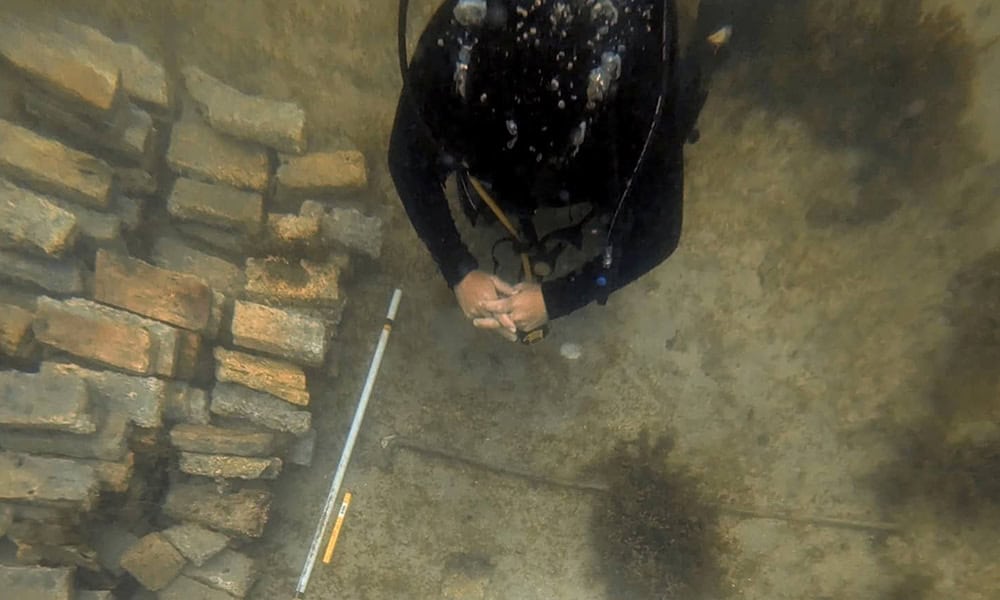
An expedition of marine archaeologists from Denmark has unraveled the mystery surrounding two shipwrecks lying in the shallow waters of Cahuita National Park, on the Caribbean coast of Costa Rica. For nearly two centuries, local fishermen, who first settled in the area in 1826, believed the wrecks were pirate ships.
However, a 2015 discovery of distinctive yellow bricks by U.S. archaeologists from East Carolina University sparked new questions, leading to the revelation that these are the remains of Danish vessels involved in the transatlantic slave trade. The ships, Fridericus Quartus and Christianus Quintus, were part of Denmark’s participation in the trade, which spanned from the 1660s to the early 1800s. During this period, over 120,000 Africans were forcibly transported across the Atlantic under brutal conditions.
Loaded with cloth, metal goods, and weapons for trade, the vessels departed Copenhagen in December 1708, bound for the Danish colony of St. Thomas (now part of the U.S. Virgin Islands) via West Africa. According to the National Museum of Denmark and the Viking Ship Museum, the ships never reached their destination.
During an extensive underwater excavation in 2023, conducted in collaboration with the University of Costa Rica and Costa Rica’s National System of Conservation Areas (SINAC), marine archaeologists recovered fragments of wood, yellow bricks, and Dutch-made clay pipes. Scientific analysis at the University of Southern Denmark determined that the materials correspond to 18th-century European ships, supporting historical records of shipwrecks in the region.
The timber originated from an oak tree felled between 1690 and 1695 in the western Baltic Sea, a region encompassing Denmark, northeastern Germany, and southern Sweden. The yellow bricks match those produced in Flensburg, then a Danish city known for its brick manufacturing. David Gregory, a marine archaeologist at the National Museum of Denmark, noted, “The charred wood and Danish cargo confirm these are the Fridericus Quartus and Christianus Quintus, lost in 1710.”
Investigators revealed that, after a voyage lasting several months, the ships ran out of provisions, exacerbating the suffering of the enslaved Africans onboard. Navigational errors led the vessels over 2,000 kilometers off course. In a state of desperation, the crew and enslaved Africans mutinied in 1710. One vessel was consumed by fire, while the other sank after its anchor was cut.
Of the approximately 650–690 enslaved people who survived, many reached the shores of Costa Rica. Some were recaptured and sent to cacao plantations in Matina, while others escaped and integrated into local communities, contributing to the vibrant Afro-Costa Rican heritage today.
SINAC plans to incorporate these findings into educational programs at Cahuita National Park, ensuring that this significant chapter of history resonates with future generations. The wrecks, restricted to non-invasive tours, remain a protected testament to Costa Rica’s complex colonial past.





