
Last Friday, April 25, the official presentation of the 2025–2030 National Fisheries and Aquaculture Development Plan took much of Costa Rica’s coastal fishing sector by surprise. Developed by the Costa Rican Institute of Fisheries and Aquaculture (INCOPESCA) in conjunction with the Executive Secretariat for Agricultural Sector Planning (SEPSA), the document outlines an ambitious roadmap toward 2030. However, beyond the optimism displayed at its launch, the success of the Plan will hinge on institutional capacity to coordinate efforts and address long-standing structural challenges.
In its design, the Plan incorporates the aquaculture vision of the FAO-promoted “Blue Transformation,” integrating mariculture, technological innovation, and gender equity. Nevertheless, as with the Chinchilla-Miranda administration’s plan (Decree No. 37587-MAG), significant structural gaps remain: the absence of a robust fisheries information system, weak institutional capacity, a lack of scientific data and reliable statistics, limited effective social participation, and outdated traceability methods—such as the lack of onboard observers or strengthened satellite tracking. As a result, sustainability risks being reduced to rhetoric.
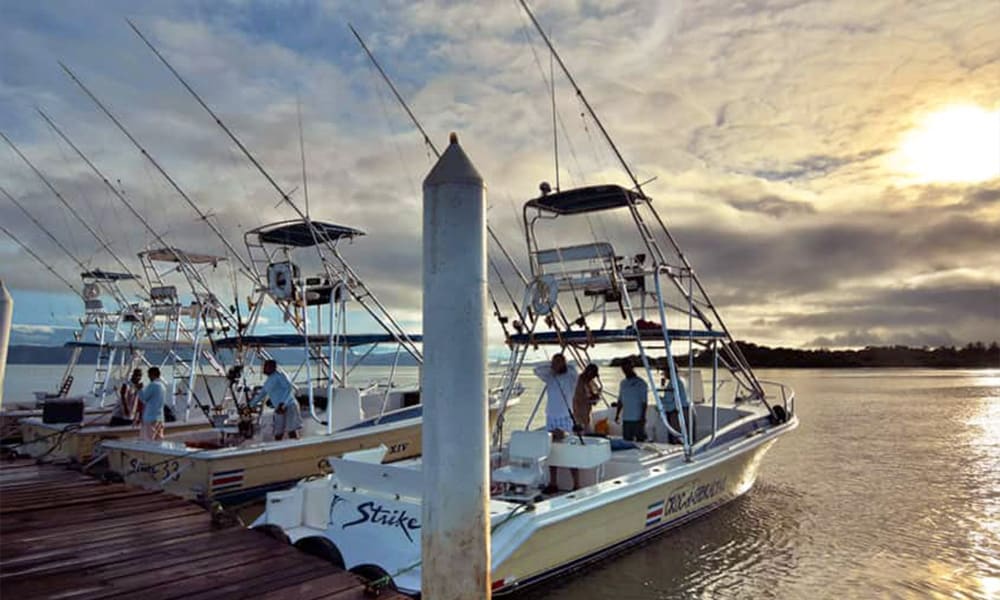
One of the most evident omissions is the absence of specific strategies for the tourism and sport fishing sector. Far from marginal, this activity accounts for 33.6% of active licenses, surpassing all individual commercial categories except small-scale fishing. It is estimated to generate nearly $500 million annually, sustaining thousands of coastal families and contributing approximately 75% of the total license revenue collected by INCOPESCA in recent years (INCOPESCA-PE-0825-2022), all while operating with a fraction of the extractive fishing effort. Despite its economic and ecological significance, the Plan merely acknowledges the sector’s existence without articulating concrete actions to strengthen it.
This exclusion contradicts Costa Rica’s commitments under the Sustainable Development Goals (8, 12, and 14), which promote sustainable use of marine resources. Fishing tourism, based largely on catch-and-release practices, not only conserves fish populations but also stimulates local value chains, contributing to the well-being of coastal communities.
In this context, it is particularly contradictory and concerning that, for example, while the Plan allocates ₡378 million to the Costa Rica Pelagic Fishery Improvement Project (FIP)—focused on fishing sharks, billfish, tuna, and mahi-mahi—no specific funding has been designated to strengthen tourism and sport fishing.
The systematic omission of this sector is not a mere technical oversight; it reveals a profound disconnect between public policy and key sources of sustainable development in communities such as Guanacaste, Puntarenas, and the Costa Rican Caribbean. It marginalizes those who also “break their backs” to energize our coastal zones. This strategic error erodes public trust, particularly in regions where sport fishing is a pillar of subsistence and development. The 2024 State of the Nation report highlighted the deep mistrust that prevails toward INCOPESCA and other public authorities among artisanal and sport fishing sectors. This sentiment is echoed in the documentary released this week, Voices of the Sea.
Although the 2025–2030 Plan proclaims the importance of “citizen participation,” it introduces no new mechanisms for participatory governance, nor does it strengthen the legitimacy of decision-making processes in the fisheries sector.
The lack of structural support for tourism and sport fishing not only represents a missed opportunity to promote marine sustainability and coastal economic development but also raises questions about the fairness and coherence of public policies in the sector. If Costa Rica aspires to solidify its position as a regional leader in the blue economy, it is imperative to correct this omission and promote improvement projects specifically designed for this fisheries subsector.
Building opportunities for future generations will not be possible if key sectors continue to be rendered invisible. Supporting tourism and sport fishing is not a concession—it is a smart strategy to conserve marine ecosystems, diversify the coastal economy, and strengthen the legitimacy of public management of ocean resources.
Author
Damián Martínez Fernández
Director of Conservation and Public Policy
Costa Rican Fishing Federation (FECOP)