

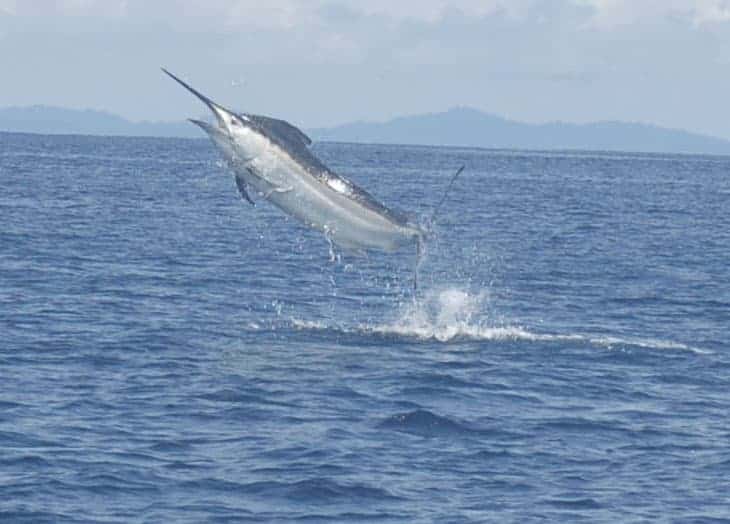
The mislabeling of seafood products is a widespread issue in the food industry that has been the subject of numerous studies and investigations around the world. This practice not only impacts end consumers but is also having significant consequences for both human health and the economy.
The research, led by the BIOMOL Molecular Biology Laboratory at LCI Veritas University in Costa Rica, aimed to identify billfish fillets—such as sailfish, swordfish, and marlins—being sold in Costa Rican markets using DNA barcoding techniques. DNA sequences from the cytochrome oxidase subunit I (COI) region were analyzed from 178 tissue samples collected at fish markets and vendors across all seven provinces of Costa Rica.
“As we celebrate the 10th anniversary of our founding, the BIOMOL lab reaffirms its interest and active commitment to positively influencing the responsible management of Costa Rica’s fishery resources. We do this by applying high-confidence molecular tools that enable precise identification of seafood products from our oceans, ensuring their origin,” emphasized Juan Carlos Delgado-Carazo, coordinator of the research laboratory.
Sequence analyses showed that samples sold as “sailfish” and “swordfish” had the highest percentage of correct identification (93.44% and 96.43%, respectively). In contrast, fish sold as “white marlin” and “pink marlin” had the highest rates of mislabeling (100% and 28.19%, respectively).
Overall, 33.71% of the samples analyzed were found to be mislabeled, which may have significant implications not only for consumer rights but also for fishery statistics, management policies, and conservation efforts.
Where does the error come from?
The main cause of mislabeling stems from inconsistencies in the use of common names by the national fisheries authority, compared to the official common names used globally. “In practice, fish are often landed after having their fins, heads, and guts removed, which results in the loss of diagnostic morphological characteristics. This leads to identification errors and mislabeling throughout the seafood supply chain,” explained Roy Saravia, lead researcher on the study.
Costa Rica has built a global reputation as a leader in marine conservation, yet it is not immune to the issue of seafood mislabeling. Since 2012, the country has regulated the labeling of various seafood products in an effort to implement traceability, but inaccurate labeling continues in markets, allowing the public to unknowingly consume mislabeled species.
“This study seeks to contribute to a more accurate understanding of what ends up on our plates, grounded in scientific evidence. It aims to provide tools to improve traceability, transparency, and sustainability throughout Costa Rica’s fishing value chain,” added Delgado-Carazo.
What did the sample analysis involve?
DNA barcoding, a tool widely used around the world to detect food mislabeling—whether accidental or fraudulent—was employed. To determine whether species were correctly labeled, commercial names used in the markets were compared to scientific names established in academic literature. DNA barcoding was then used to assess whether the genetic identity matched the labeled name.
Samples were collected from various geographic regions of Costa Rica. Although most fish markets are concentrated in the central region, sampling was distributed over the course of a year and across different regions to minimize the risk of collecting samples from the same individual fish.
Each sample was labeled with the commercial name under which it was sold at the point of purchase. Samples were then transported in coolers with ice and processed at the BIOMOL Molecular Biology Laboratory at LCI Veritas University. A tissue fragment approximately 1 cm long and 0.3 cm wide was extracted from each fillet, stored in vials with 99% alcohol, and kept at -20°C until analysis.
The comparative analysis between genetic identification and commercial labeling revealed an overall mislabeling rate of 33.71%. Sailfish and swordfish showed low mislabeling rates (6.56% and 3.57%, respectively).
“Approximately 10% of samples labeled as ‘marlin’ in markets turned out to be sailfish. These findings are concerning, as mislabeling affects not only consumers but also fisheries management and species conservation,” concluded Saravia.
“We hope that DNA analysis can be increasingly integrated into national seafood supply chains to ensure the correct labeling of wild species consumed in Costa Rica, helping detect and prevent the unlawful exploitation of threatened species,” Delgado-Carazo concluded.
Samples were collected between July 2022 and February 2023, and the study was published in the highly regarded British scientific journal Food Control.





