
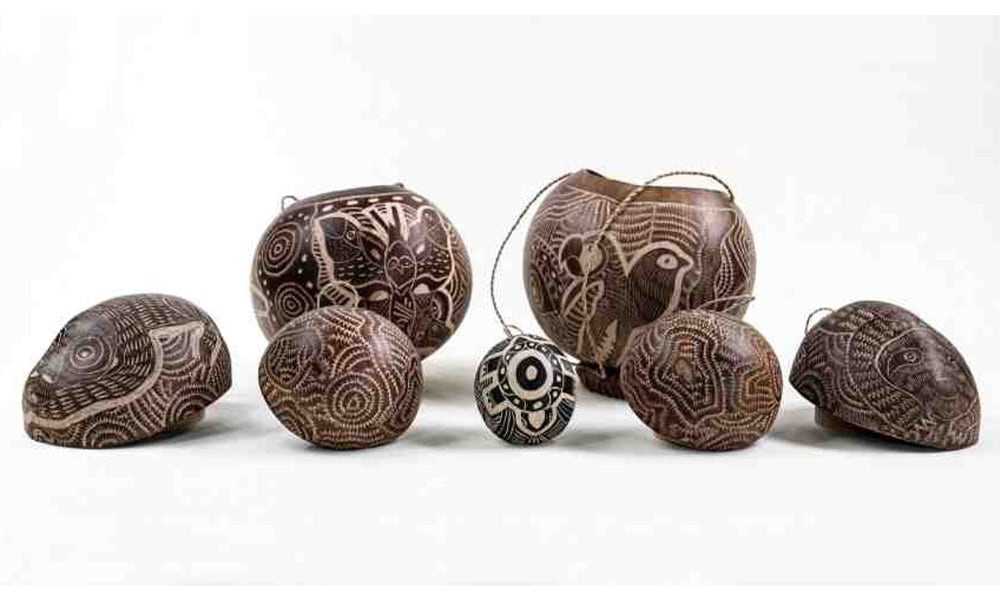
“The Lives of a Fruit” is an exhibition featuring 139 pieces created by Costa Rican artisans, designers, and artists who took on the challenge of crafting the most beautiful works from jícaros.
The exhibit opens to the public on Friday, June 28, at 9 a.m., at the Cultural Heritage Office on Central Avenue, San José. It aims to make the jícaro craft more widely known and to celebrate the creators and tradition bearers who practice it.
The first part of the display features indigenous handicrafts in jícaro, made as part of the legacy of Costa Rica’s native peoples. The exhibition includes pieces from representatives of the Cabécar, Bribri, Maleku, Boruca, Ngöbe Buglé, and Térraba-Brörán indigenous communities.
The second section showcases traditional popular handicrafts in jícaro, created under the influence of various legacies and customs of different groups, reflecting their traditions and identities. This section includes artisans from Nicoya, Pococí, San José, and Guatuso (Maleku territory).
The third category is a small group of four artisans from the indigenous peoples: Cabécar, Maleku, Boruca, and Térraba-Brörán. They are considered “Masters Bearers of Tradition,” with more than 25 years of experience in this craft. Through their trajectory and techniques, they reflect important elements that are present in the national and community identity.
The fourth section showcases contemporary handicrafts in jícaro, which are works made under the usual principles of craftsmanship but incorporate new techniques and designs. Visitors can see 36 objects such as lamps, bags, costume jewelry, and other designs that use the jícaro as raw material for their creations.
The exhibition not only reveals the handicraft object represented in the jícaro and its traditional domestic, symbolic, or decorative uses but also covers the role of artisans as carriers and transmitters of knowledge. It explores how their histories and socio-cultural contexts influence the techniques and uses of handicrafts.
“The artisans, who are the bearers and transmitters of knowledge, have a leading role in the exhibition, since it is through them that the craft is maintained and safeguarded, contributing an invaluable legacy to the culture and history of Costa Rica,” said Dayana Morales, archaeologist of the Directorate of Cultural Heritage.