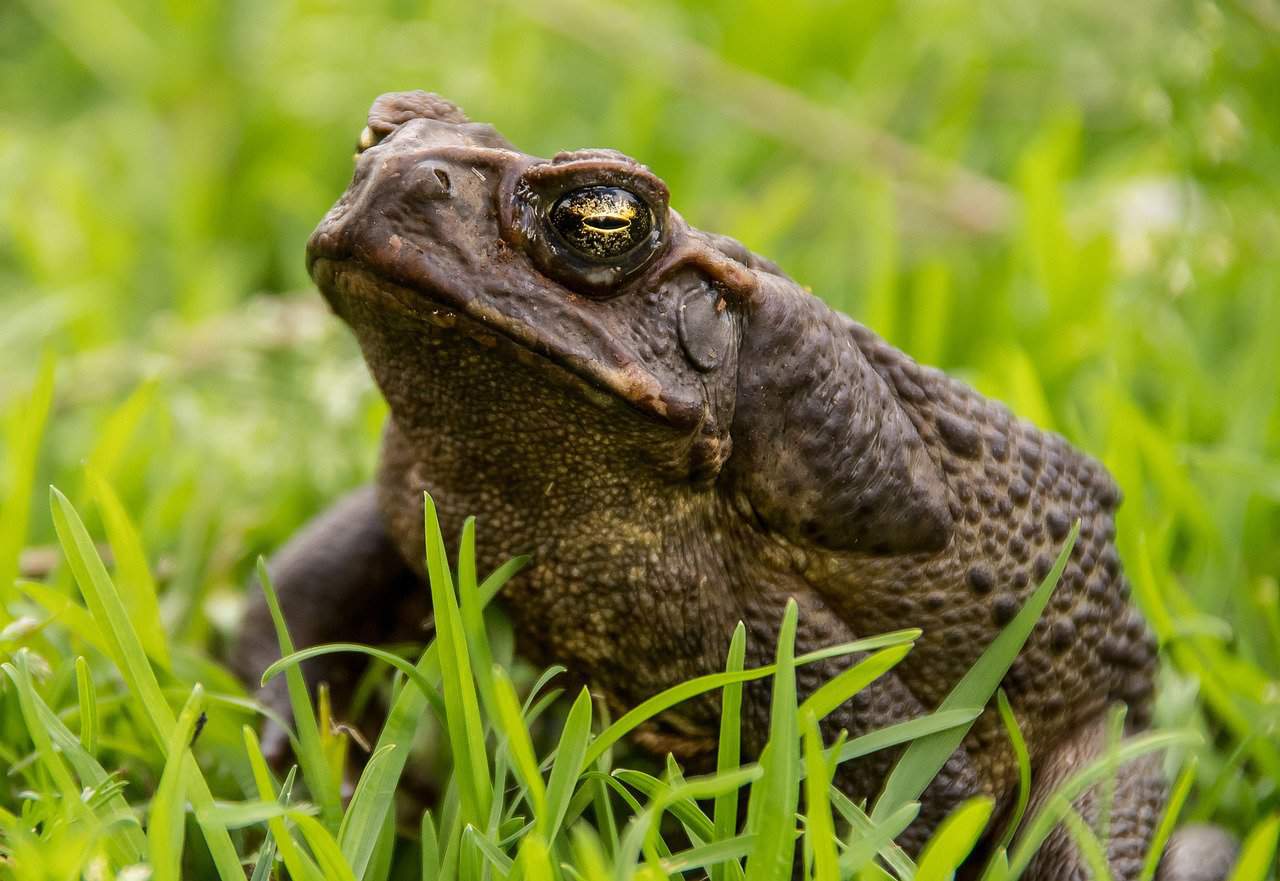
Today we discuss the biggest toad you’ve ever seen, the giant toad. The giant toad is also known as the cane toad in English. In Spanish, it’s sapo gigante or sapo de caña, which are exact translations.
The scientific name used to be (Bufo marinus) but was changed to (Rhinella marina) when DNA testing revealed that they were more closely related to a different group of toads than was previously thought.
Giant toads are giant, especially the females. The males are a decent size, but females can grow to nine inches long and over three pounds! The color of their skin can vary from gray to olive to red-brown. Most of the individuals that I’ve seen could be successfully described as brown. They have rough, warty skin and two large, puffy glands behind their eyes called parotoid glands.
Giant toads can be found in a wide variety of habitats in Costa Rica from sea level up to over 5,000 feet in elevation. They seem to be particularly prevalent in hot lowland areas and in and around human settlements. They make themselves at home around people’s homes, often eating cat and dog food left outside for the family pet.
We don’t have pet food outside, but during buggy times of year they frequent the porches of my house eating the insects attracted to our outside lights. They let me know they’ve stopped by for a visit by leaving, what I believe are called in the scientific literature, giant toad poops on the porch.
Giant toads are terrestrial and nocturnal. They hide under cover during the heat of the day and emerge at night to hunt. They are one of the creatures whose diet seems to include whatever it can catch and fit into its mouth. They eat insects, reptiles, other amphibians, small reptiles, crustaceans, some plants, feces, and refuse from the people who live nearby.
These toads can live a long time, up to 10 to 15 years in wild, which gives them plenty of time to grow into giants. They’re afforded this time to grow because they are toxic in every stage of their lives. The eggs are toxic. The tadpoles are toxic. The adults are toxic. Adult giant toads produce a milky-white fluid called bufotoxin from those two parotoid glands behind their eyes.
Bufotoxin is toxic to a whole slew of animals including humans. The literature says the toad’s toxin possesses hallucinogenic properties similar to those of LSD, but the same literature says a large enough dose can kill a grown man, so toad licking is probably not a good idea.
Giant toads are large enough to trigger my camera traps on their own. I often record them near bodies of fresh water. Many times it’s not the toads themselves that trigger the camera, but another creature walking by, and the toad happens to be there. See if you can spot the toad in each of the clips in the video below.
About the Author
Vincent Losasso, founder of Guanacaste Wildlife Monitoring, is a biologist who works with camera traps throughout Costa Rica. Learn more about his projects on facebook or instagram. You can also email him at: vincent@guanacastewildlifemonitoring.com