

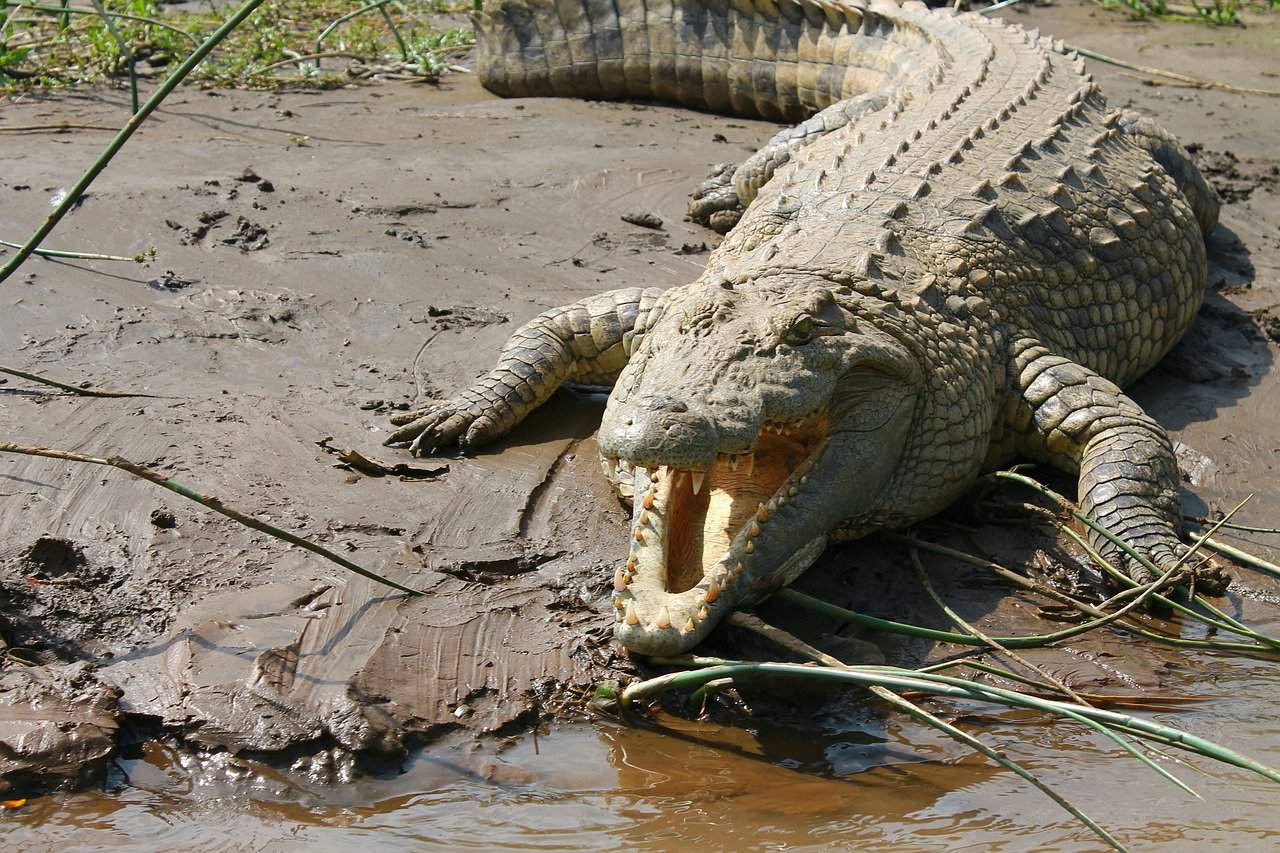
Crocodiles are thriving once again in the rivers and wetlands of Costa Rica according to conservation authorities, prompting debate as to whether overpopulation is responsible for a recent spate of crocodile attacks on humans.
The highest density of crocodiles is found in the Tempisque wetlands in Guanacaste, though significant populations also reside in the rivers of the Central Caribbean, Northern Caribbean, and Central Pacific regions. The Tempisque, Coto, Pacuare, Bongo, Tárcoles, Matina, Nosara, Colorado and Sarapiquí rivers contain the most crocodiles according to data from the National System of Conservation Areas (SINAC).
“Crocodiles play a vital role as keystone species—their selective predation and nutrient recycling maintains the health of these ecosystems,” explained Juan Sanchez, a SINAC biologist. “Seeing their numbers recover to historic levels is a welcome sign for Costa Rica’s wildlife.”
However, the apparent population boom has sparked theories that overpopulation is to blame for a recent spate of crocodile attacks. Two tourists in Guanacaste suffered crocodile bites this week alone, fueling calls that wildlife authorities need to control their numbers.
Yet academic experts rebuff these claims, asserting ecological indicators do not support overpopulation in play.
“If they were overpopulated, we would observe intense competition for limited resources like food and female mates—but our data shows crocodiles are not fighting over these necessities,” noted Ivan Sandoval, crocodile expert from National University.
Rather, as opportunistic predators crocodiles are capitalizing on food sources inadvertently provided by growing human communities encroaching along crocodile habitats. Officials urge residents and tourists to take common sense precautions near rivers.
“It’s important the public not interact with these animals by avoiding entering rivers and areas they are known to frequent,” Sandoval advised. “Coexistence through smart land use planning and giving crocodiles distance is key.”
Conservationists aim to continually monitor crocodile populations throughout the country to ensure balance with their surroundings. A few problem animals may need to be relocated if displaying aggressive behavior—but otherwise authorities view their resurgence as an exciting victory in protecting Costa Rica’s precious wildlife.





