

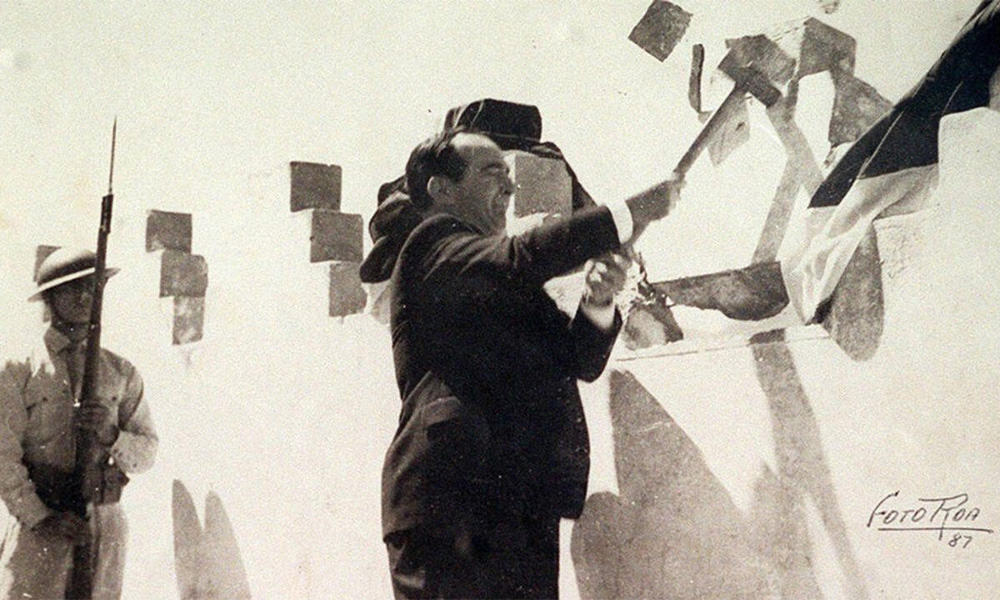
On December 1, 1948, Costa Rica experienced a pivotal moment in its history with the abolition of the army, a decision that remains fundamental to the nation’s identity.
At the Cuartel Bellavista, now housing the National Museum of Costa Rica, President José Figueres Ferrer, leading the Founding Board of the Second Republic, symbolically demolished a wall with a sledgehammer. This act officially abolished the National Army, embodying a visionary and fundamental decision that shaped the country’s trajectory.
“I took a sledgehammer to a wall of the Bellavista Barracks to symbolize the elimination of the vestige of Costa Rica’s military spirit from another time. I handed over the building for the headquarters of an anthropology museum that continues to radiate culture today,” declared José Figueres Ferrer on December 1, 1948.
This choice guided Costa Rica towards a more just and educated society, shifting focus from military prowess to human development. Today, the government directs resources towards healthcare, education, and culture instead of military acquisitions.
The elimination of the army as a permanent institution was an extraordinary step. Costa Rica’s commitment to this decision has not only shaped its domestic landscape but has also contributed to a positive global image, setting it apart in the Latin American context.
Following the abolition, public order and security responsibilities shifted to the Civil Guard, a newly named force absorbing former members of the National Liberation Army. The restructuring of functions between ministries continued for decades until the creation of the General Police Law in 1994, aiming to professionalize police forces with the establishment of the National Police School in 1964.
Costa Rica commemorates this historic event every December 1st, celebrating a key milestone in its pursuit of peace and democracy. The constitution of 1949 officially enshrined the abolition of the army, redirecting budgets to develop the educational system.
In Act No. 178 on October 31, 1949, the constitutional article abolishing the army and creating the civil police for public order protection was approved. Decree No. 249 on the same day transferred the Bellavista Barracks to the University of Costa Rica for the establishment of the National Museum.
“The military victories themselves are of little value. What is built upon them is what matters,” stated José Figueres Ferrer.





