
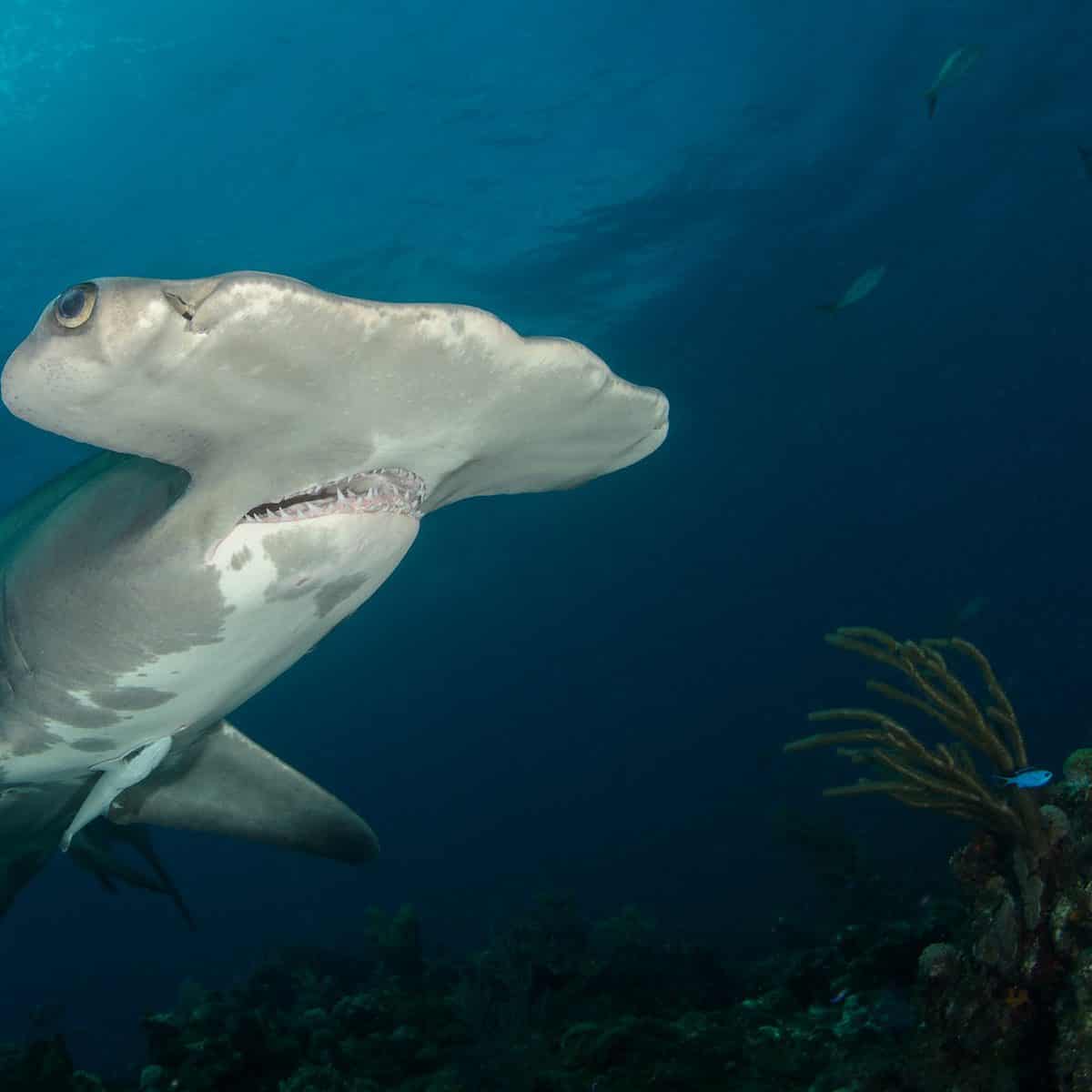
The Costa Rica has declared three species of hammerhead sharks as endangered through a ruling stating that these animals are “one step away from extinction,” confirmed judicial sources on Tuesday.
“The Sphyrna species is declared as wildlife in danger of extinction according to technical and scientific criteria, and by legal disposition, public domain. The National System of Conservation Areas is ordered to include the hammerhead shark species Sphyrna lewini, Sphyrna mokarran, and Sphyrna zygaena on the list of endangered species,” stated the ruling of the Constitutional Court I.
Two out of the three species of hammerhead sharks are classified as being at “critical risk” of extinction and having a “declining” population in the Red List of Threatened Species of the International Union for Conservation of Nature (IUCN).
The Costa Rican justice system also warned public entities to “adopt all necessary and appropriate measures” to put an end to the capture, retention, commercialization, and unloading of these three species.
In February, the Costa Rican government banned the fishing of hammerhead sharks, a species highly demanded for its fin soup.
Requiem and hammerhead sharks represent more than half of the global fin trade, which is centered in Hong Kong and generates around $500 million annually.
One kilogram of fins can cost up to $1,000 in East Asian markets.
According to popular belief, shark fin soup is believed to delay aging, improve appetite, aid in memory, and enhance sexual desire.
In southern Costa Rica, over the Pacific Ocean, there is the Golfo Dulce sanctuary, with Cocos Island as a World Heritage site that boasts the largest congregations of hammerhead sharks, according to the Presidency of Costa Rica.
At the end of 2022, at the Convention on International Trade in Endangered Species of Wild Fauna and Flora (CITES) summit in Panama, with reservations from Japan, regulations were decided upon for 54 species from the families of requiem sharks (Carcharhinidae) and hammerhead sharks (Sphynidae), the most trafficked for their fin soup ingredients.