

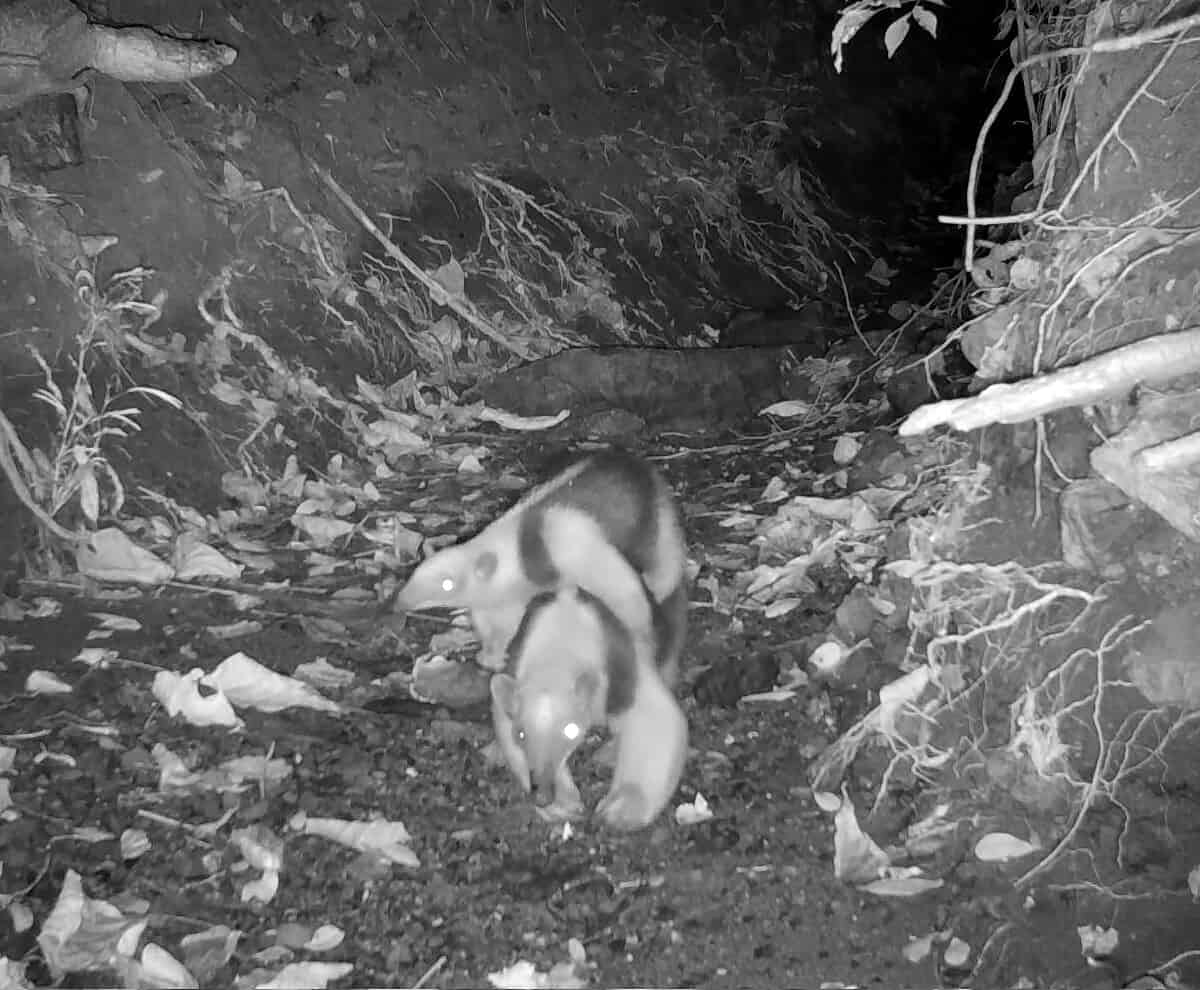
Meet the northern tamandua. They’re nocturnal and diurnal, they’re terrestrial and arboreal, and they have a prehensile tail. What’s not to like?
The northern tamandua (Tamandua mexicana) is also known as the collared anteater or lesser anteater in English. Along with tamandua, they’re also called oso hormiguero or oso colmenero in Spanish.
Northern tamanduas range from Mexico down to the northern tip of South America. The southern tamandua takes over the ant-eating in the rest of South America. In Costa Rica, they can be found in just about the entire country, and in my experience they’re fairly common. Since they’re partially diurnal, lucky hikers can stumble upon them while exploring the wilds of Costa Rica. If the tamandua is unlucky, motorists can see them on the side of the road, a product of their mostly nocturnal attempts to get to the other side.
As some of their names imply, collared anteaters are fans of eating ants. They use their powerful oversized foreclaws to tear into ant nests both in the treetops and on the forest floor. Once they gain access to the intricate tunnels of the nest, they use their 16 inch sticky tongue to slurp up as many ants as they can. They could easily be called collared termite-eaters as well, because they’re just as likely to use the same maneuvers on arboreal and terrestrial termite mounds.
Diets of tamanduas studied in Panama were found to consist of approximately one-third ants and two-thirds termites. The same folks found that adult tamanduas ate about 9,000 ants and termites per day from 50 to 80 different ant and termite colonies. They visit so many different colonies each day because they like to eat and run.
They’ll scratch their way into a termite mound or the tunnels that lead to termite mounds and begin eating as many worker termites as possible. When the soldier termites start to gather and mount a counterattack by shooting a nasty turpentine-like substance out of their nozzle-shaped heads, the orange is no longer worth the squeeze so to speak, and the tamandua moves on to attack another mound. In this way, the mounds aren’t completely destroyed, and the termites can repair the damage, until the tamandua returns of course.
I’ve encountered tamanduas several times while checking camera traps in forests all over Costa Rica. If they don’t notice you, they’ll go about their business of tearing into termite tunnels and licking up the inhabitants right before your eyes. If they do notice you, they’ll most likely climb high up into the nearest tree.
If you happen to get too close and the tamandua feels threatened, it’ll face you, stand up on its back legs and spread its claw laden front arms as if to say ‘come get some.’ And trust me, you don’t want any. I handled a small juvenile at a wildlife rescue center, and it left painful marks on my hands through thick leather gloves without even trying.
While they are both diurnal and nocturnal, I record them mostly at night with my camera traps. One of my favorite types of videos is of a female tamandua with a juvenile catching a ride on her back, which is the juvenile’s preferred method of getting around until they become so heavy that the female decides enough is enough. I’ve included a few of those clips in the video below.
About The Author
Vincent Losasso, founder of Guanacaste Wildlife Monitoring, is a biologist who works with camera traps throughout Costa Rica. Learn more about his projects at: Instagram and facebook or by email.





