

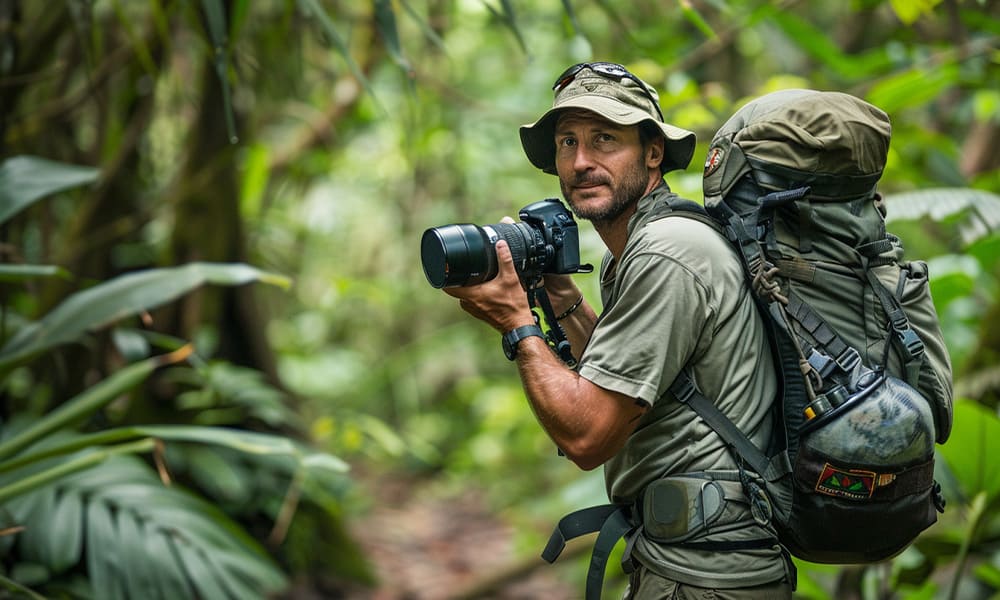
When I heard about the inauguration of a new school building at China Kichá – a remote jungle village in south-central Costa Rica’s Chirripó Indigenous Reserve, where young school director Yorleni Leiva, like many other teachers in Costa Rica’s rural schools, has been struggling to find resources for her students – I felt it was a monumental event that I, as a Tico Times photographer, could not miss. Ever since arriving in Costa Rica three months ago, I have been intrigued by its indigenous people and have found myself going to great lengths to better understand their ways through my images.
To reach the site, I was told to drive to the town of Paso Marcos, where guides would be waiting to take me on a seven- hour hike through the jungle to arrive at China Kichá the same day. I’d be in the village for two nights to witness the official opening of the new building, donated by the Japanese Embassy to replace the leaky grass structure in which Leiva, her colleagues and her Cabécar students had previously held classes at the community’s first-ever school, opened last year.
However, my instructions could in no way prepare me for what I was about to encounter. What was supposed to be seven hours turned into two days – two days of being tired and unsure, uncertain of my location or the distance to my final destination. And while my trek was at times daunting, I came to realize that what would be my great adventure is everyday life for the people of China Kichá.
I left San José at 4:45 a.m. on Nov. 9 to leave time to finish the hike before the sun went down; however, upon reaching Paso Marcos, the guides were nowhere in sight. When they had not arrived by 10:30, my travel companions – an outdoor education teacher, a lawyer and her friend, all intent on seeing the school – and I decided to begin the hike ourselves. Upon crossing the first stream, we saw a horse and two young boys in the distance, only to learn that they would be our guides to China Kichá.
After an hour, we had already crossed the Pacuare River twice, it had begun to rain and I was already wondering how much longer it would take to get there. By the second hour, I had given up any hope of staying dry; my clothes were drenched and I was wading through knee-high mud. I started to shake from the cold each time I stopped to wait for group members who were walking more slowly, so one insisted that we all walk at our own pace and eventually we would all meet up. That’s when things went wrong.
To my surprise, when the sun began to set, I was nowhere near my destination. Each time I passed an indigenous person on the trail I would ask, “How much longer to China Kichá?” and they would respond, “Very far.” After a while, I stopped asking and assumed that surely it was just around the next bend, over the next mud-covered mountain or right across the next river crossing.
Night fell and I found myself without water or food, but more importantly, without light. Luckily, the outdoor education teacher had slowed his somewhat rapid pace and had allowed me to catch up to him. Our other two companions, and the guides, were far behind us, out of sight. I began to panic; the hike seemed more and more difficult, and we had only moonlight to guide us. About two hours after sunset, I saw a light in the distance and was certain the small glow was coming from our final destination. We hurried toward the light, only to find out it was another school in another jungle community.
I, however, could walk no further: my clothing was soaking wet, my shoes were filled with mud and I had none of my belongings, having put them on the horse at our guides’ insistence.
We approached the source of the light, a house, and found a man standing outside. After speaking with him, we realized that our 13-year-old guide, Austin, was his son. He began to worry that the group had been split and sent a search party to find Austin and the others, and he introduced us to a woman who lived nearby.
Upon entering her one-room house, it became clear that despite her hospitality, we were imposing. The house was made out of sticks and had a dirt floor. She had two sleeping mats hoisted up in the air, a cluster of desks and school chairs and a small stove. She immediately offered me dry clothes and food. About an hour and half after arriving, we saw flashlights making their way toward the house. Despite the rain and darkness, the others had made it.
After being fed and discussing the challenges we had just met, we all went to bed, exhausted. Because sleeping space was limited, I shared a bed with the woman at whose house we were staying – so at that moment, I had used her dry clothes, eaten her food and was about to take over part of her bed. The generosity she displayed that night will forever remain with me.
The next morning, we were back on the trail at 5 a.m. and arrived at China Kichá shortly after 7 a.m., to be greeted by many members of the community. For the first time since the hike began, I was able to take photos. I worked most of the morning but by early afternoon, I could no longer stand without my eyes shutting, and trying to compose an interesting photo seemed impossible. After fighting off the tiredness for hours, I had to rest. I woke multiple times through my nap to find schoolchildren and intrigued adults watching me sleep, wondering who I was and why I was there.
We left our location in the jungle as soon as the sun rose the next morning in order to make it out before sunset. During my hike out of the jungle, there was less rain, but the mud was still there. I spent much of that day thinking about what I had been through.
My time in the jungle was the most physically and mentally challenging experience of my 23 years, but it also taught me about myself and my desire to produce telling images of stories that must be shared. And more than anything, I realized that what had come to be a challenge for me was everyday life for them. Leiva, 31, has to walk out every two to three weeks to take care of administrative matters in the town of Turrialba. Some of the schoolchildren’s parents also hike out of the reserve regularly to Paso Marcos or further to acquire supplies for the school and other items necessary for survival deep in the jungle (all of which they must carry on their back, including school desks).
While it may have taken me hours upon hours to reach China Kichá in search of photos, it takes others multiple trips in and out of the reserve in an effort to provide an education to those who call the jungle home.
For more information on the China Kichá school or other indigenous schools throughout the country, contact Yorleni Leiva at yorlm@yahoo.com.mx, or the Indigenous Education Program of the Public Education Ministry at 256-2564.





