One of the major purposes of my columns on relocating to Costa Rica is to prepare future expats for Costa Rica’s idiosyncrasies and cultural nuances that they may encounter after making the move.
I remember when I was living and studying in Mexico many moons ago, I noticed that policeman carried screwdrivers in their back pockets. As it turned out, it was common practice to remove a car’s plates when a driver committed certain infractions. This practice is widespread since it is not only done in Mexico but in some of the other countries in Latin America including Costa Rica.
In Costa Rica plates are most frequently removed by the police for parking in restricted areas (whether the driver is present or not), for not having a valid marchamo (vehicle circulation permit) or because a vehicle failed to pass the yearly “stem to stern” mechanical inspection.
Supposedly, the country’s traffic police confiscate a couple of hundred plates daily which can cause chaotic situation when you go to the Cosevi (Costa Rican Road Safety Council) office where you have to retrieve the plates.
How expats and others can get their license plates returned:
You have to make an on-line appointment, by e-mail: servicios@csv.go.cr or in person at the Oficinas (Offices) del Cosenjo de Seguridad Vial (Cosevi).
To complete this process the vehicle’s owner must have the following:
- A copy of the car’s Título de Propiedad which shows who is the cars rightful owner.
- The original Derecho de Circulación (permission to circulate), called a Marchamo.
- A certificate that your car has passed the annual vehicle inspection. NOTE: there is a slight problem with this procedure at present since the government hired a new company to do this. Consequently, many cars do not have their paperwork up to date during the transition period. Check to see if this requirement is temporarily waived.
- The car’s owner must show a valid cédula (an I.D. card for Costa Rican citizens), a DIMEX ID for residents or a passport.
- If the car is in the name of a corporation, you must have a Personería Jurídica (legal status) issued by the national registry (Registro Nacional) or a notary’s certification (certificación notarial)
- The original ticket must be paid or successfully appealed (impugnado). You must have printed or digital proof of the payment.
All these steps must be done in person. If you want someone else to do them for you, that person must have legal authorization (poder legal) from a lawyer stating that the person can act on your behalf. They must have all the original documents (parte, certificado de propiedad, copies of your cédula, etc.).
NOTE: If you are in Guanacaste or other areas, for example, that is where you will have to go there to get your vehicle or plates. Also always go in another car, taxi or Uber to claim your plates.
Finally, if your Spanish skills are not up to par, you may need to take someone with you to interpret.
About the Author
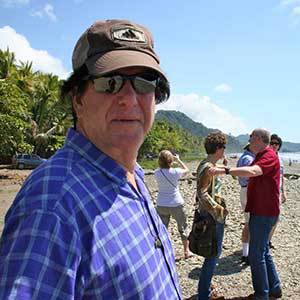
Christopher Howard has lived in the country over 40 years, is a Costa Rican citizen, Costa Rica’s foremost relocation expert and has been conducting monthly relocation/retirement tours to Costa Rica for 30 years. See www.liveincostarica.com. He is also the author of the one- of-a-kind bestselling, “New Golden Door to Retirement and Living in Costa Rica — the official guide to relocation” and the “Guide to Costa Rican Spanish,” that may be purchased through: www.costaricabooks.com or www.amazon.com