

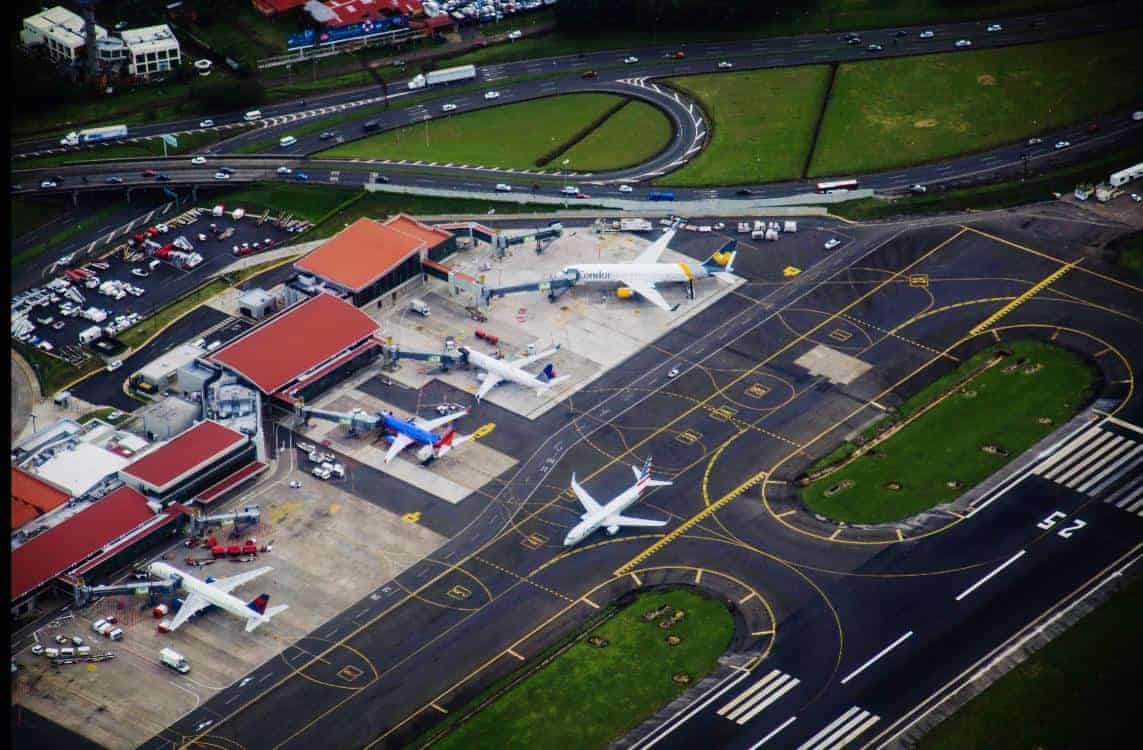
Reports of drones flying near San Jose’s Juan Santamaría International Airport have increased sharply this year, prompting airport officials to warn that unauthorized flights can force takeoffs and landings to be temporarily stopped and potentially delay hundreds of travelers. AERIS, the company that operates Costa Rica’s main international airport, said reports of drones near the terminal have roughly doubled compared with last year.
The devices pose their greatest danger when commercial aircraft are taking off, approaching the airport or preparing to land. The problem has already affected airport operations. When a drone is spotted in an area that could interfere with aircraft, the control tower and airport authorities may temporarily restrict or suspend takeoffs and landings while they determine whether it is safe to continue operating.
For passengers, that can mean delayed departures, arriving aircraft being asked to remain in holding patterns and, in more serious cases, flights being diverted to another airport. Airport officials say even a relatively small drone can create a serious problem if it collides with a passenger aircraft traveling at high speed. Engines, cockpit windshields and other parts of the aircraft could be damaged in a collision.
Costa Rica already has restrictions designed to prevent that situation. The General Directorate of Civil Aviation (DGAC), prohibits drone operations within 8 kilometers, or about 5 miles, of an airport unless the operator has received specific authorization. Anyone who needs to fly a drone inside that restricted area must request permission in advance and provide information including the location, reason for the flight, planned altitude, operating area and the dates and times when the drone will be used.
Aviation authorities then decide whether the flight can safely take place and what coordination is required. People who fly drones without the required authorization can face administrative proceedings and penalties under Costa Rican aviation rules. The warning is particularly important around Juan Santamaría, where aircraft continually approach and depart over populated areas west of San José.
AERIS said drone operators should check the rules before flying rather than relying solely on the restrictions shown in a drone’s mobile application. The airport operator is asking recreational and commercial drone pilots to stay outside restricted areas unless they have received permission, arguing that a short, unauthorized flight can have consequences far beyond the person controlling the drone.
For anyone traveling by air, the issue adds yet another potential cause of unexpected delays at our busiest airport: if a drone is reported close enough to an aircraft’s flight path, safety takes priority and airport operations can be stopped until authorities determine that the airspace is clear.





