
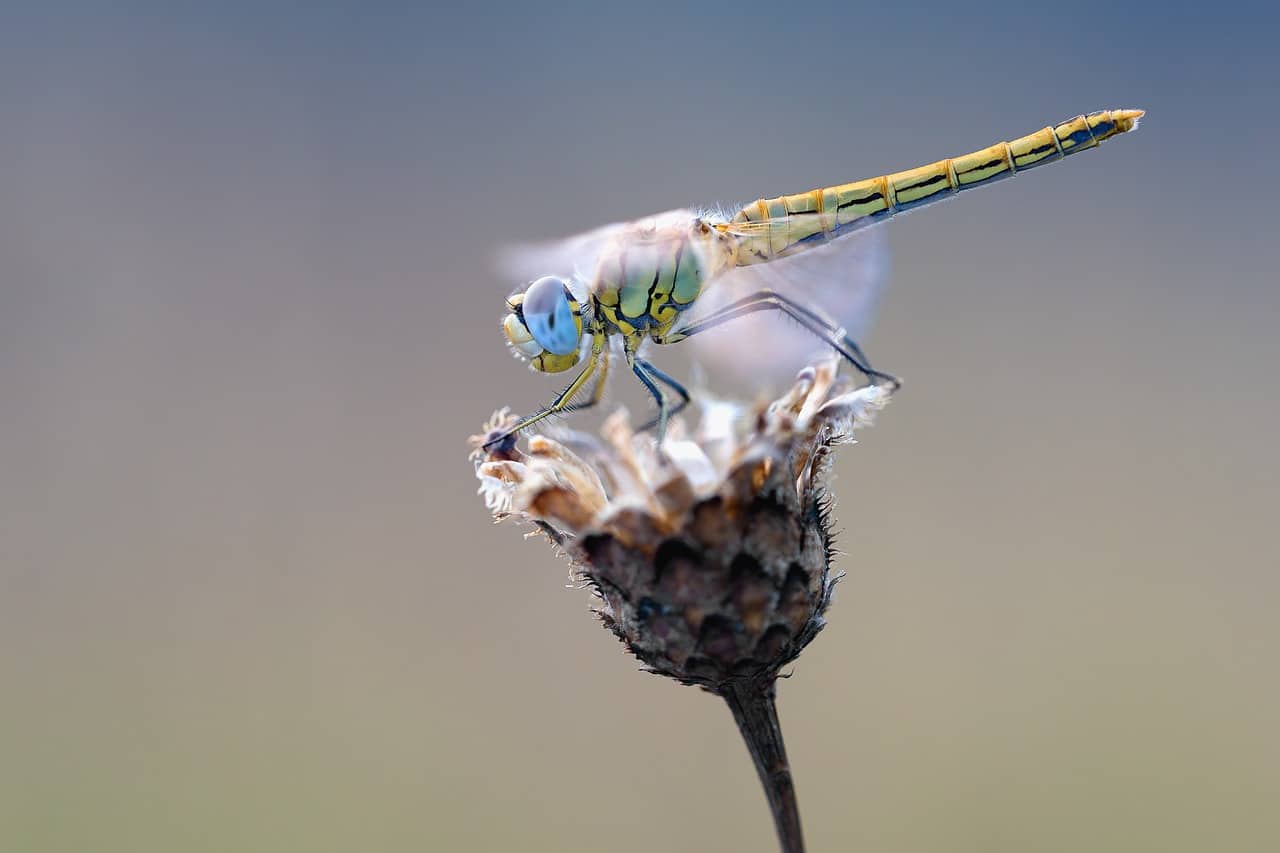
The destruction of wetlands is driving a decline of dragonflies around the world, with one sixth of species of the magnificently colourful insects threatened with extinction, conservationists said on Thursday.
A report from the International Union for Conservation of Nature presented the first assessment of all 6,016 dragonfly and damselfly species globally, and found that at least 16 percent of them risked going extinct.
Their decline was a symptom of widespread loss of the marshes, swamps and free-flowing rivers they breed in, driven mainly by the expansion of unsustainable agriculture and urbanisation around the globe, IUCN said in the update of its “Red List” of threatened species.
“By revealing the global loss of dragonflies, today’s Red List update underscores the urgent need to protect the world’s wetlands and the rich tapestry of life they harbour,” IUCN director general Bruno Oberle said in a statement. “Globally, these ecosystems are disappearing three times faster than forests,” he warned.
A report published three years ago by the Ramsar Convention on Wetlands found that 35 percent of the world’s wetlands — which include lakes, rivers, marshes and peatlands, as well as coastal and marine areas like lagoons, mangroves and coral reefs — were lost between 1970 and 2015.
Wetlands are uniquely valuable. They store carbon, protect against floods, and offer habitats for one in 10 of the world’s know species.
Potentially much higher
And the state of dragonfly species is an especially good indicator for how the wetlands they call home are doing.
“They’re very, very sensitive to changes in the environment. And so that is an early warning signal to what’s happening to wetland systems around the world,” Craig Hilton-Taylor, who heads IUCN’s Red List unit, told AFP. He said there had not been enough data to determine whether some of the dragonfly species evaluated were threatened, warning the true number teetering on the brink of extinction could be far higher than 16 percent.
“It is potentially much higher,” he said, suggesting as many as 40 percent might be threatened. The situation is particularly dire in South and Southeast Asia, where more than a quarter of all dragonfly species are threatened, IUCN said. This is largely due to the clearing of wetland and rainforest areas to make room for crops like palm oil, it explained.
Pesticides, other pollutants and climate change are also growing threats against dragonfly species worldwide, and constitute the biggest threat to the heavy-bodied insects in North America and Europe. “Climate change is a key factor,” Hilton-Taylor said, pointing out that “with increasing frequency and intensity of droughts, wetlands dry up, and the dragonflies lose their habitat”.
Over 40,000 endangered
With the latest update, the Red List now includes assessments of 142,577 species of animals and plants, including 40,084 considered to be threatened with extinction.This marks the first time that the number facing the highest risk has passed 40,000, IUCN said. “This is really a call to the world to step up and do much more,” Hilton-Taylor said.
Some species on the list seemed to be recovering, and were moved to less at-risk categories in the latest assessment, but more were seen as deteriorating. Among them was the Pyrenean desman, a small semiaquatic mammal with a long snout found only in rivers in Andorra, France, Portugal and Spain, which was moved from “vulnerable” to “endangered” on the Red List.
The unusual mole-like creature, which is one of only two remaining desman species in the world, has seen its population shrink by as much as 50 percent in the past decade alone.That is largely due to human impacts, like the disruption of river flow and reduced water levels as a result of hydropower plant, dam and reservoir construction.
Water extraction for agriculture and to make artificial snow for the Pyrenean ski slopes has also made significant areas inhospitable to the desman, IUCN said.
by Nina LARSON